
Key lime (Citrus aurantiifolia): description, history, cultivation and uses
Key lime, Citrus aurantiifolia, is a small, aromatic citrus valued for its tart flavor. This article covers its characteristics, origin, cultivation, culinary uses and differences from other limes.
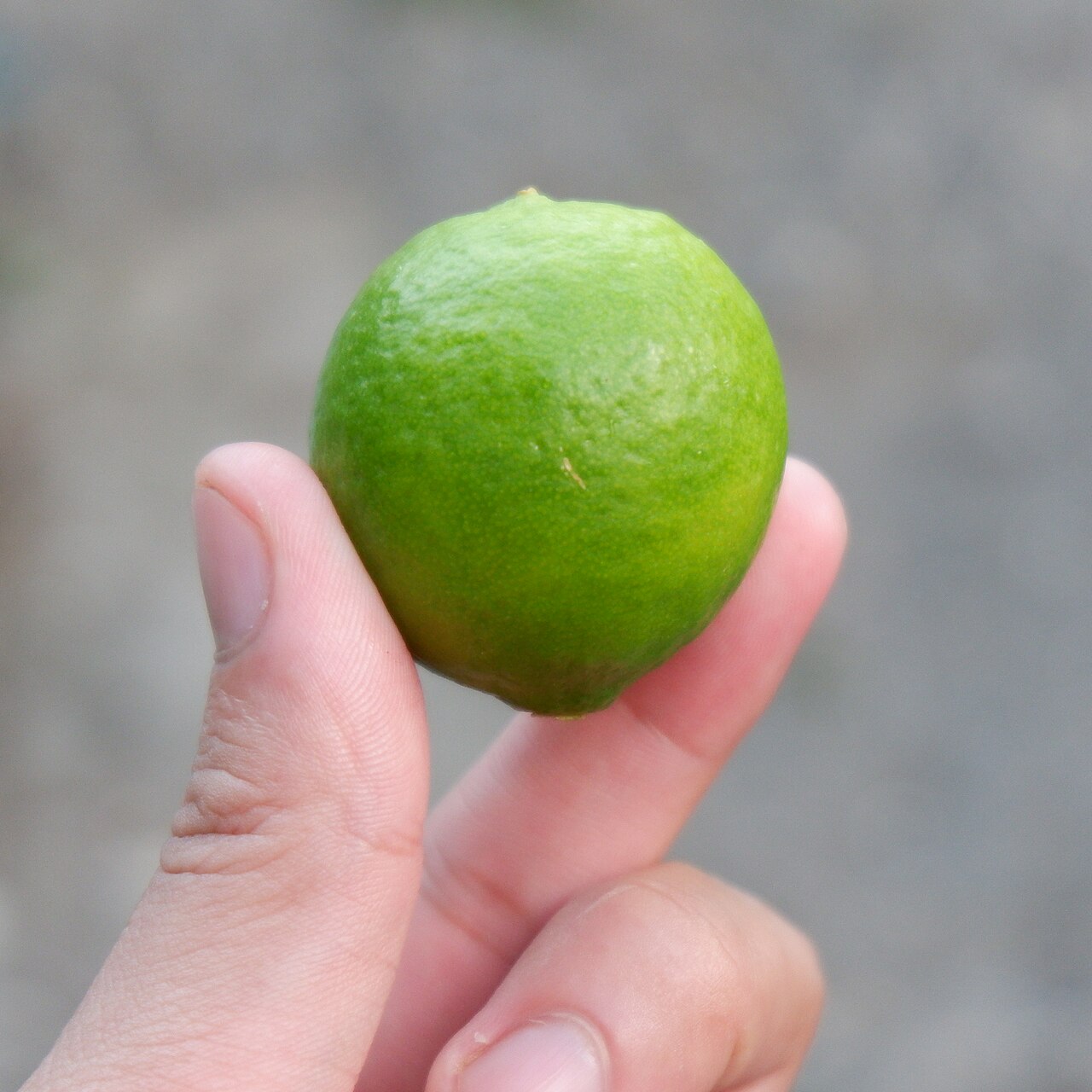
The Key lime is a small, aromatic citrus fruit grown as a shrub or small tree and valued for its distinctive tart, floral flavor. Botanically known as Citrus aurantiifolia (sometimes cited as Citrus x aurantiifolia), it is commonly called the Key lime, Mexican lime, West Indian lime or bartender's lime. Compared with the larger, milder Persian lime, Key limes are smaller, more acidic, more aromatic and typically have a thinner rind and more seeds. The fruit is often picked while green though it turns yellow when fully ripe; culinary tradition and commercial practice favor harvesting before full maturity for texture and shelf life.
Image gallery
8 Images




Characteristics
Key lime plants are generally shrubby, often producing many branches and thorns. They commonly reach a few metres in height in favorable climates, with compact or dwarf forms used for container growing. Leaves are ovate and resemble those of other citrus species. Flowers are single and fragrant, appearing across much of the year in warm, frost-free areas and producing small round fruit about 2.5–5 cm in diameter.
- Size and appearance: Small, round fruit with a thin, smooth rind; color ranges from green to yellow when ripe.
- Flavor and composition: Pronounced acidity and aromatic oils give a tart, slightly bitter and perfumed taste prized in cooking and beverages.
- Plant habit: A thorny shrub or small tree; dwarf varieties are grown indoors or in pots.
Flowers and fruit may develop throughout the year where frost is absent, with peak abundance in warmer months. Home gardeners value compact cultivars for balcony or indoor culture in temperate regions, while commercial production favors field-grown trees in tropical and subtropical zones.
Origin and history
Key lime is believed to have originated in Southeast Asia and spread westward with the movement of peoples and trade. Historical records and trade routes show citrus species circulating through the Middle East into North Africa and Europe; later Spanish and Portuguese explorers introduced various limes and other citrus fruits to the Caribbean and the Americas. In the United States the name "Key" became associated with the Florida Keys, where the fruit was grown historically and linked to regional cuisine. Storms and agricultural change in the early 20th century altered local plantings, and international trade has shifted much commercial production to Mexico and parts of Central America in recent decades.
Uses, culinary importance and cultivation
Key limes are chiefly valued for culinary uses. Their juice and zest are central to iconic preparations such as Key lime pie, but they are also used in marinades, dressings, ceviches, sauces, cocktails and confections where a bright, penetrating citrus note is desired. Essential oils in the peel contribute strong aroma used in some beverages and flavorings.
From a cultivation standpoint, Key limes prefer warm, humid climates without hard frost. They are grown both commercially and by hobbyists; potted dwarf varieties allow cultivation in cooler regions with winter protection. Growers choose planting sites, irrigation and pruning practices to manage thorniness and fruiting, and commercial supply now often originates in Central America and Mexico for markets in North America.
Distinctions and notable facts
Key limes differ from Persian (Tahiti) limes primarily in size, acidity, rind thickness and aroma. Persian limes are larger, seedless and milder, which made them more profitable for large-scale trade in the 20th century. By contrast, the Key lime remains prized for its particular flavor and regional associations, especially with the Florida Keys and the dessert that bears its name.
Further reading and links
- Plant description and growth habit
- Comparison with Persian lime
- Key lime pie and culinary uses
- Leaf morphology and botanical notes
- Flower characteristics
- Origin in Southeast Asia
- Spread through the Middle East
- Introduction to North Africa
- Citrus in Europe
- Historical trade routes and the Crusades
- Spanish exploration and transport
- Florida Keys history
- Columbian-era distribution
- Expansion in North America
- Production in Mexico
- Cultivation in Florida
- Commercial growing in California
- Etymology from Persian
- Persian lime cultivar history
- Trade agreements and modern supply
- Central American production
- Texas cultivation
Questions and answers
Q: What is the Latin name for the Key lime?
A: The Latin name for the Key lime is Citrus aurantiifolia (often, less correctly: C. aurantifolia), or Citrus x aurantiifolia (Christm.) Swingle.
Q: How tall can a Key lime tree grow?
A: A Key lime tree can grow up to 5 meters in height.
Q: What are some other names for the Key lime?
A: Other names for the Key lime include Mexican lime, West Indian lime and Bartender's Lime.
Q: What distinguishes a Key Lime from other limes?
A: The key distinguishing factor of a Key Lime compared to other limes is its unique flavor which is more tart and bitter than other limes. It also has higher acidity, a stronger aroma, and a thinner rind than that of the more common Persian lime.
Q: Where did the English name "lime" come from?
A: The English name "lime" was derived from the Persian name لیمو Limu.
Q: When was it introduced to North America?
A: The Key Lime was introduced to North America by Spanish explorers contemporaneously with Columbus in tropical and sub-tropical areas including Mexico, Florida, and later California.
Q: How did it become known as 'Key' Lime? A:The term 'Key' was added sometime after 1926 when most U.S C .aurantiifolia plants were destroyed by a hurricane but some wild plants growing in the Keys survived this event .
Related articles
Author
AlegsaOnline.com Key lime (Citrus aurantiifolia): description, history, cultivation and uses Leandro Alegsa
URL: https://en.alegsaonline.com/art/53113
Sources
- fao.org : Alphabetical List of Plant Families with Insecticidal and Fungicidal Properties
- hort.purdue.edu : Citrus aurantiifolia Swingle