
Islamism: political movements seeking to apply Islamic principles
Islamism is a range of political ideologies that seek to shape government and society according to Islamic principles. It encompasses diverse movements, methods, and interpretations across history and regions.
Overview
Islamism refers to a spectrum of political movements and ideologies that advocate using Islamic sources and values to organize public life. It is distinct from the religion of Islam itself, which is a faith and cultural tradition; Islamism specifically emphasizes political and legal reform so that states or communities follow Islamic law or principles. Advocates differ widely on goals, tactics and the role of pluralism.
Image gallery
10 Images





Core ideas and characteristics
Common themes among Islamist currents include the centrality of sharia as a reference for legislation, the desire for moral reform of society, and the fusion of religious authority with political legitimacy. Some strains prioritize peaceful participation in existing political systems, while others endorse revolutionary change or reject secular institutions. Interpretations of what sharia requires vary greatly among scholars and movements.
Historical development
Modern Islamist thought emerged in the late nineteenth and twentieth centuries as responses to colonial rule, social change and perceived decline. Intellectuals and activists such as Muhammad Iqbal and others articulated visions of Islamic renewal; later figures including Yusuf al-Qaradawi, Ayatollah Khomeini and writers like Sayyid Qutb influenced organizational and ideological trends. In some contexts activists also drew on the civil rights and anti-colonial movements, with figures like Malcolm X referenced for his critique of Western power and advocacy of religiously grounded identity.
Variations and examples
- Social and political parties that enter elections and provide social services (for example, movements similar to the Muslim Brotherhood).
- Revolutionary or theocratic projects that seek state transformation, exemplified by the 1979 Iranian Revolution and leaders linked to Ayatollah Khomeini.
- Transnational organizations and thinkers, such as movements associated with Islamic-majority nations or with scholarly networks including prominent clerics.
- Groups that advocate pan-Islamic unity or caliphate ideas and others that stress local, cultural adaptations of Islamic governance.
Debates, uses and distinctions
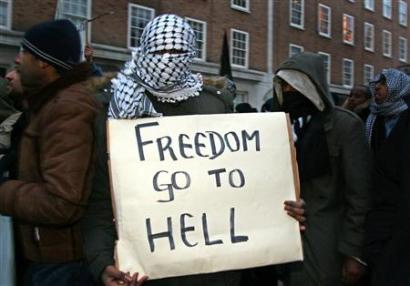
Public debate about Islamism often centers on whether it supports democratic norms, human rights and pluralism. Some Islamist parties have participated in democratic processes; others have been condemned for authoritarian or violent tactics. Analysts emphasize the distinction between mainstream political Islam and violent extremism, noting that violent actors represent a small but highly visible part of the broader phenomenon. Comparative study also contrasts Islamism with secular nationalist and liberal religious trends.
Notable figures and further study
Influential thinkers and activists associated with Islamist thought include historical and modern figures; readers can explore writings of thinkers like Sayyid Qutb, Hassan al-Banna and scholars referenced by institutions studying society and politics. For broader context see scholarly overviews and reputable sources that discuss regional variants and the complex relationship between religion and state in different eras and localities; further resources are available through academic databases and policy research portals (religious studies, legal, civil rights archives).
Understanding Islamism requires attention to local history, theological argument, and contemporary politics. Its diversity means generalizations are often misleading; careful study distinguishes between advocacy for moral public life, institutional political engagement, and groups that pursue violence.
Related articles
Author
AlegsaOnline.com Islamism: political movements seeking to apply Islamic principles Leandro Alegsa
URL: https://en.alegsaonline.com/art/48414