
Indo-European peoples: origins, languages and cultural legacy
Overview of the Indo-European peoples: their proposed steppe origin, Proto-Indo-European language, archaeological and genetic evidence, major descendant groups, and lasting cultural impact.
The term "Indo-European peoples" is used by scholars to describe prehistoric populations associated with the spread of the Proto-Indo-European language and related cultural traits across large parts of Eurasia. These people are not a single ethnos recorded in historical documents, but a scholarly construct combining linguistic, archaeological and genetic evidence to explain how a family of related languages and material practices dispersed from a common homeland into Europe, western Asia, central Asia and the Indian subcontinent.
Image gallery
8 Images


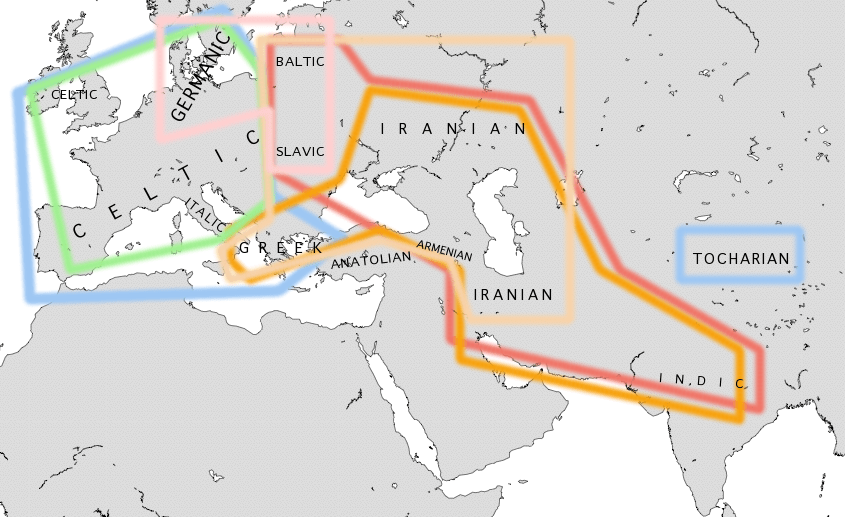
Origins and homeland
Most researchers locate the principal homeland of the Proto-Indo-European-speaking communities on the Pontic–Caspian steppe in what is now eastern Europe and adjacent areas of central Asia. Archaeological models such as the Kurgan hypothesis emphasize mobility, horse pastoralism and the use of wheeled vehicles as vectors of expansion from the steppes. This reconstruction links archaeological remains in the eastern Europe and central Asia with linguistic evidence and points to regions such as the Ukrainian steppes as central to early dispersals.
Language, classification and major branches
At the linguistic core is Proto-Indo-European, a reconstructed ancestor of a large family of languages. Over centuries this ancestral speech split into multiple branches. Scholars distinguish between different subgroupings and sound-system developments (commonly referred to as Centum and Satem divisions) that produced the familiar historical families. Major descendant branches include:
- Tocharian (in western China and Central Asia)
- Indo‑Iranian (including Indo-Aryan languages in South Asia)
- Greek
- Celtic
- Germanic
- Armenian
- Albanian
- Italic (the ancestors of Latin and the Romance languages)
- Balto‑Slavic and Anatolian branches
More generally, the scholarly label "Indo-European" refers to the whole family of related languages (Indo‑European languages) and to hypotheses about earlier stages and subgroupings (language family models).
Archaeology, chronology and culture
Indo‑European expansions are mainly associated with late Neolithic and Bronze Age horizons. Material markers often cited include burial mounds (kurgans), horse harnesses and the early use of chariots and wagons. The spread reached western Asia, penetrated deep into central Asia, and extended into India in historical times. Archaeologists use finds, settlement patterns and burial rites, in combination with linguistic reconstructions, to chart these movements. The umbrella term does not imply a single uniform culture everywhere but a set of related practices that varied regionally.
Evidence and modern perspective
Evidence for Indo‑European dispersals comes from three complementary fields: comparative linguistics, archaeology and, more recently, population genetics. Genetic studies have strengthened the case for steppe-related migrations during the Bronze Age, but interpretations remain cautious; language spread, cultural exchange and population movement can follow different patterns. In historical eras, descendants of those ancient speech communities are usually identified by their later languages or ethnic names (for example, Greeks, Celts, Iranians, Italic and Germanic peoples) rather than by the umbrella term.
The concept of "Indo‑European peoples" remains a central framework for understanding prehistoric Eurasian connections. It helps explain shared vocabulary, mythic motifs and technological transfers across distant regions while reminding scholars that human histories are complex mixtures of migration, contact and local continuity.
For further reading on archaeological phases and regional studies see resources linked here: Bronze Age contexts, surveys of the eastern European steppes and comparative treatments of Indo‑European linguistics.
Related articles
Author
AlegsaOnline.com Indo-European peoples: origins, languages and cultural legacy Leandro Alegsa
URL: https://en.alegsaonline.com/art/47190