
Investiture Controversy: Medieval Conflict over Church Appointments
Major 11th–12th century dispute between secular rulers and the papacy over who had the right to appoint bishops and abbots; shaped church–state relations and medieval politics.
Overview
The Investiture Controversy was a prolonged political and ecclesiastical struggle in medieval Europe over who held authority to appoint senior church officials. At its core was a contest between secular rulers and the papacy for control of bishoprics and abbeys. This disagreement is often called the lay investiture controversy because it concerned lay (non‑clerical) investiture of clerics with the symbols and offices of spiritual power. For background on the larger struggle between secular and religious institutions, see secular and religious powers.
Image gallery
10 Images






Core issues and practices
Central to the dispute were the practices and symbols used when a new bishop or abbot took office—traditionally a ring and a staff were given to signify spiritual authority. Secular rulers had long selected and invested candidates to ensure loyalty and control over church lands and local governance. Critics argued this practice corrupted the church, while monarchs insisted it was a necessary aspect of political rule. See more on the practice of investiture and the role of bishops.
Key events and figures
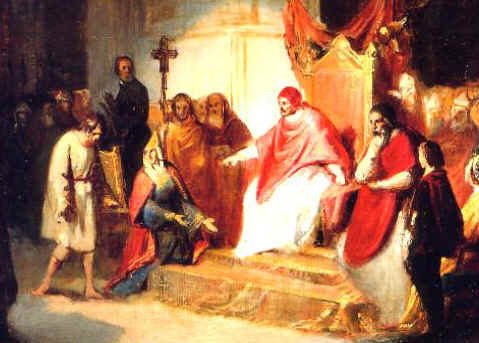
The conflict became most conspicuous in the late 11th century when the Holy Roman Emperor the emperor and his supporters clashed with reformers in Rome. The drama centered on Emperor Henry IV and Pope Gregory VII, whose dispute included mutual excommunications and public confrontations. Famous episodes include the emperor's journey to obtain the pope's forgiveness—commonly called the Walk to Canossa—and years of rebellion and warfare in the empire. The struggle triggered long civil conflicts, particularly within Germany, and involved magnates such as dukes and abbots who vied for autonomy and influence (great dukes and abbots played key roles).
Resolution and consequences
The conflict did not produce a single, instantaneous victory. Over decades of negotiation and intermittent fighting, a compromise gradually emerged that limited lay investiture of spiritual symbols while recognizing a role for rulers in temporal matters. This settlement reshaped the balance of power: the papacy strengthened its claims to church reform and moral authority, while territorial princes and secular elites gained greater independence from central imperial control. The outcome contributed to the development of distinct spheres of ecclesiastical and temporal authority across Europe.
Significance and legacy
The Investiture Controversy influenced medieval law, canon reform, and the growth of papal institutions. It clarified questions about clerical appointment, reduced secular interference in some ecclesiastical offices, and accelerated political decentralization in parts of the Holy Roman Empire. Scholars often view the controversy as a turning point in medieval church–state relations and a catalyst for later conflicts over sovereignty and jurisdiction.
Notable aspects and distinctions
- The controversy combined legal, spiritual, and military elements: excommunications, synods, royal decrees, and armed uprisings all played parts.
- It differed from later church–state disputes by focusing specifically on the ritual and legal control of appointments rather than on broader doctrinal questions.
- Although the immediate crisis centered on high offices, its ripple effects reached parish life, landholding, and the political map of Europe.
For further reading on related topics, consult introductions to medieval political history and the Gregorian reform movement at secular and religious powers and surveys of the Holy Roman Empire at the emperor and the reign of Henry IV. Additional resources on papal reform and Pope Gregory VII appear at Gregory VII and overviews of episcopal office and investiture at bishops and investiture. For regional consequences, see materials on medieval Germany and the political role of great dukes and abbots.
Questions and answers
Q: What was the Investiture Controversy?
A: The Investiture Controversy was a conflict between secular and religious powers in medieval Europe.
Q: Who were the main parties in the Investiture Controversy?
A: The main parties in the Investiture Controversy were Holy Roman Emperor Henry IV and Pope Gregory VII.
Q: What was the dispute in the Investiture Controversy?
A: The dispute in the Investiture Controversy was about who would control appointments of bishops (investiture).
Q: What were the consequences of the Investiture Controversy?
A: The Investiture Controversy led to many years of bitterness and nearly fifty years of civil war in Germany. It ended with the triumph of the great dukes and abbots, and the falling apart of the German empire in the end.
Q: When did the Investiture Controversy start?
A: The Investiture Controversy started in the 11th century.
Q: What was another name for the Investiture Controversy?
A: Another name for the Investiture Controversy was the lay investiture controversy.
Q: Why was the Investiture Controversy significant in medieval Europe?
A: The Investiture Controversy was significant in medieval Europe because it represented a struggle between secular and religious powers over control of appointments of bishops, which was a highly valued position of power and influence at the time.
Related articles
Author
AlegsaOnline.com Investiture Controversy: Medieval Conflict over Church Appointments Leandro Alegsa
URL: https://en.alegsaonline.com/art/47925