
Ichthyology: The Scientific Study of Fishes
Ichthyology is the branch of zoology concerned with fishes: their classification, anatomy, ecology, evolution, and importance to people and ecosystems.
Overview
Ichthyology is the scientific discipline that studies fishes, their biology and their relationships to other organisms and the environment. The word derives from Greek roots meaning fish and knowledge. Ichthyologists investigate living and fossil species, examine diversity of form and function, and address questions from basic systematics to applied problems such as fisheries management and conservation.
Image gallery
6 Images


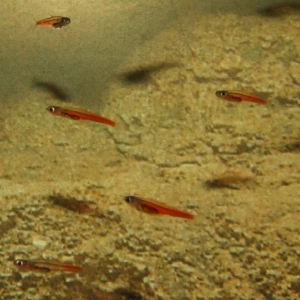

Major groups and classification
Modern ichthyology recognizes several broad groups of fishes. These include jawless fishes such as hagfish and lampreys, cartilaginous fishes such as sharks, skates and rays (collectively the Chondrichthyes), and the vast assemblage of bony fishes (Osteichthyes). Broad-scale classification is based on anatomy, development and increasingly on genetic data; ichthyologists work to describe species, resolve evolutionary relationships and update taxonomies as new evidence appears.
Methods and subfields
Research methods range from field sampling (nets, traps, remote cameras and sonar) to laboratory techniques (dissections, microscopy, physiology experiments and molecular sequencing). Subdisciplines include:
- Systematics and taxonomy — naming and classifying species.
- Morphology and anatomy — study of form and functional structures.
- Ecology and behavior — habitat use, feeding and life cycles.
- Physiology and developmental biology — growth, reproduction and environmental responses.
- Fisheries science and conservation — sustainable harvest, population assessments and protection of threatened species.
History and development
Observations of fishes date to ancient naturalists, but ichthyology became more systematic with the rise of modern taxonomy and comparative anatomy in the 18th and 19th centuries. Advances in diving, sampling gear, microscopy and molecular tools have expanded the field, revealing both vast diversity and many previously unknown species, especially in deep and tropical waters.
Importance and applications
Ichthyological knowledge underpins commercial and recreational fisheries, aquaculture, habitat restoration and biodiversity conservation. Studying fishes also provides insights into evolutionary processes, climate impacts on aquatic ecosystems, and the health of freshwater and marine environments that humans depend on for food, livelihood and recreation.
Notable aspects
Fishes display extraordinary diversity in shape, size, life histories and adaptations — from tiny reef species to large pelagic predators. Ichthyology intersects with paleontology, genetics and conservation policy, and practitioners range from academic researchers to fisheries biologists and environmental managers. For introductory resources and species guides see general overviews and field keys maintained by museums and research institutions (general fish resources).
Related articles
Author
AlegsaOnline.com Ichthyology: The Scientific Study of Fishes Leandro Alegsa
URL: https://en.alegsaonline.com/art/46472