
Hagfish: jawless marine craniates and their biology
Hagfish are eel-like, jawless marine craniates notable for a cartilaginous skull, slime defense, scavenging habits, and a debated position in vertebrate evolution.
Overview
Hagfish are elongated, eel-like marine animals placed in the class Myxini within the superclass Cyclostomata. They lack jaws and true paired fins and are often described as primitive among living craniates because they retain many ancestral traits. Although they possess a cartilaginous skull, hagfish do not have a well-developed vertebral column, a feature that has made their relationship to other vertebrates a long-standing subject of study and debate.
Image gallery
10 Images


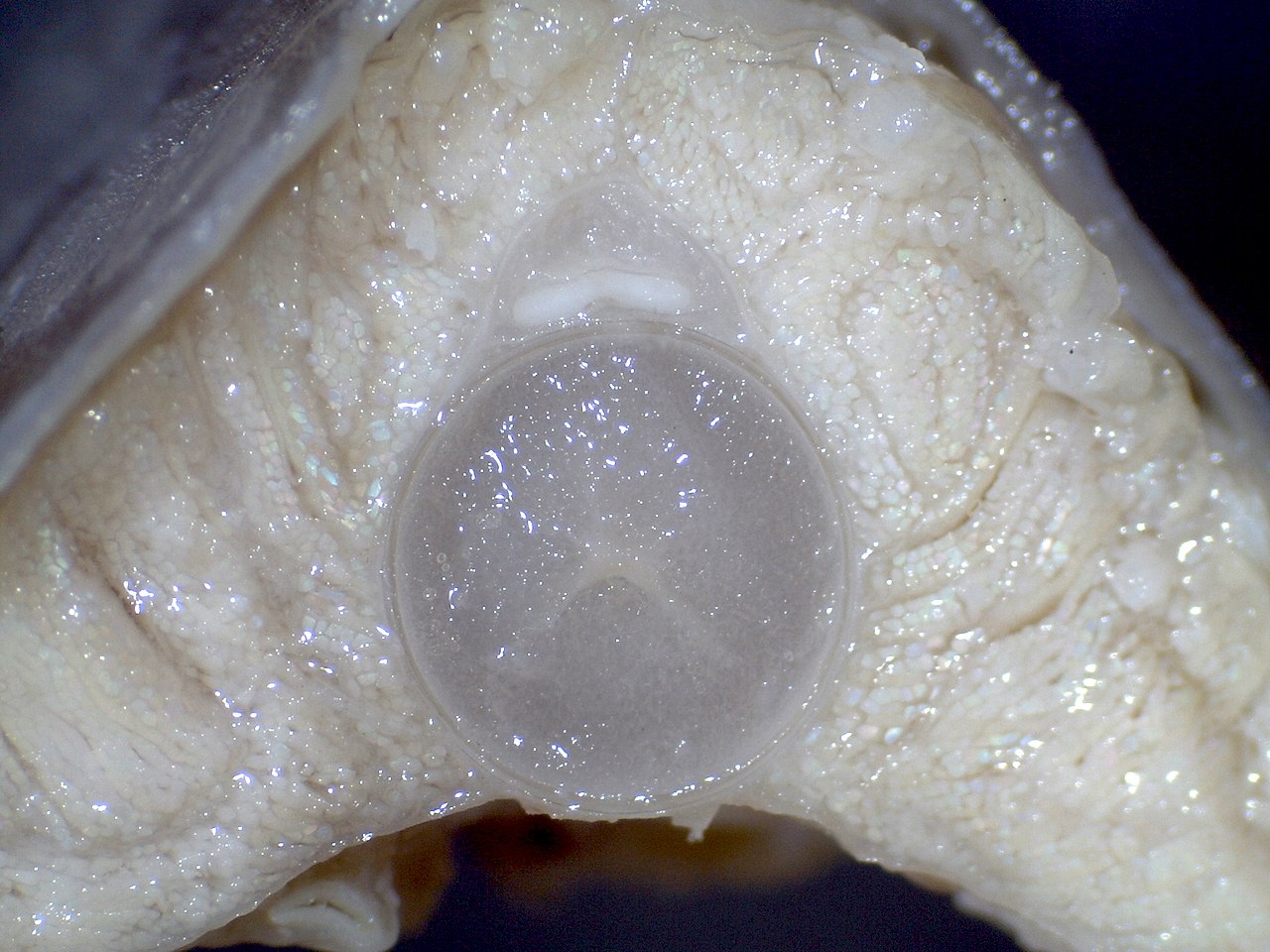


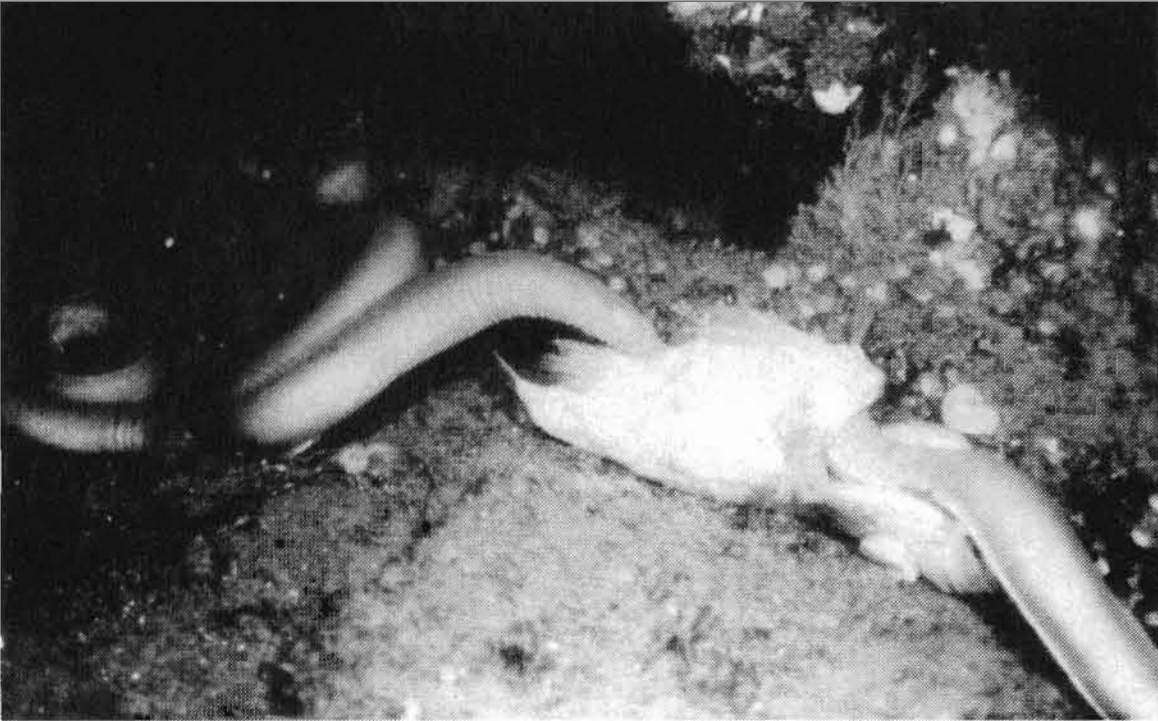
Physical characteristics
Hagfish show a distinctive combination of features that distinguish them from most fishes. Their head is supported by a cartilaginous braincase rather than bone, and much of the body is soft and flexible. Notable attributes include:
- Cartilaginous cranium and connective tissues supporting the head; the skull is largely cartilaginous rather than bony, which is discussed in classical texts on cranial anatomy (cartilage).
- Multiple gill pouches and a slime-producing integument; their gill structures and fin-like folds contribute to respiration and locomotion (gills and fins).
- Absence of jaws and a simple feeding apparatus with tooth-like rasps used for rasping flesh and scavenging.
- Size typically ranges from small to moderately long eel-like bodies in most species, adapted to benthic life on continental slopes and deeper shelves.
Behavior and ecology
Hagfish are primarily scavengers and opportunistic predators that feed on dead or dying animals on the sea floor. They are well known for their ability to produce large quantities of viscous slime from specialized glands along their flanks; this slime can clog the gills of predators and fishing gear, and it allows hagfish to escape tight spaces by tying themselves into knots and wiping away mucus. Many species are adapted to cold, deep-sea environments, and they play an important role in recycling organic matter on the ocean bottom.
Evolutionary significance and classification
The systematic position of hagfish has been debated for more than a century. In older classifications hagfish and lampreys were grouped together as cyclostomes (sometimes referred to historically by the collective term Agnatha), seen as the most basal living craniates alongside jawed vertebrates (gnathostomes). Because hagfish lack a true vertebral column, some researchers argued they should be excluded from the subphylum Vertebrata. More recent molecular and genetic studies generally support cyclostome monophyly, meaning hagfish and lampreys form a clade that is the sister group to jawed vertebrates.
Human interactions and scientific importance
Hagfish have had limited direct economic use, though their skin has occasionally been used as a leather substitute in some regions. They are scientifically valuable because they retain features considered primitive for craniates and thus provide insight into early vertebrate evolution, cranial development, and the origins of immune and sensory systems. Many aspects of hagfish reproduction and life history remain incompletely understood, which makes them an active subject for ongoing research in comparative anatomy, physiology, and molecular biology.
Notable facts and distinctions
Hagfish are unique among living craniates for their prodigious slime production, unusual feeding behavior (including entering carcasses through orifices), and their combination of a cartilaginous skull with an otherwise reduced axial skeleton. Their study illuminates the sequence of innovations that led from primitive jawless forms to the diversity of modern vertebrates and continues to inform debates about how to define the vertebrate body plan.
Skull reference • Cartilage overview • Vertebrata debate • Gill and fin structures • Agnatha history • Gnathostome comparison
Questions and answers
Q: What is the superclass that hagfish belong to?
A: Hagfish belong to the superclass Cyclostomata.
Q: Do hagfish have a skeleton?
A: Hagfish do not have a skeleton, except for a skull made of cartilage.
Q: Why do some researchers think that Myxini should not be in the subphylum Vertebrata?
A: Some researchers think that Myxini should not be in the subphylum Vertebrata due to the absence of a true skeleton.
Q: Why are hagfish considered to be fish?
A: Despite not having a true skeleton, hagfish are considered to be fish due to having fins and gills, and living in the sea.
Q: How were hagfish and lampreys grouped in the original 19th century classification?
A: Hagfish and lampreys were grouped together as cyclostomes (or historically, Agnatha), as the oldest surviving class of vertebrates alongside gnathostomes in the original 19th century classification.
Q: Was an alternative scheme proposed that excluded hagfish from the vertebrates group?
A: Yes, an alternative scheme proposed that jawed vertebrates are more closely related to lampreys than to hagfish, so vertebrates include lampreys but exclude hagfish.
Q: What does recent DNA evidence support regarding the grouping of hagfish and lampreys?
A: Recent DNA evidence supports the original scheme that groups hagfish and lampreys together as cyclostomes.
Related articles
Author
AlegsaOnline.com Hagfish: jawless marine craniates and their biology Leandro Alegsa
URL: https://en.alegsaonline.com/art/41753
Sources
- ui.adsabs.harvard.edu : 2010PNAS..10719137J
- doi.org : 10.1073/pnas.1014583107
- pnas.org : pnas.org/content/107/45/19379.abstract?ijkey=75045ff51201cdaf5e96614a55a17bc53075bb27&key…
- books.google.com : Endothelial biomedicine
- buzzle.com : "Hagfish Anatomy"
- nhc.ed.ac.uk : Modern Jawless Fish: Hagfish and Lampreys
- uri.edu : "Friends of Oceanography Public Lecture Series - Explores the strange, wondrous, and disgusting hagfish"
- ntnu.no : "Slimy, disgusting and useful"
- oceanexplorer.noaa.gov : "Disgusting hagfish and magnificent sharks"
- seasky.org : Sea and Sky: Atlantic Hagfish
- animaldiversity.ummz.umich.edu : "Eptatretus stoutii"
- snopes.com : "Eel for Real"
- news.discovery.com : "Hagfish Slime Makes Super-Clothes"