
Immortality: concepts, biology, culture, and technological approaches
Overview of immortality: definitions, natural examples, cultural and religious beliefs, scientific and technological efforts, ethical issues, and symbolic uses across traditions.
Immortality, often called eternal life, is the condition of living indefinitely without dying. As a concept it appears across philosophy, religion, literature and speculative science. In everyday use, immortality can mean absolute unending life, biological indefinite lifespan, or continuity of identity through nonbiological means. The term contrasts with mortality, the property of being subject to death, and different traditions and disciplines treat the idea in distinct ways.
Image gallery
5 Images


Natural and biological perspectives
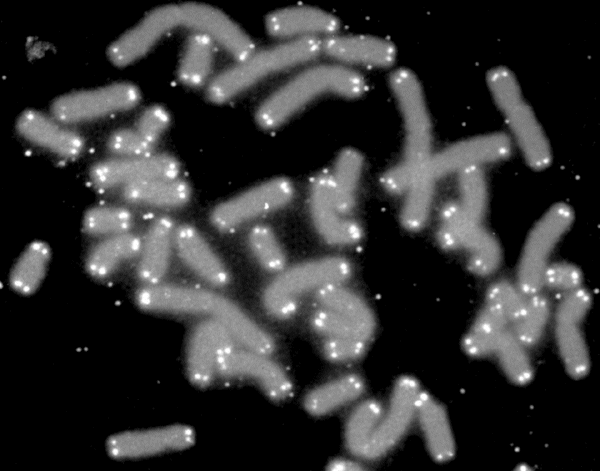
In biology, very few organisms display what is effectively negligible senescence or continuous regenerative ability. Certain simple life forms and cellular systems can resist the normal aging processes seen in most multicellular animals; for example, some microorganisms and clonal colonies can persist for long periods. Most research into aging focuses on extending healthy lifespan rather than achieving absolute immortality. Scientists also examine limits imposed by reproduction, disease, and accidental hazards when considering any extension of life.
Cultural, religious, and mythological views
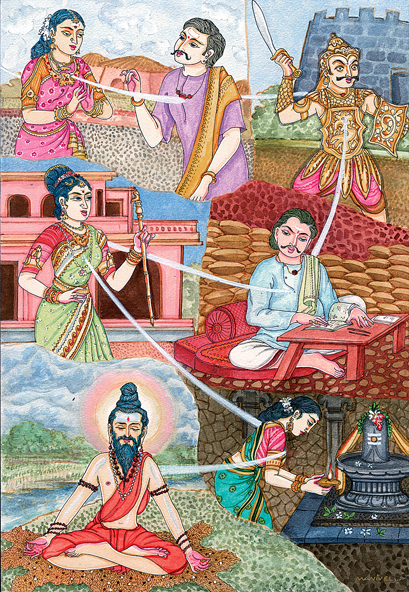
Ideas of immortality are central to many religions and mythologies. Some faiths posit an immortal soul and an afterlife, while other traditions describe gods, heroes, or mythical beings who do not die. Stories of perpetual youth, elixirs of life, and undying beings appear in folklore around the world and have shaped cultural attitudes toward death and the desire to transcend it. Philosophers and theologians debate whether an immortal personal identity is coherent and what moral implications it would carry.
Technological and speculative approaches
Contemporary discussions about achieving human immortality often separate near-term biomedical advances from more radical proposals. Anti-aging research, regenerative medicine, and organ replacement aim to extend healthy human life. More speculative ideas include mind uploading to digital systems, use of advanced robotics to house cognition, or extensive cybernetic augmentation to replace failing biological parts. Futurists and technologists vary in their expectations about feasibility and timelines for these possibilities, and some have proposed specific future milestones as part of broader hypotheses about accelerating technological change.
Challenges, distinctions, and ethical concerns
Even if biological aging could be slowed or stopped, other causes of death such as accidents, infection, or violence would remain unless addressed by broader social and technological measures. Ethical debates consider effects on population, resources, inequality, meaning in life, and legal status of long-lived persons. There are also philosophical questions about continuity of personal identity if consciousness is transferred to nonbiological substrates.
Symbols, notable facts, and related topics
Immortality has symbolic expressions in art and color: for example, the amaranth flower has been associated with undying memory in some Western iconography, while other cultures attribute longevity symbols of different colors and motifs. The topic spans many related areas of study and cultural reference.
- Mortality
- Bacteria and simple organisms
- Fictional depictions
- Mythology
- Religious perspectives
- Concepts of an immortal soul
- Beliefs about an afterlife
- Magic and science in historical searches for longevity
- Definitions of life
- Actuarial considerations
- Accident rates and external mortality risks
- Mind uploading hypotheses
- Supercomputing and cognitive simulation
- Virtual environments as continuations of identity
- Cyborg and prosthetic augmentation
- Designs for resilient or indestructible bodies
- Futurist discourse
- Ray Kurzweil and public figures
- Technological singularity debates
- Amaranth as symbol
- Symbolism in Western traditions
- Peach as longevity symbol
- Chinese cultural expressions
For readers seeking more detail, topics to explore include the biology of aging, philosophical theories of personal identity, the history of immortality motifs in art and literature, and contemporary ethical analyses of life extension technologies.
Questions and answers
Q: What is the opposite of immortality?
A: The opposite of immortality is mortality, which means a living thing can die.
Q: Are there any living things that are known to be immortal?
A: Yes, there are a small number of living things that are known to be immortal. These are mainly simple, lower forms of life like bacteria.
Q: Is it possible for people or animals to become immortal?
A: Not yet, although stories about immortal people or animals are popular in fiction and mythology.
Q: Do religions say people have an immortal soul with an afterlife?
A: Yes, many religions say people have an immortal soul with an afterlife.
Q: How long would the average life span be if everyone were physically immortal?
A: Insurance actuaries have calculated that even if everyone were physically immortal, the average life span would still only be 400 years because of the accident rate; eventually, everyone would die of a fatal accident and it would be very unusual to encounter anyone more than 800 years old.
Q: What color represents immortality in Western civilization?
A: The color amaranth represents immortality in Western civilization.
Q: What color represents immortality in Chinese civilization?
A: The color peach represents immortality in Chinese civilization.
Related articles
Author
AlegsaOnline.com Immortality: concepts, biology, culture, and technological approaches Leandro Alegsa
URL: https://en.alegsaonline.com/art/46849