
Osteichthyes — the bony fishes
Osteichthyes, or bony fishes, are the largest group of vertebrates, including ray‑finned and lobe‑finned fishes; they show diverse adaptations and have major ecological and human importance.
Overview
Osteichthyes, commonly called bony fishes, are a major group of fish distinguished primarily by a bony skeleton. They comprise two principal lineages: the Actinopterygii (ray‑finned fishes) and the Sarcopterygii (lobe‑finned fishes). Together they represent the most species‑rich clade of vertebrates, with well over 29,000 described species occupying marine, freshwater and some brackish habitats worldwide.
Image gallery
10 Images


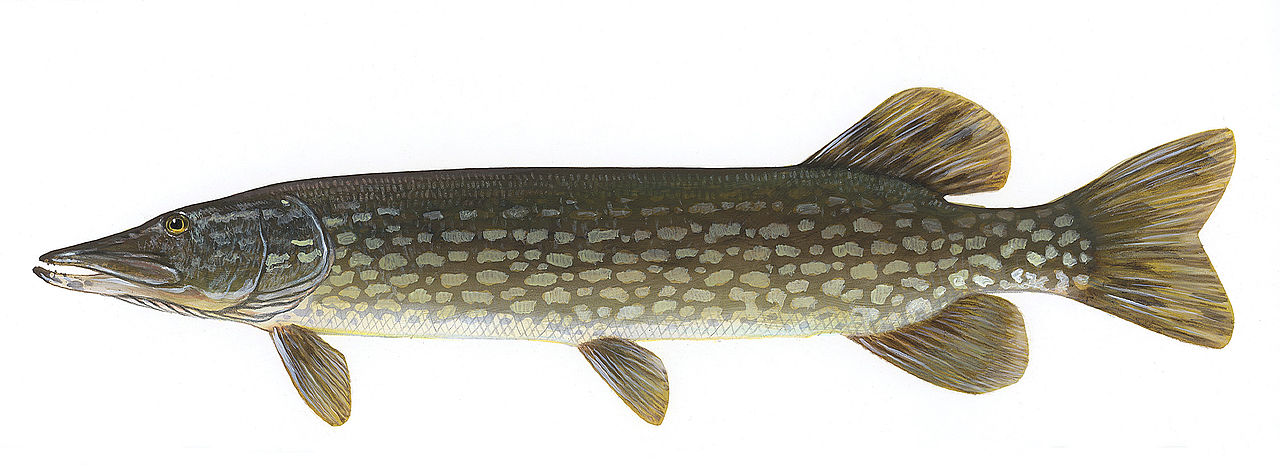


Key characteristics
Bony fishes share several anatomical features that set them apart from cartilaginous fishes (sharks and rays) and jawless fishes. Typical traits include a skeleton formed largely of bone rather than cartilage, gills covered by an operculum for protection, paired fins, and scales of various types. Many groups possess a swim bladder or lung‑like structure that aids buoyancy or respiration; in evolutionary terms the swim bladder and lungs are closely related.
- Skeleton: ossified bone supporting the body and fins.
- Fins: rays in Actinopterygii; fleshy lobed fins in Sarcopterygii.
- Respiration: gills with an operculum; swim bladder or lungs in some taxa.
- Scales: cycloid, ctenoid or ganoid types depending on lineage.
Evolution and historical context
Fossil and molecular evidence indicate that the split between ray‑finned and lobe‑finned fishes occurred hundreds of millions of years ago, during the early history of jawed vertebrates. The lobe‑finned fishes include the ancestors of terrestrial vertebrates; for that reason Osteichthyes are often described as paraphyletic with respect to land vertebrates. Modern classifications sometimes subsume the tetrapods within the bony‑fish assemblage to reflect evolutionary relationships, so that the group becomes monophyletic.
Importance, uses, and notable examples
Bony fishes are central to aquatic ecosystems as predators, prey and ecosystem engineers. They are vital to human societies through fisheries, aquaculture and recreation. Economically and scientifically important examples include salmon and tuna in commercial fisheries, goldfish and cichlids in aquarium trade, and model organisms such as the zebrafish used in biomedical research. Living survivors of ancient lineages, like coelacanths and lungfishes, provide insights into early vertebrate evolution.
Taxonomic notes and distinctions
Traditionally treated as a single superclass, Osteichthyes contrasts with groups like the cartilaginous Chondrichthyes and jawless Agnatha. The main taxonomic division—ray‑finned versus lobe‑finned—is useful for describing functional anatomy and evolutionary history. Contemporary phylogenetic systems emphasize common ancestry: including tetrapods among bony fishes makes the group reflect descent from a single common ancestor rather than excluding land vertebrates.
Further reading
For introductions and taxonomic overviews see resources on Osteichthyes and general summaries of fish diversity. For the two major clades consult material on Actinopterygii and Sarcopterygii. Discussions of phylogenetic implications and paraphyly are available in treatments addressing the relationship between fishes and land vertebrates, including the placement of tetrapods within broader vertebrate trees and considerations of why the traditional group is described as paraphyletic.
Related articles
Author
AlegsaOnline.com Osteichthyes — the bony fishes Leandro Alegsa
URL: https://en.alegsaonline.com/art/73419