
Ibis — long‑billed wading birds of the family Threskiornithidae
Ibis: long‑legged, down‑curved billed wading birds found worldwide in wetlands; social foragers, colonial nesters, and culturally significant in ancient societies.
Overview
The ibises are a group of long‑legged wading birds in the family Threskiornithidae. They are best known for their elongated, downward‑curving bills which they use to probe soft substrates for food. Most species live and feed in wetland environments such as marshes, mudflats, flooded fields and mangroves, and many are gregarious—moving and nesting in flocks or colonies.
Image gallery
10 Images



Characteristics
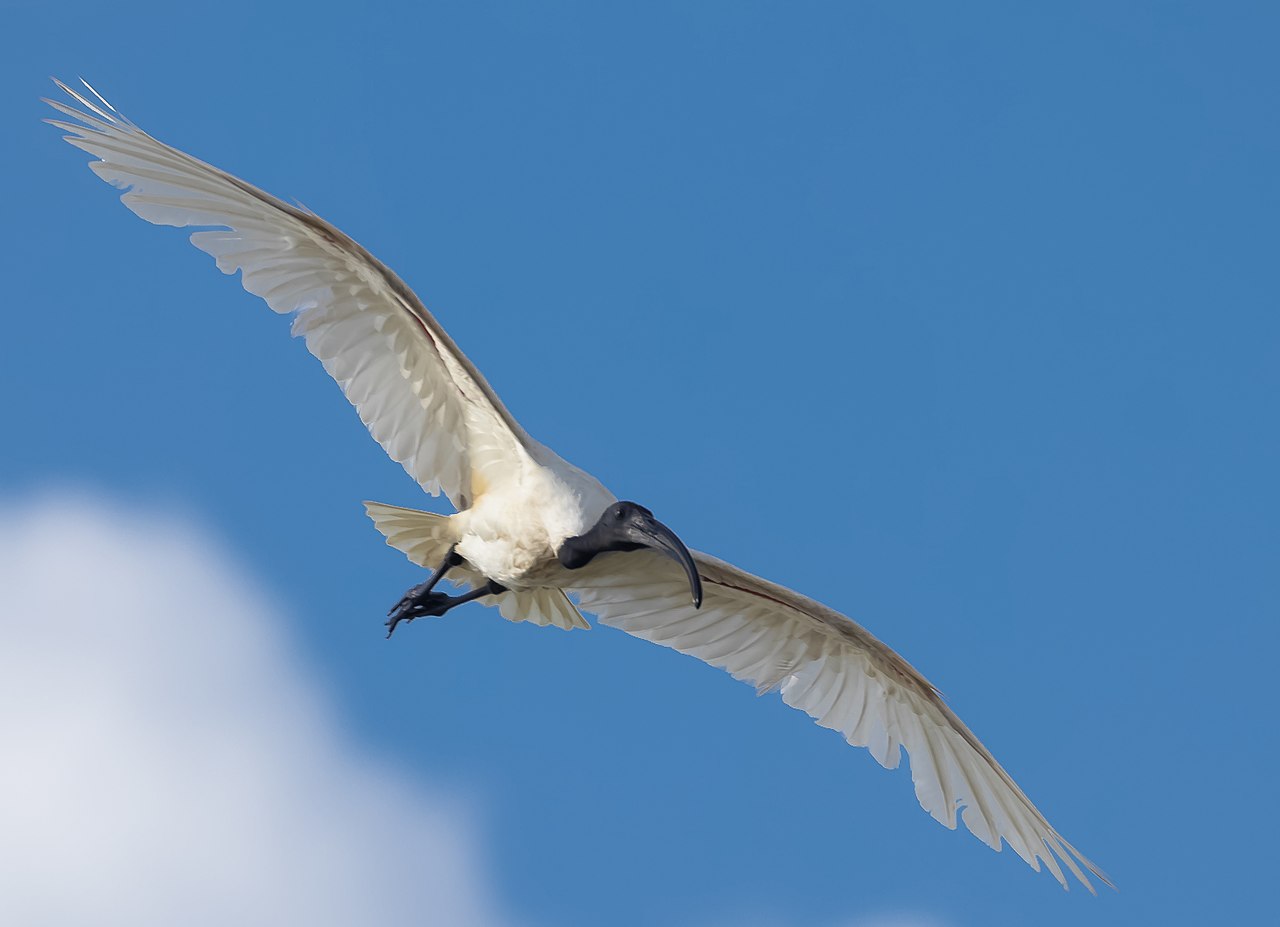
Typical ibis features include a slender body, relatively long neck and legs, and a long decurved bill. Plumage varies widely among species: some are predominantly white, others dark or glossy, and a few show bright colours on the plumage or bare facial skin. Their feeding technique is distinctive—ibises probe with their bills to find invertebrates, small fish, and crustaceans in mud and shallow water. Many species rely on tactile sensation while probing rather than seeing their prey directly.
Habitat, distribution and examples
Ibises occur on most continents, excluding only Antarctica. Different species occupy a range of wetland habitats from tropical mangroves to temperate marshes and urban parks with shallow water. Well‑known examples include the glossy ibis, the sacred or African ibis, the American white ibis and the scarlet ibis. Some species are highly mobile and may travel considerable distances in response to water availability.
Breeding and social behaviour
Most ibises nest in trees, shrubs or reedbeds, and many form mixed colonies with other wetland birds such as spoonbills and herons. Nests are typically simple platforms of sticks placed close together in colonies that can number from a few pairs to hundreds of pairs. Parental care is shared by both sexes in many species, and young are fed by regurgitation or by direct feeding at the nest.
Human interactions, history and cultural significance
Ibises have long been noticed by humans for their distinctive shape and habits. In ancient Egypt, one species became associated with religious symbolism and was sometimes mummified; classical authors also recorded beliefs and stories about ibises. The word "ibis" has roots in Greek and Latin and likely comes ultimately from Ancient Egyptian sources. Accounts from antiquity, such as those by Josephus and Pliny, reflect the bird's prominence in early human cultures.
Conservation and notable facts
Conservation status varies by species: some ibises are widespread and adaptable, while others face pressures from wetland drainage, pollution and habitat loss. In some regions introduced populations have become established outside their native range. Ecologically, ibises play roles as predators of aquatic invertebrates and as indicators of wetland health. Their colonial breeding and visible foraging behaviour also make them familiar subjects for birdwatchers and wetland studies.
Notable species (examples)
- Glossy ibis — a widespread, often nomadic species
- American white ibis — common in wetlands of the Americas
- Sacred (African) ibis — historically significant in Egypt
- Scarlet ibis — noted for its bright red plumage
Further reading and resources: Taxonomy and family overview, Feeding ecology and diet, Nesting associations with spoonbills and herons, Habitat and distribution maps, Etymology and linguistic history, Ancient sources mentioning ibises, Cultural importance in antiquity, Conservation status and management
Related articles
Author
AlegsaOnline.com Ibis — long‑billed wading birds of the family Threskiornithidae Leandro Alegsa
URL: https://en.alegsaonline.com/art/46373
Sources
- eurekalert.org : "Ancient Egyptians gathered birds from the wild for sacrifice and mummification"
- theguardian.com : "Experts crack mystery of ancient Egypt's sacred bird mummies"
- journals.plos.org : "Mitogenomic diversity in Sacred Ibis Mummies sheds light on early Egyptian practices"
- wikidata.org : Q193833
- species.wikimedia.org : Threskiornithinae
- fossilworks.org : 289766
- itis.gov : 823973
- nzor.org.nz : 4e42a125-9974-4f1c-b95a-13be18c43b27