
Iguana (genus Iguana)
Iguanas are large tropical lizards of the genus Iguana, native to the Americas and Caribbean. This article outlines their appearance, ecology, behavior, human interactions, and conservation status.
Overview
Iguanas are a group of large tropical lizards belonging to the genus Iguana. Native to parts of Central and South America and many Caribbean islands, they are best known through two closely related species: the common green iguana and the Lesser Antillean iguana. These reptiles occupy forested and coastal habitats and are adapted to a largely arboreal lifestyle.
Image gallery
10 Images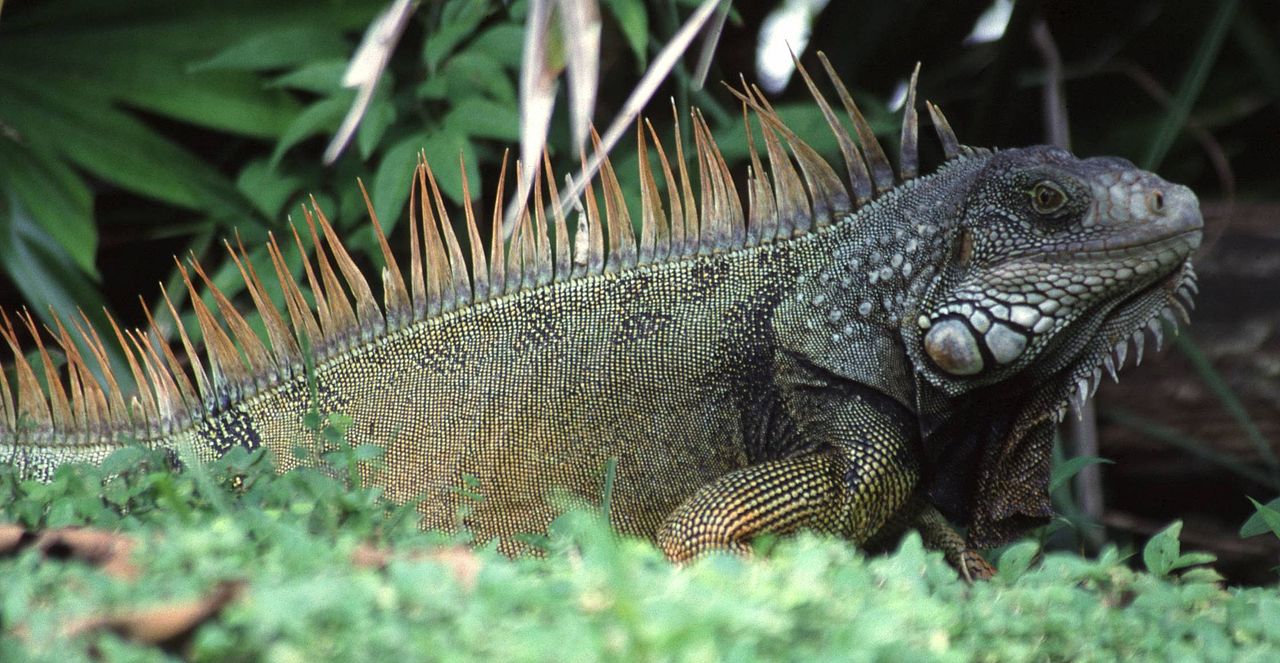


Description and characteristics
Physically, iguanas have robust bodies, long tails, and well-developed limbs. Many show a dewlap (a loose throat flap) and a row of dorsal spines. Color varies by species, age and sex: green tones are common, though some populations display browns, grays or bands. Their teeth and jaws are suited for a primarily plant-based diet, but juveniles may take insects. Iguanas are ectothermic and rely on basking to regulate body temperature.
Distribution, habitat and ecology
Natural ranges include tropical lowland forests, mangroves and islands in Central and South America and the Caribbean. The two recognized species differ in distribution: one is widespread on the mainland and many islands, while the other is restricted to parts of the Lesser Antilles. Iguanas are often associated with trees and water; many are competent swimmers and descend to the ground to feed, nest and bask.
Behavior, diet and reproduction
Iguanas are primarily herbivorous as adults, eating leaves, flowers and fruit, though diet can vary by season and site. They are diurnal and often bask in sunlight to warm up. Reproduction is seasonal in many areas: females dig nests in sandy or loose soil, lay clutches of eggs and abandon them to incubate. Young iguanas hatch fully formed and are independent at birth.
Human interactions and conservation
People keep iguanas as pets and use them as a food source in some regions. The popular pet trade and habitat loss have affected wild populations. The green iguana has also been introduced outside its native range, where it can become an invasive species, altering local ecosystems. Conservation concerns vary by species and location; some island populations face higher risks from habitat change, hunting and introduced predators.
Notable facts and distinctions
- Two widely referenced species are commonly discussed in field guides and conservation literature: the widespread green iguana and the Lesser Antillean iguana (species overview).
- Their presence across mainland and island habitats connects to regional ecology and human culture in Central (Central America) and South America (South America) and the Caribbean (Caribbean).
- General information about their biology and care appears in natural history sources and pet guides (tropical reptile resources).
For introductory identification and natural history, consult regional field guides and reputable conservation organizations. Further scientific detail is available through specialist literature and herpetological studies (lizard resources).
Questions and answers
Q: What is an Iguana?
A: Iguana is a kind of reptile that lives in tropical regions of Central and South America and the Caribbean.
Q: What are the two species of Iguana?
A: There are two types of Iguana: the Green Iguana and the Lesser Antillean Iguana.
Q: Where do Iguanas live?
A: Iguanas inhabit tropical areas of Central and South America and the Caribbean.
Q: Are Iguanas found in other parts of the world?
A: No, Iguanas are only found in tropical regions of Central and South America and the Caribbean.
Q: How many species of Iguana are there?
A: There are only two known species of Iguana.
Q: What are some characteristics of Iguanas?
A: Iguanas are reptiles with long tails, scaly skin, and sharp claws. They are herbivores and have a unique third eye used to detect movement.
Q: Are Iguanas dangerous to humans?
A: Green Iguanas are generally docile and not dangerous to humans, but Lesser Antillean Iguanas can be territorial and aggressive towards humans if threatened.
Related articles
Author
AlegsaOnline.com Iguana (genus Iguana) Leandro Alegsa
URL: https://en.alegsaonline.com/art/46637