
Ichthyornis: a toothed seabird of the Late Cretaceous
Ichthyornis, a seabird-like avian from the Upper Cretaceous, combined modern flight anatomy with primitive teeth and hunted fish in the Western Interior Seaway of ancient North America.
Overview
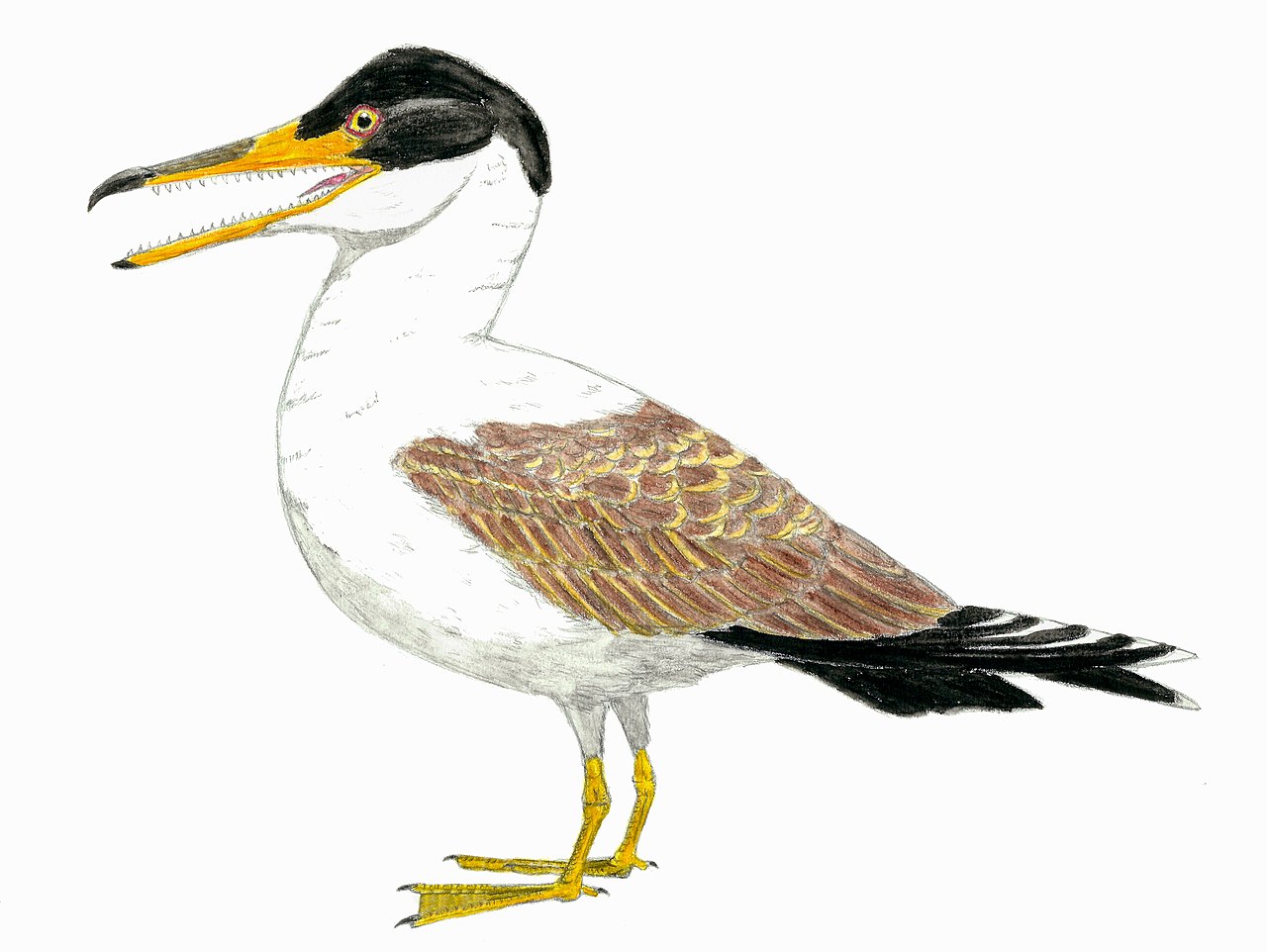
Ichthyornis (literally "fish bird") was a seabird-like avian that lived during the Upper Cretaceous, about 93–83.5 million years ago. It is often described as tern-like in appearance and habit, and is best known for combining advanced flight adaptations with a jaw lined with teeth. Fossils indicate it fed primarily on fish and other small marine prey.
Image gallery
10 Images




Anatomy and scientific importance
Ichthyornis shows a mixture of features now called mosaic evolution: a well-developed flight skeleton similar to modern birds alongside primitive characteristics such as teeth set in the jaws. It possessed a keeled sternum and wing bones adapted for powered flight, but retained toothed mandibles, which made it a crucial taxon in understanding how modern birds evolved. Paleontologists use Ichthyornis to illustrate that some modern avian traits appeared before the complete loss of teeth.
Discovery, age, and distribution
Specimens of Ichthyornis were first described in the 19th century and have been recovered from Late Cretaceous marine deposits. Many well-preserved fossils come from formations associated with the ancient Western Interior Seaway, a vast inland sea that inundated parts of what is now North America. The time and place of these deposits place Ichthyornis firmly in the Upper Cretaceous period, where it shared ecosystems with other marine reptiles, fishes, and early birds. For broader geological context see the Upper Cretaceous rock record.
Ecology and behavior
Evidence from fossil sites and comparison with modern seabirds suggests Ichthyornis nested on shorelines or islands and foraged in flocks. Its fish-eating diet and wing morphology imply active pursuit and plunge-diving or surface-skimming for prey. Like many coastal birds today, social behavior and colony nesting are likely but remain interpretations based on ecological analogy rather than direct observation.
Notable facts and distinctions
- Ichthyornis is one of the best-known examples of an avialan that retained teeth while showing modern flight anatomy.
- Its fossils helped 19th- and 20th-century scientists link birds to theropod dinosaurs and reconstruct steps in avian evolution.
- Despite its toothed beak, many aspects of its skeleton indicate efficient, sustained flight comparable to some modern seabirds.
As a recognizable transitional form, Ichthyornis continues to be cited in discussions of how complex avian features—such as a keeled breastbone, wing structure, and beak morphology—evolved in stages rather than all at once.
For further reading on regional fossils and comparisons with modern seabirds, consult resources linked to paleontological summaries and regional stratigraphy: tern-like birds, Upper Cretaceous context, diet studies, Western Interior Seaway, inland seas, and North American fossil records.
Questions and answers
Q: What does the name "Ichthyornis" mean?
A: "Ichthyornis" means "fish bird".
Q: During which period did the Ichthyornis live?
A: The Ichthyornis lived during the Upper Cretaceous period.
Q: How did the Ichthyornis live?
A: The Ichthyornis lived in flocks, nested on shorelines, and hunted for fish in the Western Interior Seaway.
Q: Where did the Ichthyornis hunt for fish?
A: The Ichthyornis hunted for fish in the Western Interior Seaway, a large inland sea which is now part of North America.
Q: What kind of bird is the Ichthyornis?
A: The Ichthyornis is a tern-like bird.
Q: When did the Ichthyornis live and when did it go extinct?
A: The Ichthyornis lived from 93 to 83.5 million years ago during the Upper Cretaceous period.
Q: What was the habitat of the Ichthyornis?
A: The Ichthyornis lived on shorelines and hunted for fish in the Western Interior Seaway, a huge inland sea in what is now North America.
Related articles
Author
AlegsaOnline.com Ichthyornis: a toothed seabird of the Late Cretaceous Leandro Alegsa
URL: https://en.alegsaonline.com/art/46475