
Pliny the Elder (Gaius Plinius Secundus)
Roman naturalist, author of the encyclopedia Naturalis Historia, and military officer. Overview of his life, major work, methods, death at Vesuvius and lasting influence.
Gaius Plinius Secundus (23 AD–25 August 79 AD), commonly known as Pliny the Elder, was a prominent Roman scholar, military officer and compiler of knowledge. He combined practical service in the navy and army with a lifelong interest in natural phenomena and the written traditions of earlier authors. Best known for his encyclopedic Naturalis Historia, Pliny shaped how later generations organized information about the natural world.
Image gallery
10 Images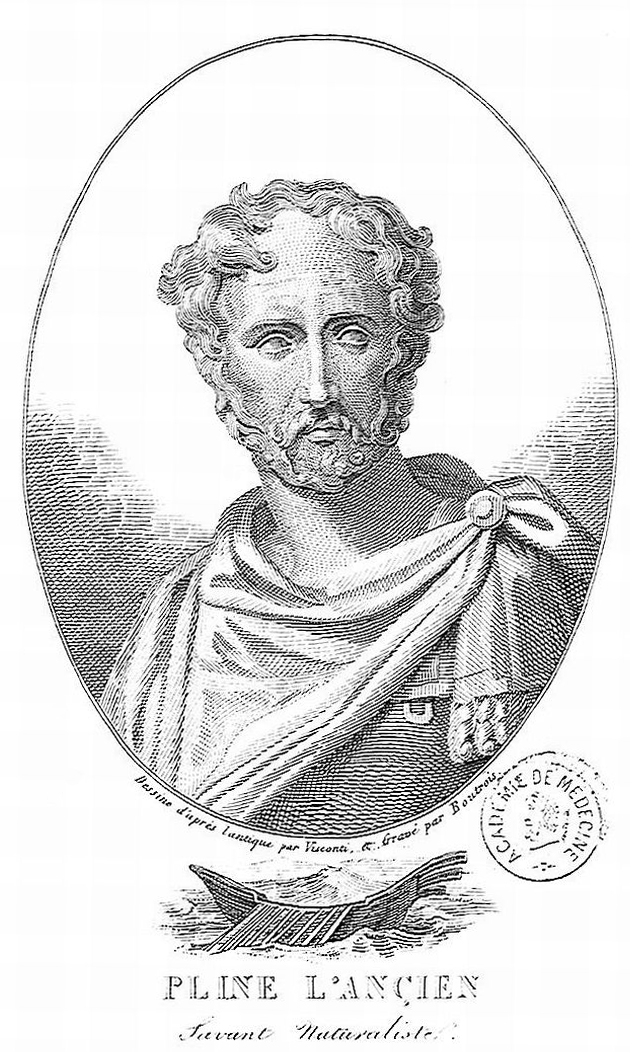




Life and career
Pliny's public life involved administrative and military duties in the early Roman Empire. Contemporary accounts indicate he was well-connected at the imperial court and a personal friend of the emperor Vespasian. His nephew, Pliny the Younger, preserved important letters that describe aspects of his uncle's character and the circumstances of his death. Outside official service, Pliny spent much of his time traveling, observing, reading, and taking notes from a broad range of written sources and eyewitness testimony.
Natural History (Naturalis Historia)
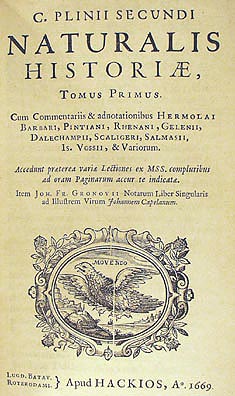
Pliny's Naturalis Historia is a sprawling reference work organized into 37 books. It attempts to summarize the accumulated knowledge of the classical world across many fields. Topics range from cosmology, geography and human diversity to animals, plants, medicines, agriculture, minerals and the arts. Rather than presenting a tightly argued scientific treatise, Pliny compiled excerpts and reports from dozens of earlier writers and from reports brought by travelers, merchants and soldiers.
- Books 1–6: the heavens, geography and anthropology
- Books 7–11: zoology and human anatomy
- Books 12–19: botany and medicinal plants
- Books 20–32: agriculture, farming and remedies
- Books 33–37: minerals, gems, pigments and art techniques
Method and sources
Pliny explicitly acknowledged his debts to earlier authors, and his method is largely that of a compiler. He cited or paraphrased a wide range of Greek and Roman authorities, as well as practical informants. His work preserves fragments of many otherwise lost texts. Modern readers note that Pliny mixed empirical observation with secondhand reports and myth; he sometimes evaluated stories critically, but he also transmitted popular beliefs of his era without stringent verification.
Death at Vesuvius
Pliny died on 25 August 79 AD while attempting to assist people threatened by the eruption of Mount Vesuvius. Contemporary testimony indicates he sailed from the shore to the area of Stabiae hoping to mount a rescue; the eruption at that time had already devastated Pompeii and Herculaneum. Accounts from his nephew suggest Pliny succumbed to the effects of the eruption—likely toxic gases, ash or fumes—rather than by direct physical injury, although precise details remain uncertain.
Legacy and influence
Pliny's Naturalis Historia became a standard reference through late antiquity, the Middle Ages and the Renaissance. Its organization and breadth influenced later encyclopedias and natural histories. Scholars value the work both for its substance and for the survivals of quotations from earlier writers. In modern history of science and classical studies, Pliny is read as an important transmitter of ancient knowledge and as an example of early attempts to collect and systematize information about the natural world.
For further reading on Pliny's life and the contents of his encyclopedia, see editions and commentaries that discuss his sources, editorial practice and the reception of his work in later cultures. Modern studies also revisit his methods to separate firsthand observation from received lore, and to understand how his text functioned as a practical handbook as well as a storehouse of classical learning.
Roman context • Authorial practice • Early Empire administration • Vespasian and his circle • Vesuvius eruption • Pompeii • Herculaneum
Questions and answers
Q: Who was Pliny the Elder?
A: He was a Roman author, naturalist, and natural philosopher, as well as a naval and army commander of the early Roman Empire, and personal friend of the emperor Vespasian.
Q: What did Pliny the Elder do in his spare time?
A: He spent most of his spare time studying, writing, or investigating natural and geographic phenomena in the field.
Q: What was Pliny the Elder's most well-known work?
A: His most well-known work was a encyclopedic work titled Natural History ("Naturalis Historia").
Q: What did Natural History become a model for?
A: It became a model for many subsequent encyclopedic texts.
Q: When did Pliny the Elder die?
A: He died on 25 August 79 AD.
Q: How did Pliny the Elder die?
A: He died attempting the rescue by ship of a friend and his family from the eruption of Mount Vesuvius, which had just destroyed the cities of Pompeii and Herculaneum.
Q: Who was Pliny the Elder's personal friend?
A: He was a personal friend of the emperor Vespasian.
Author
AlegsaOnline.com Pliny the Elder (Gaius Plinius Secundus) Leandro Alegsa
URL: https://en.alegsaonline.com/art/128811