
Ichthyophiidae — Asiatic tailed caecilians
Ichthyophiidae: a family of primitive, egg-laying, burrowing caecilians of South and Southeast Asia, with a distinct tail, external larval stage and dermal scales; Ichthyophis is the best-known genus.
Overview
Ichthyophiidae, commonly called Asiatic tailed caecilians or fish caecilians, are a family of limbless amphibians native to South and Southeast Asia. They belong to the order Gymnophiona (caecilians) and are often regarded as retaining many ancestral or "primitive" traits compared with other extant caecilian families. Most ichthyophiids are fossorial, spending much of their lives buried in soil or hidden under leaf litter, emerging mainly to breed or after heavy rains.
Image gallery
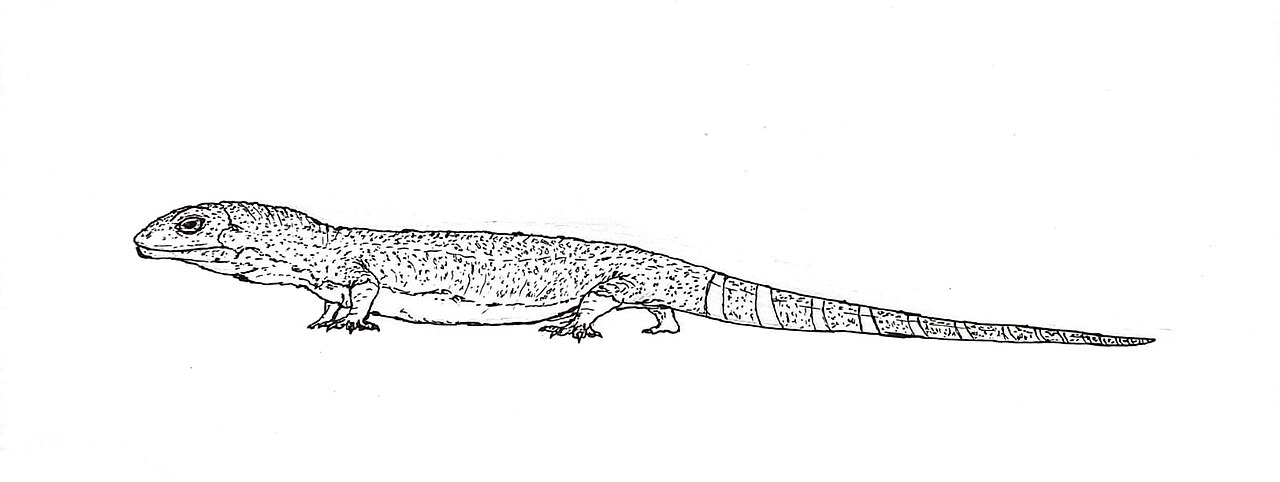
6 Images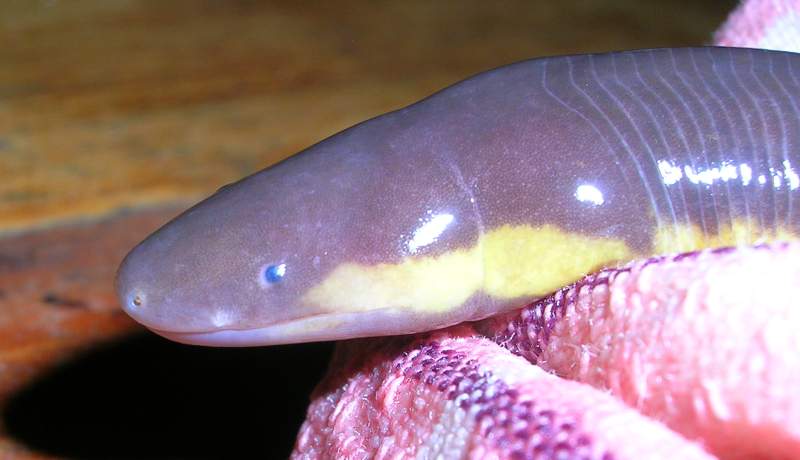



Morphology and distinguishing features
Ichthyophiids are elongated and cylindrical with smooth, segmented skin marked by annular grooves. Unlike many more derived caecilians, members of this family retain a distinct tail at the posterior end and show a less deeply recessed mouth. Their bodies commonly bear numerous small dermal scales set within the annular grooves, and their eyes are small and often covered by skin or bone, reflecting a reduced reliance on vision.
One notable anatomical feature is the musculature associated with the jaw: there are two sets of muscles used for closing the jaw, a condition present in most caecilians but with differences among families. This jaw muscle pattern contrasts with some related groups such as the family Rhinatrematidae, which lack the same arrangement in certain respects.
Sensory adaptations and locomotion
As burrowing animals, ichthyophiids rely heavily on tactile and chemical cues. They possess a pair of tentacular openings on the head — a sensory organ unique to caecilians — which aid in detecting prey and navigating subterranean environments. Locomotion is accomplished by muscular undulation and contraction against the surrounding substrate; some species are also capable of aquatic swimming during their larval stages.
Reproduction, development and parental care
Ichthyophiids are oviparous: females deposit eggs in concealed, moist sites such as small burrows, cavities under logs or in damp soil. In many species the eggs hatch into aquatic or semi-aquatic larvae, which develop in streams, seepages or slow-moving water before metamorphosing into terrestrial juveniles. The presence of a free-living larval stage contrasts with viviparous or direct-developing strategies found in other caecilian families.
Parental care has been reported or suggested for several species. Females may remain with egg clutches and guard them until hatching, and there are anecdotal observations of maternal behaviors that reduce predation or desiccation risk. The extent and form of care vary among species and are the subject of ongoing study.
Diet and ecology
Ichthyophiids are carnivorous, feeding on soil-dwelling invertebrates such as earthworms, termites, ants and various arthropods. Their feeding habits can influence soil invertebrate populations and contribute to nutrient cycling in forest and agricultural soils. Predators of ichthyophiids include larger vertebrates capable of digging or catching them when they surface; however, many aspects of their ecological interactions remain poorly documented due to their secretive habits.
Distribution and habitat
Species of Ichthyophiidae are known from a wide region of South and Southeast Asia, including parts of India, Sri Lanka, Myanmar, Thailand, Malaysia and the Indonesian archipelago, and extend to nearby islands where suitable habitat occurs. They inhabit moist tropical and subtropical forests, riparian zones, and altered landscapes that retain adequate soil moisture. Typical requirements are soft, humid soils or leaf litter for burrowing and nearby water for larval development.
Taxonomy and evolutionary significance
Ichthyophiidae is considered to retain several ancestral characters among caecilians, such as an external larval stage and a true tail. The genus Ichthyophis is the best-known representative of the family. Because the fossil record for caecilians is limited, interpretations of their early evolution rely on comparative anatomy and molecular phylogenetic studies. For a general introduction to caecilians and their broader relationships see the order overview Caecilians (order Gymnophiona).
Conservation and research needs
Many ichthyophiid species are poorly known and may be under-recorded because of their secretive, subterranean lifestyle. Threats include habitat loss from deforestation and agriculture, pollution and alteration of stream systems that sustain larvae. They may also be sensitive to changes in soil moisture and quality. Conservation assessments for numerous species are incomplete, and better field surveys, life history studies and monitoring are needed to inform conservation actions.
Human interactions and cultural notes
Because ichthyophiids are seldom seen, human encounters are infrequent. They are sometimes mistaken for snakes or eels when encountered on the surface. In some local communities caecilians feature in folklore or traditional knowledge, but they are not widely used or collected compared with more conspicuous amphibians. Increased public awareness and targeted research can help improve understanding and protection of these little-known amphibians.
Further reading and resources
Readers seeking taxonomic lists, species accounts or the latest research should consult specialized herpetological literature and databases maintained by research institutions and conservation organizations. The family is an active subject of taxonomic revision and ecological study, and names or species limits may change as new work appears.
Questions and answers
Q: What is Ichthyophiidae?
A: Ichthyophiidae is the family of Asiatic tailed caecilians or fish caecilians found in southeast Asia.
Q: What are some unique features of Ichthyophiidae?
A: Some unique features of Ichthyophiidae include the absence of the mouth being back underneath the head, having tails, and many scales on their body. They also have two sets of muscles for closing the jaw, which is a feature unique to caecilians.
Q: Where do Ichthyophiidae lay their eggs?
A: Ichthyophiidae lays their eggs in small holes in moist soil.
Q: What happens to the eggs of Ichthyophiidae?
A: The eggs of Ichthyophiidae hatch into larvae.
Q: Where do Ichthyophiidae live?
A: Ichthyophiidae live in streams or underground seepages.
Q: Do the females of Ichthyophiidae protect their eggs?
A: There is some evidence suggesting that female Ichthyophiidae may protect their eggs until they hatch.
Q: How do Ichthyophiidae develop into adults?
A: After hatching into larvae, Ichthyophiidae develop into adults.
Related articles
Author
AlegsaOnline.com Ichthyophiidae — Asiatic tailed caecilians Leandro Alegsa
URL: https://en.alegsaonline.com/art/46473
Sources
- doi.org : 10.1016/j.ympev.2004.05.014
- pubmed.ncbi.nlm.nih.gov : 15336675
- sysbio.oxfordjournals.org : "Experimental design in caecilian systematics: phylogenetic information of mitochondrial genomes and nuclear rag1"
- doi.org : 10.1093/sysbio/syp043
- pubmed.ncbi.nlm.nih.gov : 20525595
- research.amnh.org : research.amnh.org/herpetology/amphibia/index.php
- amphibiaweb.org : amphibiaweb.org/