
Hydrazone: structure, synthesis, reactions and applications
Hydrazones are organic compounds with the general formula R1R2C=NNH2, formed from hydrazines and carbonyls. This article covers structure, preparation, key reactions (Wolff–Kishner, Fischer indole) and uses.
Hydrazones are a class of organic compounds derived from carbonyl compounds in which the carbon–oxygen double bond of an aldehyde or ketone is replaced by a carbon–nitrogen double bond to a hydrazine fragment. The general formula is R1R2C=NNH2. Chemically they are related to imines and oximes and can act as useful intermediates in synthesis. For a schematic representation see the hydrazone functional group.

Image gallery
3 Images

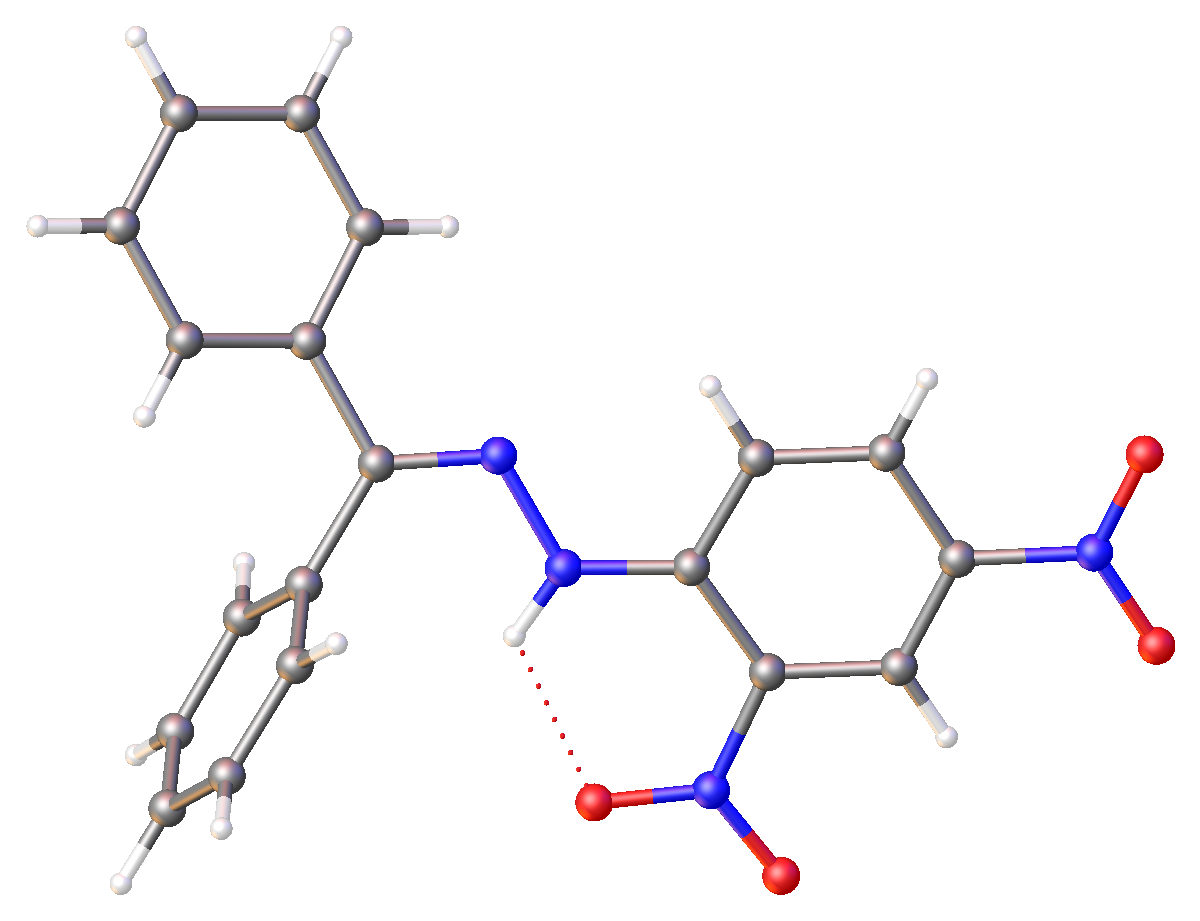
Structure and properties
A hydrazone contains a C=N–NH2 motif; the C=N bond can show geometric (E/Z) isomerism and the NH2 portion can be protonated or substituted. Compared with the parent aldehydes and ketones, the oxygen atom is replaced by a nitrogen-containing unit, which alters polarity, basicity and reactivity relative to the original carbonyl oxygen analogue. Many hydrazones are isolable solids or liquids and their stability depends on substitution and conjugation.
Formation (synthesis)
Hydrazones form by condensation of a carbonyl compound with a hydrazine or a substituted hydrazine. In practice a ketone or aldehyde is treated with a hydrazine reagent — often with removal of water — to give the C=NNH2 linkage. Typical starting reagents are the carbonyl partner and a simple hydrazine or a substituted hydrazine; broader descriptions of the class of starting carbonyls can be found under carbonyl compounds. Formation is generally reversible and can be driven to completion by removing water or by using an acid catalyst.
Reactions and synthetic uses
Hydrazones serve as versatile intermediates in organic chemistry. One well known transformation is the Wolff–Kishner reduction, in which a hydrazone is converted to the corresponding alkane, effectively removing the oxygen and fully reducing a carbonyl; this method can be used to reduce a ketone to a methylene group after formation of the hydrazone and subsequent treatment with base and heat. Hydrazones also participate in the Fischer indole synthesis, a route to indoles that are central scaffolds in many bioactive molecules. Other reactions include hydrolysis back to the carbonyl, reductive transformations, and use in umpolung chemistry when converted to diazo or carbanion equivalents.
Applications and importance
Because of their ease of preparation and versatile reactivity, hydrazones are important in laboratory and industrial synthesis. They appear as intermediates in drug and natural product syntheses and are used in structure elucidation and derivatization techniques. For example, converting a carbonyl to a hydrazone can facilitate separation or identification, and subsequent reduction or rearrangement can introduce new functionality relevant to pharmaceutical targets. Hydrazone chemistry also finds use in materials science and as linkages in reversible conjugation strategies.
Distinctions and practical notes
- Hydrazones differ from oximes (R1R2C=NOH) by replacement of the oxygen-containing group with NNH2.
- They can be formed from a variety of substituted hydrazines to tune properties and reactivity.
- Some hydrazones are sensitive to strong acids or oxidants and can be converted to diazo compounds under appropriate conditions, enabling further transformations such as metal-catalyzed insertions or cyclopropanations.
- For practical laboratory procedures and safety information see standard method references and reagent guides available online at reduction and preparation resources and specialized summaries at related functional group pages.
Overall, hydrazones represent a small structural change from aldehydes and ketones that opens a wide array of synthetic possibilities. For broader context and related topics consult introductory texts and reviews on nitrogen-containing functional groups and carbonyl chemistry, or specialist pages on aldehydes, ketones and hydrazine derivatives.
Additional reading and practical examples can be found at general chemistry resources and synthetic-method collections indexed under functional group guides, carbonyl reaction lists and focused articles on the Wolff–Kishner and Fischer indole transformations.
Related articles
Author
AlegsaOnline.com Hydrazone: structure, synthesis, reactions and applications Leandro Alegsa
URL: https://en.alegsaonline.com/art/46080