
Hydrofluoric acid (HF)
Hydrofluoric acid is an aqueous solution of hydrogen fluoride. It is chemically HF, used in industry for etching, fluorochemical manufacture, and petroleum processing, and is uniquely hazardous to humans and materials.
Overview
Hydrofluoric acid is the common name for an aqueous solution of the gas hydrogen fluoride. Chemically represented as HF, the material is not only a strong corrosive liquid but also a source of fluoride ions when dissociated in water. In contrast with many mineral acids, hydrofluoric acid has distinct chemical behavior and unusual hazards that require specialized handling and emergency procedures. For more on the parent gas, see hydrogen fluoride and for the solvent, see water.
Image gallery
3 Images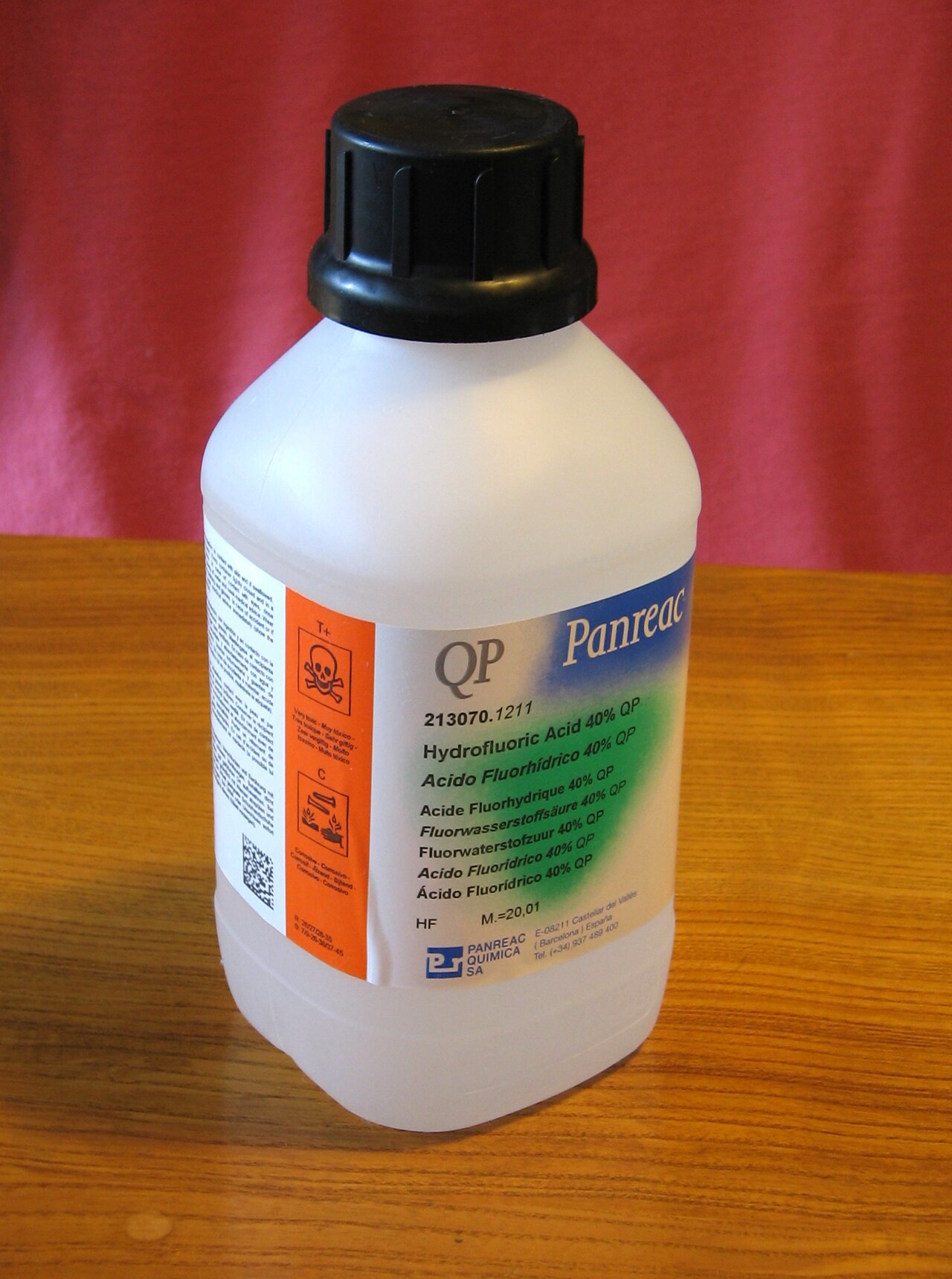


Chemical properties and reactions
HF is a weak acid in the Brønsted sense compared with other hydrogen halides, due to strong hydrogen bonding between molecules in solution. Despite that, the acid is highly reactive toward oxides and silicates. It attacks glass and silicate-containing materials, converting silica into fluorosilicate compounds; this etching process is used intentionally in glass finishing and produces species related to hexafluorosilicic acid while destroying the structural silica of the glass (glass etching). When HF donates a proton it generates fluoride ions, which form a wide variety of fluoride compounds and salts (fluoride salts).
Production and industrial uses
Industrial manufacture typically starts from the mineral fluorite (also called fluorspar): reacting fluorite with hot sulfuric acid releases hydrogen fluoride gas, which is then absorbed in water to make hydrofluoric acid. The acid is a key feedstock in the production of organofluorine chemicals and fluoropolymers such as PTFE (Teflon), refrigerants historically marketed as freon, and many other specialty fluorochemicals. It also serves as a catalyst or reagent in petroleum refining and alkylation processes (petroleum processing), in metal cleaning and surface preparation, and in the controlled etching or frosting of glass.
Hazards and medical considerations
Hydrofluoric acid is uniquely dangerous. It injures tissue like other strong acids but also produces systemic toxicity because fluoride ions bind divalent cations in the body, most importantly calcium and magnesium. This sequestration of physiological ions can lead to painful deep tissue damage, delayed burn symptoms, and potentially life‑threatening disturbances of cardiac rhythm if absorption is sufficient.
First aid and treatment
Any exposure to hydrofluoric acid requires urgent medical attention. Basic first aid measures include immediate and prolonged flushing with water, removal of contaminated clothing, and rapid referral to emergency care. For skin exposures, specialized topical on‑site treatments such as calcium-containing gels are used to neutralize fluoride ions; medical personnel may administer supplemental calcium and monitor electrolytes and cardiac function. Eye exposures and inhalation of fumes are medical emergencies. See guidance on neutralization and decontamination procedures (deprotonation and neutralization) and on medical management for exposures to fluoride compounds.
Handling, safety, and notable distinctions
Because HF attacks glass and many metals, it is stored and handled in compatible plastics or specialty alloys. Personal protective equipment, engineering controls, and emergency response planning are essential in workplaces that use HF. Hydrofluoric acid differs from other mineral acids in being both a weak acid in solution and a potent source of highly reactive fluoride ions; these features explain why it is both industrially valuable and unusually hazardous. For broader context on the chemistry and related materials, consult industry and safety references on fluoride chemistry and the manufacture of fluorinated products (fluoride salts, hexafluorosilicic acid, refrigerants, and air conditioning applications).
- Typical industrial applications: etching and glass treatment, fluorochemical synthesis, petroleum alkylation, metal cleaning.
- Production note: derived from fluorite + sulfuric acid, HF gas absorbed into water.
- Medical hazard: fluoride ion binding to calcium and other ions can cause systemic toxicity.
For detailed procedures, regulatory obligations, and emergency protocols, consult authoritative chemical safety resources and material safety data sheets maintained by manufacturers and occupational safety agencies (HF properties, industrial uses, first aid).
Related articles
Author
AlegsaOnline.com Hydrofluoric acid (HF) Leandro Alegsa
URL: https://en.alegsaonline.com/art/46088
Sources
- doi.org : 10.1063/1.2090259
- pubmed.ncbi.nlm.nih.gov : 16292908