
Hydration (chemical hydrates)
Hydration in chemistry is the incorporation of water molecules into a compound’s structure, producing hydrates with physical and chemical properties often distinct from the anhydrous form.
Overview
In chemistry, hydration describes the association of water molecules with another substance, producing a hydrate. The water involved is often called "water of crystallization" when it is incorporated into a solid crystal lattice. Hydration can change a material’s color, state, solubility and reactivity compared with its anhydrous counterpart. The term applies widely in inorganic salts, coordination compounds and some organic systems. For a general definition see water molecule and for context on participating materials see chemical substance.

Image gallery
7 Images


How hydrates form and their structure
Hydrates form when water molecules coordinate to ions or occupy fixed positions in a crystal lattice. In many ionic salts the water is bound by hydrogen bonding or coordinate bonds to metal centers, and these waters can be integral to the solid’s crystal packing. The number of bound water molecules per formula unit is called the hydration number; it is often reflected in a compound’s name (for example, pentahydrate indicates five waters). Hydration may be reversible: heating or drying can remove the waters (dehydration), and exposure to moisture can restore them (rehydration).
Naming conventions and common prefixes
Hydrates are frequently written using a centered dot: the formula CuSO4·5H2O denotes copper(II) sulfate pentahydrate. Simple numerical Greek prefixes indicate the count of water molecules attached. Common prefixes used in chemical names include:
- mono- (1), di- (2), tri- (3), tetra- (4)
- penta- (5), hexa- (6), hepta- (7), octa- (8)
- nona- (9), deca- (10)
Properties and illustrative examples
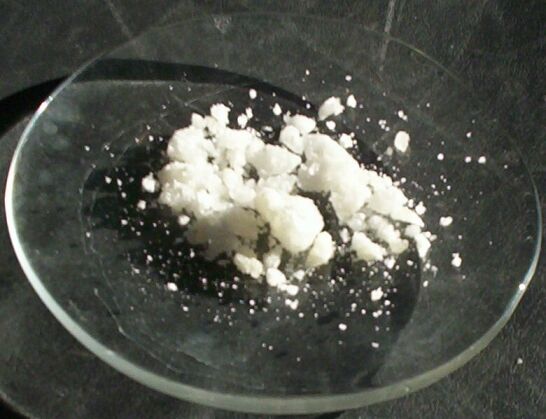
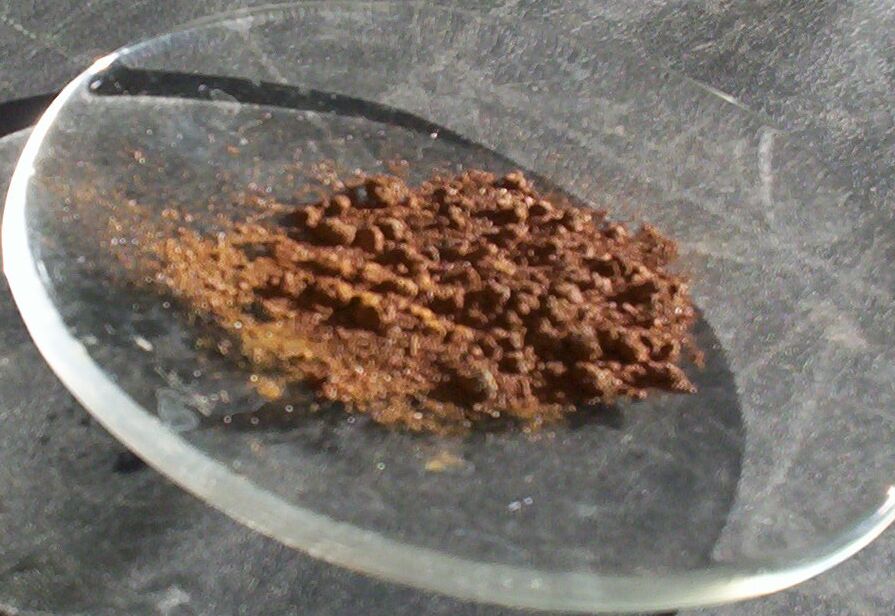
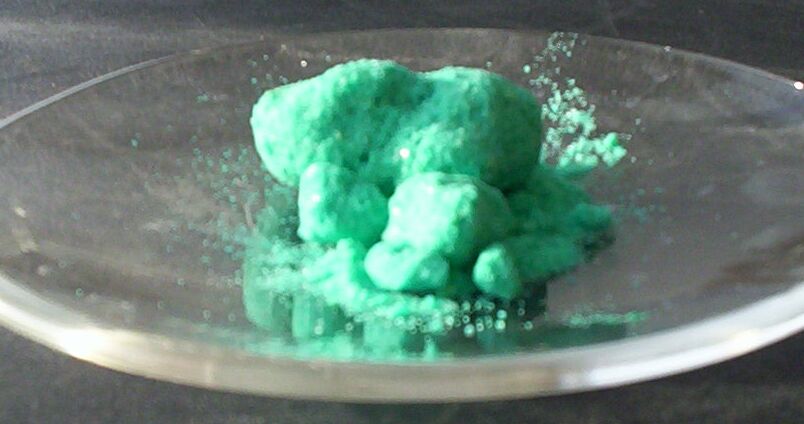
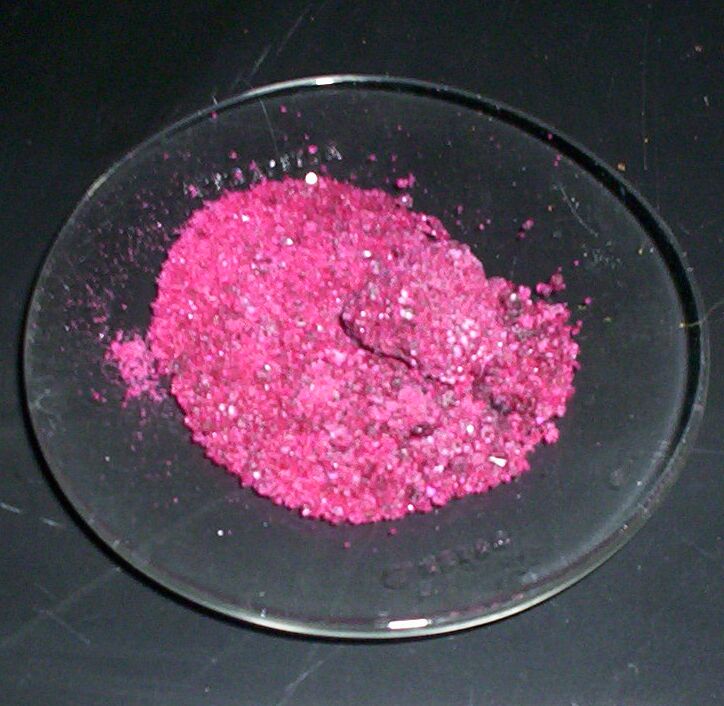
Hydration often produces readily observable changes. For example, anhydrous tin(IV) chloride is a liquid while its pentahydrate is a solid; compare images of the two forms to see this contrast. Tin(IV) chloride illustrates how added waters alter physical state. Similarly, color differences are common: anhydrous copper(II) sulfate is pale or white, while the pentahydrate is bright blue; anhydrous cobalt(II) chloride is typically blue and its hexahydrate is pink or red, a property exploited in humidity indicators and desiccants. Examples of these changes are shown below and in laboratory demonstration materials.


Practical uses and significance
Hydrates are important in industry, laboratories and everyday products. Desiccants and moisture indicators use reversible hydration to signal humidity. Many pharmaceuticals are isolated as hydrates because the water can affect stability, dissolution rate and bioavailability. Hydration enthalpies influence solubility and reaction energetics, so chemists control hydration state during synthesis, storage and analysis. In materials science, the presence or absence of water can determine mechanical and thermal properties of solids.
Handling, analysis and notable distinctions
Identifying hydrate content is often done by thermogravimetric methods or by simple heating and mass loss measurements. Not all bound water behaves identically: some waters are tightly coordinated to a metal center and require stronger conditions to remove, while others are more loosely held in the lattice. In contrast to hydration in chemical hydrates, the word "hydration" is also used in biology to mean water uptake by tissues; in this article the focus is on the chemical meaning. Examples of salts that shift color or state with hydration include cobalt(II) chloride and copper(II) chloride. Observing these examples, such as anhydrous versus hydrated copper and cobalt salts, is a simple way to understand the practical effects of hydration.


Related articles
Author
AlegsaOnline.com Hydration (chemical hydrates) Leandro Alegsa
URL: https://en.alegsaonline.com/art/46076