
Copper(II) chloride (cupric chloride)
An overview of copper(II) chloride (CuCl2): properties, structure, preparation, common uses, safety considerations, and distinctions from other copper chlorides.
Overview
Copper(II) chloride, commonly called cupric chloride, is an inorganic salt with the formula CuCl2. It contains copper in the +2 oxidation state together with chloride ions. In its anhydrous form it is typically brownish; the familiar blue-green color belongs to the dihydrate. The compound occurs as a crystalline solid that is soluble in water and forms coordination complexes in solution.
Image gallery
9 Images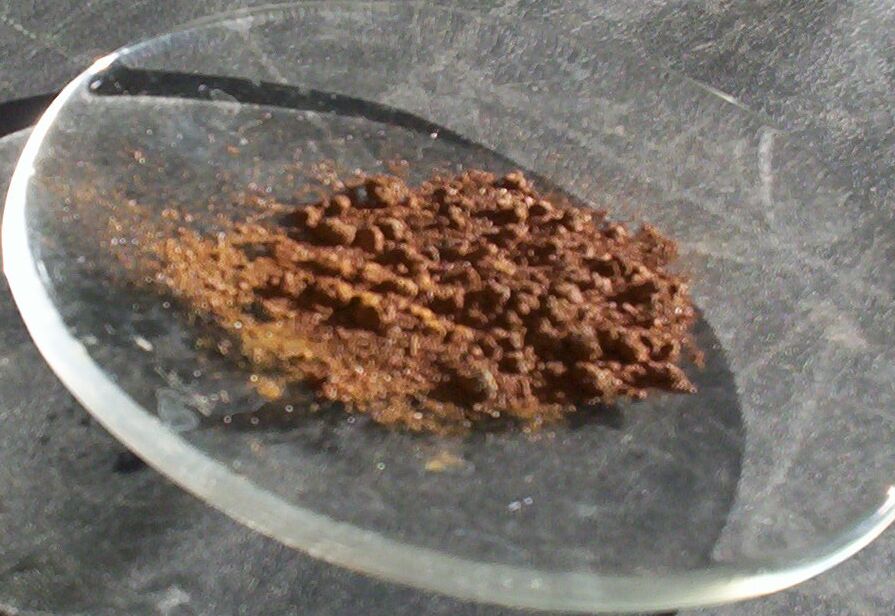


Properties and structure
The copper(II) center is a transition-metal ion that readily coordinates ligands, which influences color and reactivity. The dihydrate, CuCl2·2H2O, displays an octahedral coordination environment around copper in many solid-state descriptions, whereas the anhydrous material can show polymeric chloride-bridged motifs. In aqueous solution the ion exists mainly as hydrated Cu2+ species and can undergo redox and ligand-exchange reactions.
Preparation and reactions
Commercially and in the laboratory, copper(II) chloride is prepared by reacting copper metal, copper oxide, or copper carbonate with hydrochloric acid or by chlorination of copper compounds. It participates in reactions such as hydrolysis, complexation with ammonia or cyanide, and reduction to copper(I) chloride under suitable conditions. The compound is a useful source of Cu2+ in many synthetic transformations.
Uses and examples
- As a reagent in organic synthesis and catalysis, for chlorination and oxidation reactions (see applications).
- In textile and pigment industries, historically as a mordant and to produce colored complexes.
- For etching and printing processes and as a laboratory source of copper ions (technical data).
Safety, handling, and environmental notes
Copper(II) chloride is corrosive and toxic if ingested or inhaled; it can irritate skin and mucous membranes. Proper personal protective equipment, ventilation, and waste disposal procedures are important. In the environment, copper salts are toxic to aquatic life and are regulated in many jurisdictions (safety guidance). For emergency measures and exposure limits consult authoritative sources (first aid and regulations).
Distinctions and notable facts
Do not confuse CuCl2 with copper(I) chloride (CuCl), which contains copper in the +1 state and has very different properties, including lower solubility and distinct reactivity. Copper(II) chloride’s ability to form colorful coordination compounds and to act as a Lewis acid underpins many of its practical uses.
Related articles
Author
AlegsaOnline.com Copper(II) chloride (cupric chloride) Leandro Alegsa
URL: https://en.alegsaonline.com/art/22967
Sources
- cdc.gov : "NIOSH Pocket Guide to Chemical Hazards #0150"
- amazingrust.com : "Amazing Rust.com - CuCl2"
- wiredchemist.com : "Types of Reactions"
- docbrown.info : "USES and APPLICATIONS of CHEMICALS elements compounds mixtures formulations"
- dartmouth.edu : "Copper FAQ - Dartmouth Toxic Metals Superfund Research Program"