
House of Savoy: from Alpine counts to kings of Italy
European dynasty originating in the Alps that ruled Savoy, later became kings of Sardinia and led the unification of Italy; abolished after WWII and thereafter remained a disputed dynastic line.
Overview
The House of Savoy is a European royal family that rose from regional lords in the western Alps to become sovereign rulers of larger states and, eventually, kings of a united Italy. Over many centuries the dynasty governed the territories known as the County and later Duchy of Savoy, acquired the crown of Sardinia, and provided the monarchs who led Italian unification. Their political fortunes rose and fell with changing European alliances, wars and the growth of nation-states.
Image gallery
3 Images

Origins and early development
The dynasty traces its roots to medieval times in the Alpine region, with holdings spanning what is now parts of France, Italy and Switzerland. Early members established themselves as influential local lords; their position strengthened through strategic marriages, feudal service and territorial consolidation. The family's beginnings are commonly described as taking place in the Middle Ages, in an area that is today partly within modern Switzerland and the western Alps. Over time the Savoy lands were formalized as the Duchy of Savoy, a compact and strategically placed domain linking mountain passes and trade routes.
Expansion, crowns and statecraft
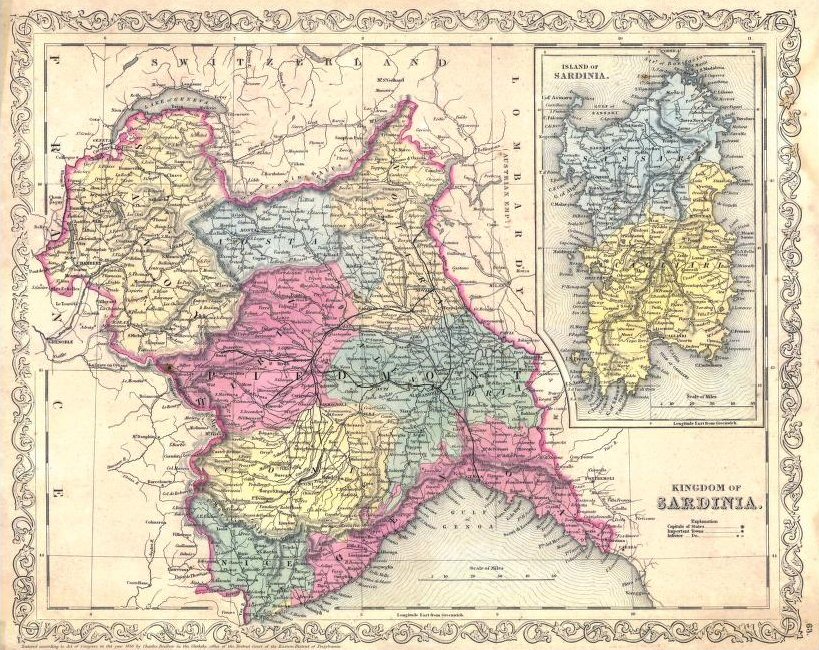
From the late medieval era through the early modern period the Savoyards expanded their influence. They acquired new territories by diplomacy and war and were involved in major European contests, including the conflicts surrounding the War of the Spanish Succession. As a result of 18th-century negotiations and exchanges among great powers the family traded claims and possessions: they relinquished Sicily and took the island crown of Sardinia, from which the title King of Sardinia derived. This elevation to a kingdom helped transform Savoy into a more conventional European state with a dynastic diplomacy that reached royal courts across the continent.
Notable roles in modern Italian history
By the 19th century the Savoy monarchy—centred in the Piedmont and Sardinia realm—became the driving political force behind the movement to unify the various Italian states. The Savoy kings supported liberal and pragmatic policies that, combined with military and diplomatic efforts, led to the proclamation of the Kingdom of Italy under a Savoy monarch. During the 20th century the family faced turbulent challenges: one king reigned while the country fought in the First World War, and later the throne presided over the kingdom through the period that included the rise of Benito Mussolini and the Second World War. In 1922 the sovereign appointed Benito Mussolini to form a government, a decision with long-lasting consequences for Italy's political trajectory. The monarchy's position weakened after the second global conflict and amid changing public sentiment.
Branches, claimants and legacy
The House of Savoy produced several cadet branches that settled abroad and intermarried with other royal families. One such line was associated with the French title of the Dukes of Nemours and maintained close ties with the court of Louis XIV and other Bourbon circles. Following the abolition of the Italian monarchy in 1946, the dynastic succession became a matter of dispute among branches: the senior line (often called the Savoy-Carignano line) and the Aosta branch each advanced competing claims. For many decades this disagreement shaped public perceptions of the family and its contemporary representatives. Until recent years, various members continued to use honorific titles and to take part in cultural and charitable activities related to their heritage.
Notable figures and distinguishing facts
- Humbert I (an early founder figure) established the family's presence in the Alpine region.
- Amadeus figures were instrumental in raising the family's status from counts to ducal rulers.
- Victor Emmanuel II became the symbol of Italian unification as the first king of a united Italy under Savoyard rule.
- 20th-century monarchs presided over both world wars and a period of constitutional change that culminated in a republican referendum and the end of the Savoy monarchy.
The dynasty's long history illustrates how a regional, mountain-based lordship could transform into a major European ruling house. Its story intersects with the shifting map of Europe, the rise of modern nationalism and debates about monarchy's role in constitutional states. For more detailed studies on aspects of Savoy governance, foreign policy and genealogy see specialized histories and archival collections linked below.
References and further reading: dynastic overview, Medieval context, Sicily in European conflict, World War I involvement, World War II period, Kingdom of Sardinia.
Related articles
Author
AlegsaOnline.com House of Savoy: from Alpine counts to kings of Italy Leandro Alegsa
URL: https://en.alegsaonline.com/art/45337