
Duchy of Savoy
A historical state ruled by the House of Savoy in the western Alps, straddling parts of present-day Italy and France; evolved from a county to a duchy and played a central role in Italian unification.
Overview
The Duchy of Savoy was a territorial state centred on the western Alps, occupying areas that are now in northern Italy and southeastern France. It was governed by the House of Savoy, a dynasty whose name derives from the Savoy region itself. The polity grew from modest beginnings into a duchy with shifting centres of power and became an influential player in regional politics for several centuries. Its identity blended Italian and Franco-Provençal influences because of its geographic position between larger states.
Image gallery
3 Images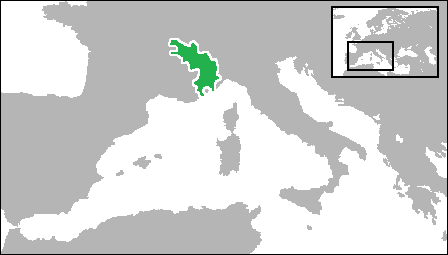


Territory, institutions and symbols
The duchy included mountain valleys, Piedmontese plains and Piedmontese towns as well as holdings on the French side of the Alps. Key administrative and ceremonial features included a ducal court, regional governors and a hereditary succession; the heir-apparent traditionally used the title Prince of Piedmont. The family maintained notable residences such as the Royal Palace at Turin; the palace served as a principal seat of power and is commonly associated with the dynasty's urban presence.
- Primary regions: Alpine territories and Piedmontese lands (northern Italy) and transalpine possessions (southwest France).
- Principal capital after the 16th century: Turin.
- Main family residence: Royal Palace of Turin.
Origins and development
The ruling house began as counts in the medieval period and was elevated to ducal rank in the early 15th century. The formal creation of the duchy marked a change in status and prestige, increasing its diplomatic weight among neighbouring powers. Over time, the Savoy rulers expanded their possessions through marriage, diplomacy and occasional warfare. The acquisition of additional territories, including the crown of Sardinia in a later dynastic configuration, significantly altered the family’s standing in European politics.
Elevation of the polity from a county into a duchy is an important milestone in its institutional history; this step consolidated the House of Savoy’s claim to princely status within the patchwork of Italian and transalpine states (duchy status) and paved the way for further territorial aggrandizement such as the dynastic link to the Kingdom of Sardinia.
Relations with neighbours and dynastic ties
The Duchy of Savoy neighboured several important Italian states and duchies. It had longstanding interactions—both cooperative and competitive—with entities like the Duchy of Parma and the Grand Duchy of Tuscany, often sealing alliances by marriage and negotiation. These relationships shaped trade routes, military alignments and cultural exchange across the region and into the broader Italian peninsula.
- Notable near neighbours: Duchy of Parma and Grand Duchy of Tuscany.
Role in the 19th century and legacy
By the 19th century the Savoyard state formed the core of the Kingdom of Sardinia under the same dynasty, which became the driving centre of Italian unification. Under diplomatic agreements of that period the Savoy territory itself was ceded to France in 1860 as part of a larger settlement that helped secure French support for Italian nationalists. The head of the House of Savoy, who had been ruler of Sardinia, became the monarch of a united Italy shortly thereafter, and the duchy's political independence was subsumed into the new national framework.
Notable facts
The Savoy dynasty is one of Europe's longer-lived royal houses, and its advancement from a local Alpine county to the leadership of a national kingdom illustrates the mobility possible in early modern dynastic politics. Architectural and cultural legacies, including palaces and religious foundations, remain important historical landmarks in the regions once governed by the duchy.
Questions and answers
Q: What was the Duchy of Savoy?
A: The Duchy of Savoy was a monarchy in northern Italy and southwest France, ruled by the Savoy family.
Q: What was the capital of the Duchy of Savoy?
A: From 1416 to 1562, the capital of the Duchy of Savoy was Chambéry. From 1562 to 1713 after which the capital was Turin.
Q: What title did the heir to the Duchy of Savoy usually receive?
A: The heir to the Duchy of Savoy was usually given the title of Prince of Piedmont.
Q: What was the main residence of the Savoy family?
A: The main residence of the Savoy family was the Royal Palace of Turin.
Q: How did the Duchy of Savoy increase in size?
A: The Duchy of Savoy greatly increased in size due to the Kingdom of Sardinia being added to the Savoy family possessions. Parts of the Duchy of Milan had also been added before.
Q: What were the neighbouring states of the Duchy of Savoy?
A: The Duchy of Savoy was a neighbour to the Duchy of Parma as well as the larger wealthier Grand Duchy of Tuscany.
Q: What happened to the Duchy of Savoy in 1860?
A: In 1860, under the terms of the Treaty of Turin, the Duchy of Savoy was annexed by France. The last Duke of Savoy, Victor Emmanuel II, became King of Italy and the country was united into modern Italy.
Related articles
Author
AlegsaOnline.com Duchy of Savoy Leandro Alegsa
URL: https://en.alegsaonline.com/art/29114