
Hooverville: Depression-era Shantytowns and Their Legacy
Hoovervilles were improvised shantytowns built by people left homeless during the U.S. Great Depression, named for President Herbert Hoover. They reveal everyday survival strategies and political tensions of the 1930s.
Overview
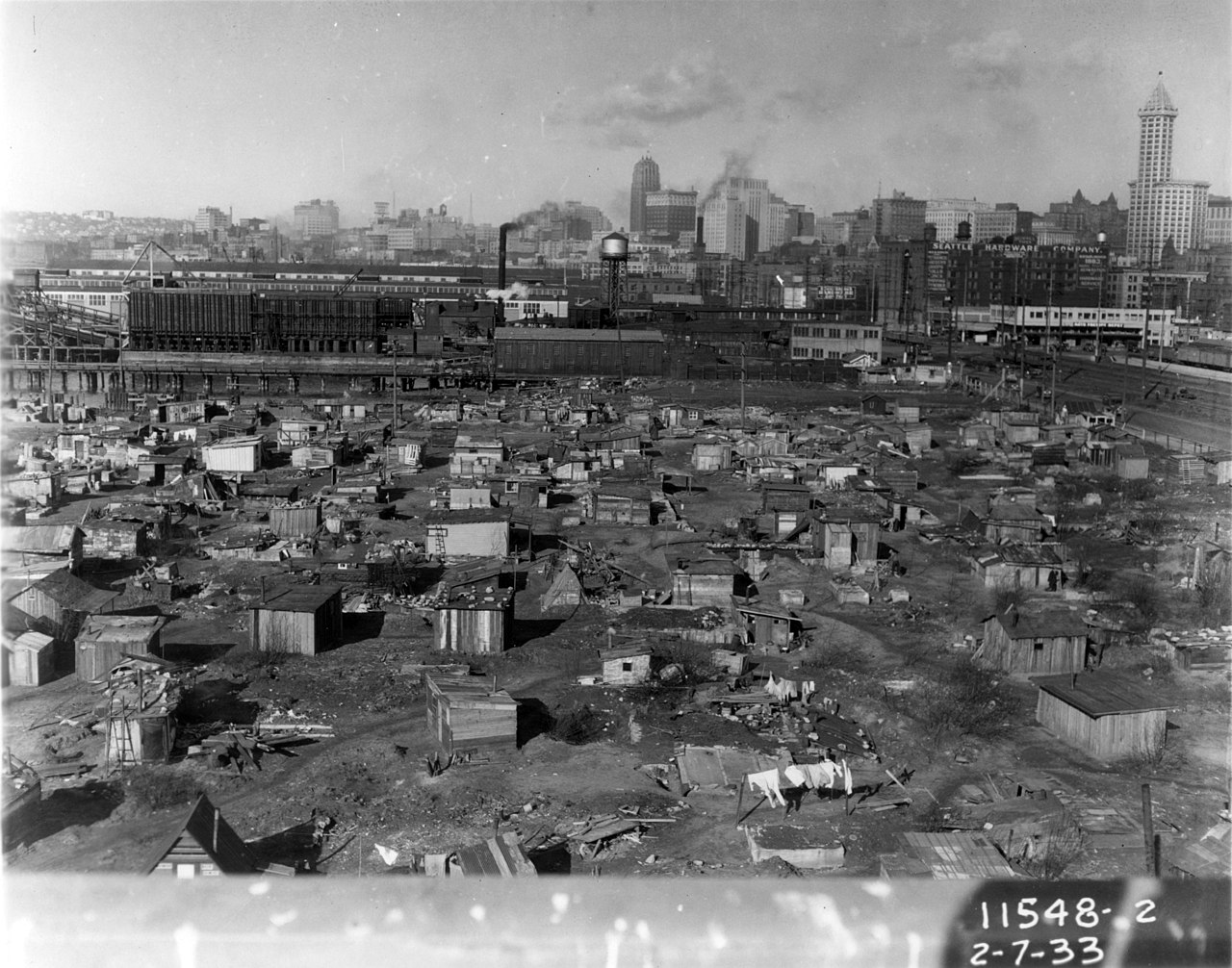
"Hooverville" was the popular name for the makeshift encampments that sprang up across the United States during the Great Depression of the 1930s. Composed of shacks and lean-tos, these settlements housed people who had lost jobs, homes, or farms. The term reflected public anger toward President Herbert Hoover, who was widely blamed for the economic collapse and for what many saw as an inadequate federal response.
Image gallery
7 Images




Characteristics and living conditions
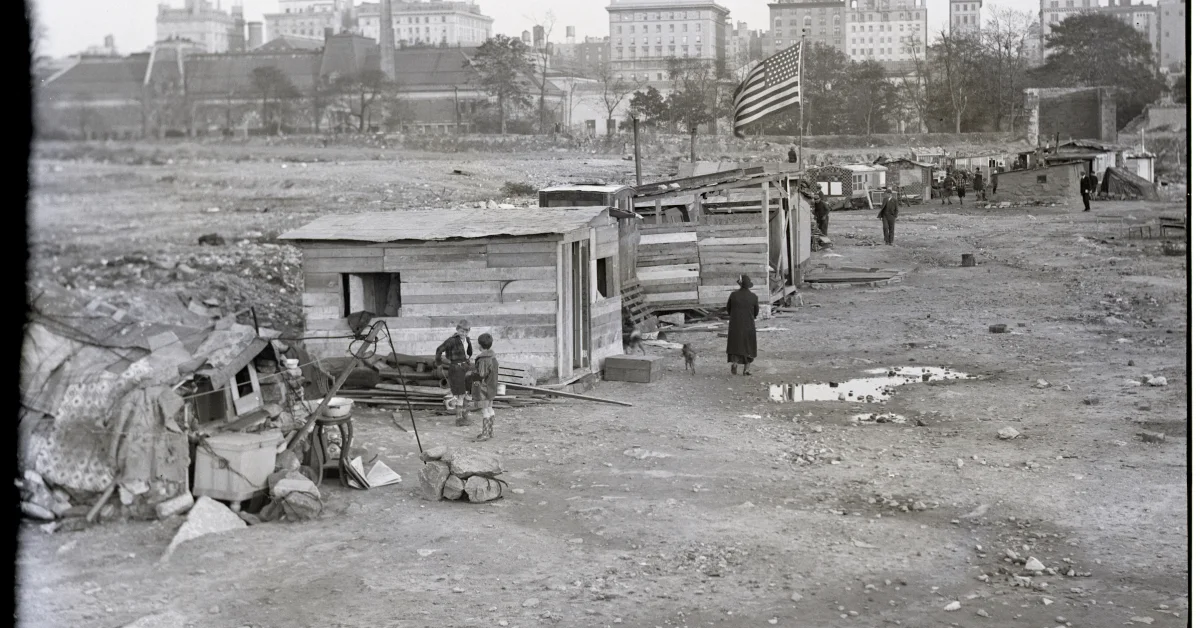
Structures in Hoovervilles were assembled from whatever materials were available: wooden crates, cardboard, corrugated metal, tar paper and other scavenged scraps. Units were small and basic, typically containing a stove or small cooking device, a bed or makeshift sleeping platform, and a few utensils. Sanitation, potable water and insulation were generally poor, and residents often depended on soup kitchens, charitable relief and informal work. Many communities developed their own systems for sharing resources, organizing small businesses, or petitioning local authorities for aid.
Origins and development
Hoovervilles emerged after 1929 as unemployment and foreclosures rose and millions faced displacement. Some formed near industrial centers and railroad yards where work might be found, others on public land such as parks or riverbanks. While early federal relief programs were limited, the scale of homelessness and public visibility of these camps helped shape later debates over social welfare and labor policy during the New Deal era under President Franklin D. Roosevelt.
Examples and official responses
Encampments varied in size and permanence; some were temporary clusters of tents while others developed into larger, semi-stable communities. One of the better-known examples occurred in New York City, where a shantytown appeared on public grounds near Central Park. Local reactions ranged from charitable aid to forcible eviction by city or federal authorities, and many Hoovervilles were dismantled as economic conditions slowly improved or as municipal orders were enforced.
Significance and legacy
Hoovervilles became a potent symbol of the Depression era in American memory—used by newspapers, political campaigners and artists to illustrate hardship and to argue for policy change. The name itself entered the language as shorthand for visible urban poverty and government failure to protect vulnerable citizens. Remnants of these camps influenced later social programs and public awareness about homelessness and urban poverty.
Typical features
- Ad hoc construction from recycled materials and debris.
- Communal reliance on mutual aid, charities and informal employment.
- Location near transportation, employment centers, or public land.
- Frequent contestation with municipal authorities over land use and public health.
Further reading and primary sources
- Primary photographs and archives
- Contemporary newspaper accounts
- Biographical material on Herbert Hoover
- Records of federal government actions
- Material culture and construction methods
- Examples of improvised building materials
- Everyday household objects used in camps
- Charitable efforts and soup kitchens
- Accounts of the Central Park encampment
- Urban case studies and municipal records
- Historical overviews and scholarly analyses
Though most Hoovervilles vanished with economic recovery and policy changes, their memory remains an important lens for understanding the social consequences of economic crisis and the role of public policy in addressing mass poverty.
Related articles
Author
AlegsaOnline.com Hooverville: Depression-era Shantytowns and Their Legacy Leandro Alegsa
URL: https://en.alegsaonline.com/art/45058