
High Force (Teesdale) — Waterfall on the River Tees
High Force is a well-known waterfall in Teesdale, County Durham. Formed where hard igneous rock overlies softer limestone, it is noted for its dramatic drop and geological significance.
Overview
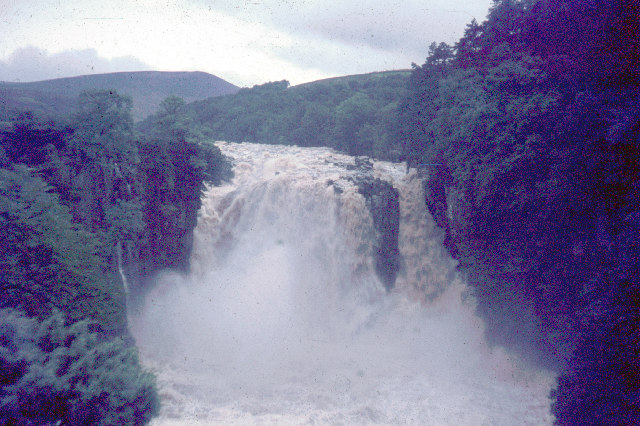
High Force is a dramatic waterfall on the River Tees in northern England, located in Teesdale, County Durham. With a single drop of about 21 metres (around 70 feet), it is widely regarded as one of Britain’s most impressive waterfalls and attracts walkers, photographers and geology enthusiasts.
Image gallery
4 Images


Geology and formation
The falls exist because of differences in rock strength along the river channel. A resistant band of igneous caprock (dolerite or 'whinstone') overlies weaker limestone and other sedimentary strata. Over time the river has eroded the softer strata more rapidly, undercutting the harder upper layer and producing a vertical or near-vertical drop. This process of differential erosion and the creation of a plunge pool are typical outcomes of erosion processes where rivers encounter contrasting rock types.
Characteristics and landscape
High Force is notable for its volume and the breadth of the torrent when the river is in spate. The falls often form a spray and rumbling sound that can be heard from some distance. Surrounding the river valley are moorland and limestone outcrops typical of upper Teesdale; the scene combines botanical interest, open upland scenery and exposed bedrock that records the area's geological history.
Visiting and significance
The site is accessible by footpaths and viewing areas on both banks, and it is a popular day-visitor destination in summer and a striking focal point in winter when flow and light create dramatic effects. Interpretive panels and local guides commonly explain the geological story and the river’s role in shaping the dale. For practical details on access, facilities and conservation, see visitor information.
Notable facts and distinctions
- High Force is often described as among England’s largest single-drop waterfalls by height and volume.
- Its formation illustrates classic geomorphological concepts such as differential erosion and caprock protection.
- It sits within a wider landscape valued for upland habitats and exposed geology, making it important for natural history as well as recreation.
Related articles
Author
AlegsaOnline.com High Force (Teesdale) — Waterfall on the River Tees Leandro Alegsa
URL: https://en.alegsaonline.com/art/44096