
Hiiumaa: Estonia’s second-largest island — geography, nature and culture
Hiiumaa, Estonia’s second-largest island, is noted for long coastlines, forests, historic lighthouses and rich wildlife. This article summarizes its geography, habitats, history, conservation and visitor highlights.
Overview
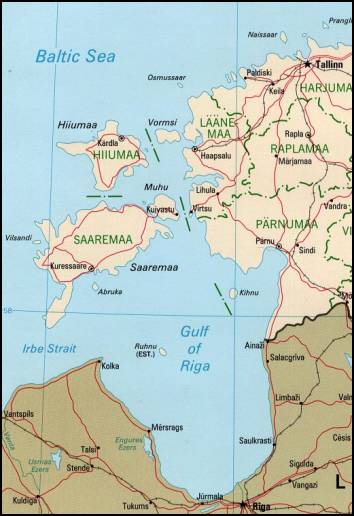
Hiiumaa is the second-largest island of Estonia, located in the Baltic Sea as part of the West Estonian archipelago. The island covers about 989 km2 and lies approximately 22 km from the Estonian mainland. Kärdla is the main town and service centre; administratively the island corresponds to Hiiu County. The island’s terrain reflects glacial history, with moraine hills, wetlands and long, varied shorelines.
Image gallery
10 Images


Landscape and habitats
The coastline alternates between sandy beaches, pebble shores and shallow lagoons, with reed beds and dunes in sheltered bays. Inland, mixed forests, coniferous stands and extensive bogs create a mosaic of habitats. Coastal meadows and small agricultural fields add to the island’s biodiversity and scenic variety. Historic maritime features such as long-standing lighthouses and stone markers are visible along the coast and recall Hiiumaa’s role in Baltic navigation.
Flora
Vegetation ranges from boreal and mixed broadleaf forest species to bog plants and coastal grasses. Wetlands support sedges, sphagnum mosses and specialized bog flora, while dry ridges and pastures sustain wildflowers and shrubs. The diversity of plant communities supports a wide range of invertebrates and birdlife.
Wildlife
Hiiumaa has a well-developed suite of large mammals and predators relative to its size. Large herbivores include elk (moose) and populations of red deer and roe deer, while wild boar are also present. Carnivores such as foxes, lynx and martens inhabit forested areas, and wolves have begun to recolonize after long absences. Reintroduction efforts for some small mammals have taken place in recent decades. Wetlands and coastal shallows attract waterfowl and waders, and the island is an important stopover for migratory birds.
History and human use
Human settlement on Hiiumaa dates back many centuries and has been shaped by fishing, seafaring and small-scale farming. The island’s maritime position led to the construction of lighthouses and navigation aids to guide shipping in the Baltic. Over time the local economy diversified to include services and tourism while retaining traditional activities such as fishing, forestry and agriculture. Local culture preserves island customs, handicrafts and seasonal events tied to the sea and rural life.
Conservation and protected areas
Parts of Hiiumaa are subject to habitat protection to conserve important shorelines, wetlands and forest tracts. Conservation efforts aim to balance nature protection with sustainable tourism, focusing on bird habitats, old-growth stands and peatland restoration. Visitor guidance and managed trails help reduce disturbance to sensitive sites during breeding and migration seasons.
Access and tourism
The island is reached by regular ferry services and by air via regional flights to a small local airport; Kärdla often serves as the main entry point for visitors. Popular activities include hiking and cycling on quiet roads, birdwatching in wetlands, coastal walks, sailing and exploring maritime heritage. Local tourism offices and regional resources provide practical information on routes, accommodations and seasonal services.
Notable places and culture
Highlights include historic lighthouses, scenic peninsulas and traditional villages that illustrate coastal Baltic culture. Cultural life on Hiiumaa features local festivals, handicrafts and foodways linked to island resources. Many visitors come to experience low-density nature, clear skies and a slower pace of life.
Quick facts
- Part of the West Estonian archipelago with a mix of coastal and inland habitats.
- Known for maritime heritage, including long-operating lighthouses and historic navigation sites.
- Important for bird migration and a range of mammal species, with ongoing conservation efforts.
Questions and answers
Q: What is Hiiumaa?
A: Hiiumaa is the second-largest island in Estonia and is part of the West Estonian archipelago in the Baltic Sea.
Q: What is the area of Hiiumaa?
A: The area of Hiiumaa is 989km2.
Q: How far is Hiiumaa from the Estonian mainland?
A: Hiiumaa is 22 km away from the Estonian mainland.
Q: What is the largest town in Hiiumaa?
A: The largest town in Hiiumaa is Kärdla.
Q: What species of animals can be found on Hiiumaa?
A: Elk, red deer, roe deer, wild boars, foxes, lynxes, and martens can be found on Hiiumaa.
Q: Which animal species were locally extinct on Hiiumaa but have started to come back?
A: Wolves were locally extinct on Hiiumaa but have started to come back.
Q: What bird species can be found on Hiiumaa?
A: Black storks, golden eagles, cranes, avocets, and swans can be found on Hiiumaa.
Related articles
Author
AlegsaOnline.com Hiiumaa: Estonia’s second-largest island — geography, nature and culture Leandro Alegsa
URL: https://en.alegsaonline.com/art/44172
Sources
- stat.ee : Comparison of self-government units
- britannica.com : "Hiiumaa | island, Estonia"
- b7.org : "Hiiumaa"
- ncbi.nlm.nih.gov : "Wolves Recolonizing Islands: Genetic Consequences and Implications for Conservation and Management"
- ui.adsabs.harvard.edu : 2016PLoSO..1158911P
- doi.org : 10.1371/journal.pone.0158911
- worldcat.org : 1932-6203
- pubmed.ncbi.nlm.nih.gov : 27384049