
Herma (Herm): Ancient Greek Sculptural Pillars and Their Roles
Hermae (herms) are squared pillars topped with a head (often Hermes) used in ancient Greece and Rome as boundary markers, protective emblems, and ritual objects, later revived as term figures.
Overview
A herma (plural hermae), commonly called a herm in English, is a sculptural object made up of a head — sometimes with a short upper torso — set above a plain, tall, squared pillar. The form originated in ancient Greece and was closely associated with the god Hermes, whose name is etymologically linked to the word herma. Over time the type was adapted to represent other figures or used without reference to a specific deity. For a general introduction and visual examples see overview of hermae.
Image gallery
10 Images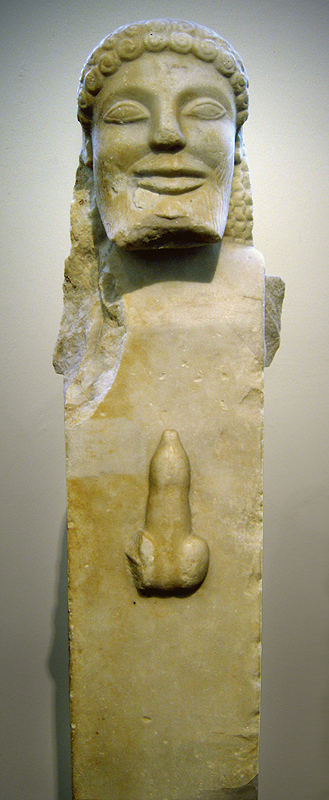


Form and distinguishing features
Hermae are typically vertical and compact. Their most recognizable elements are the block-like shaft and the sculpted head mounted on top. Some examples include a small torso with shoulders but not a full body; for discussion of such short-torso types see torso forms. Many hermae were carved with a phallus on the shaft, an element long interpreted as a symbol of fertility, masculine power, or apotropaic potency; see commentary on phallic symbolism at phallus and meaning. Shafts could be plain or bear inscriptions, dedicatory graffiti, or painted traces.
Materials, size and inscriptions
Stone, especially local marble or limestone, was the most common material; bronze and terracotta examples are also known. Sizes range from small votive objects intended for domestic shrines to life-size or larger pillars placed in public settings. Many hermae carried carved inscriptions naming the dedicatee or marking boundaries, and everyday use sometimes left informal graffiti. Studies of surface treatment and bases can be found at technical and placement notes.
Origins and religious associations
The herma form appears in the Archaic period and becomes widespread in the Classical era. Early examples functioned as markers for roads, crossing places and property limits and were associated with Hermes as protector of travelers, merchants and boundaries. Their protective, apotropaic character is emphasized in literary and archaeological sources; for the wider context of superstition and belief see studies of ancient belief and for apotropaic practice specifically see apotropaic uses. The link between the sculptural type and the god is treated in etymological and cult studies at Hermes and the name.
Placement and civic role
Hermae stood at crossroads, on city gates, at the edges of fields and estates, and outside houses, temples and gymnasia. In Athens and other poleis they served as markers of sacred or civic limits, as objects of small-scale cult, and as foci for popular ritual: wreathing, oiling and small offerings were common gestures toward these figures. Practical and ritual placement in urban contexts is discussed at Athenian contexts and accounts of everyday votive practice and good-luck rites appear at good-luck practices and examples of offerings. Protection from the evil eye and harmful influences was a frequent reason for their display; see evil-eye protection.
Adoption, adaptation and later reception
The Romans adopted and adapted the herma form for private gardens, villas and public spaces, where similar pillar-head figures performed comparable decorative and symbolic roles; see Roman adaptations at Roman use. During the Renaissance the concept reappeared as the "term" figure — a head or bust above a pillar used in architecture and landscape design — and was incorporated into decorative programmes across Europe; illustrations and later uses are discussed at Renaissance terms.
Notable incidents and modern study
Hermae played visible roles in civic life and sometimes in political controversy. A well-known episode in classical Athens involved the deliberate mutilation of many herms shortly before a major military expedition, an act that produced alarm and had political consequences. Today hermae are studied for what they reveal about popular religion, boundary rituals, and everyday interaction with sacred objects. Major museum collections and archaeological reports include catalogues and comparative studies; Greek examples and typologies are available at Greek examples.
Further reading and resources
For more on iconography, archaeology and ritual use consult museum catalogues, archaeological reports and syntheses of Greek religion. Researchers often combine literary texts with material evidence to understand both the formal qualities of hermae and their role in ancient social and religious practices. Introductory resources and specialist studies can be found via the linked entries throughout this article.
Related articles
Author
AlegsaOnline.com Herma (Herm): Ancient Greek Sculptural Pillars and Their Roles Leandro Alegsa
URL: https://en.alegsaonline.com/art/43789