
Herbert Kitchener, 1st Earl Kitchener (1850–1916)
British Field Marshal and statesman who led the Sudan campaign, served in the Second Boer War, and was Secretary of State for War at the outbreak of World War I.
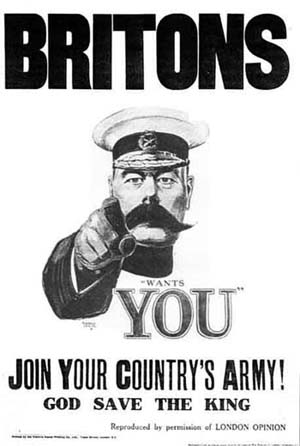
Horatio Herbert Kitchener (24 June 1850 – 5 June 1916) was a senior British Army officer and imperial administrator whose career shaped late 19th- and early 20th-century British military policy. Born in Ireland, Kitchener rose to international prominence as a commander in Egypt and the Sudan, later serving in senior staff and cabinet roles during the Boer War and at the start of the First World War. His image became an iconic recruitment symbol in 1914 and his death at sea in 1916 provoked widespread public reaction.
Image gallery
10 Images


Military career and campaigns
Kitchener built his reputation in the Nile region after being appointed Sirdar, the British commander of Egyptian forces. He led the reconquest of the Sudan, culminating in the decisive victory at Omdurman in 1898, which ended the Mahdist state and brought the Sudan under Anglo-Egyptian control. In southern Africa he served as Chief of Staff and, for a time, Commander-in-Chief of British forces during the Boer War, directing a campaign that transitioned from conventional battles to counter-insurgency measures against Boer guerrillas.
Roles, honours and distinctions
Over his career Kitchener received numerous orders and appointments reflecting both military rank and political office. He was promoted to Field Marshal and invested in several chivalric orders such as the Order of the Garter and the GCB. Other honours included the Order of Merit, the GCSI, the GCMG and the GCIE. He also held political office as a member of the Privy Council.
- Egypt — posting and administrative responsibilities in the protectorate
- Mahdist — opponents defeated in the 1890s
- Sudan — theatre of the reconquest and subsequent administration
- Boer War — senior staff leadership in South Africa
- Commander-in-Chief, southern Africa — temporary overall command
Political office and First World War
When the First World War began the British government appointed Kitchener Secretary of State for War. He oversaw mobilisation and a national volunteer recruitment effort, which used a portrait of him pointing to the viewer as the centerpiece of a famous poster campaign designed to encourage enlistment. That recruitment drive and his authority over military organisation made him a dominant public figure in Britain during 1914–15.
Controversies and methods
Kitchener's campaigns and administrative choices remain subjects of historical debate. In South Africa his strategies against guerrilla warfare included scorched-earth tactics and internment of civilians to deprive insurgents of support; these measures provoked criticism and raised moral and political questions about conduct in colonial wars. His firm administration in the Sudan and Egypt advanced British imperial objectives but also reflected the complexities of rule in conquered territories.
Death and legacy
Kitchener drowned when HMS Hampshire sank after striking a mine near the Orkney Islands while he was en route to a diplomatic mission in 1916. News of his loss produced wide mourning and sparked debate about his career and imperial policy. His memory is preserved in statues, memorials, and extensive contemporary commentary: some remember him as a symbol of imperial efficiency and military professionalism, while others critique the methods associated with counter-insurgency and colonial governance.
Further reading and references
For overview accounts and primary-source material, readers can consult historical treatments of the late Victorian and Edwardian military period, biographies focused on Kitchener's life, and records of the honours and institutions with which he was associated, such as the Order of St. Patrick. Context on recruitment and wartime propaganda is available in studies of the First World War mobilisation. Contemporary reports describe the sinking and immediate aftermath, including references to his death by drowning and the location near the Orkney Islands, attributed to a German mine.
While Kitchener's career exemplifies the reach and limits of British military power at the turn of the 20th century, his legacy is mixed: celebrated for leadership and organisation, criticized for harsh measures in colonial conflict. His life remains a focal point for discussions about empire, military reform, and the human costs of war.
Questions and answers
Q: Who was Field Marshal Horatio Herbert Kitchener?
A: Field Marshal Horatio Herbert Kitchener was an Irish born British Field Marshal. He served as Sirdar (British Commander in Chief) of the Egyptian Army, and was Chief of Staff during the Boer War of 1899-1902.
Q: What orders of chivalry did he receive?
A: Lord Kitchener received many orders of chivalry, both British and foreign, including Knight of St. Patrick and Knight of the Garter.
Q: What position did he hold at the start of World War I?
A: At the start of World War I, Lord Kitchener was appointed Secretary of State for War by Prime Minister Asquith.
Q: What famous advertisement featured his image?
A: A massive recruitment campaign began featuring Lord Kitchener's image in a famous advertisement.
Q: How did Lord Kitchener die?
A: Lord Kitchener died when HMS Hampshire sunk near the Orkney Islands after hitting a German mine in 1916.
Q: When was he born?
A: Lord Kitchener was born on 24 June 1850.
Q: When did he conquer Sudan for Britain and Egypt?
A:Lord Kitchener defeated Mahdist rebels against Egyptian rule in 1898 and conquered Sudan for Britain and (nominally) Egypt.
Related articles
Author
AlegsaOnline.com Herbert Kitchener, 1st Earl Kitchener (1850–1916) Leandro Alegsa
URL: https://en.alegsaonline.com/art/43700
Sources
- auden.stanford.edu : "Field Marshal Horatio Herbert Kitchener 1st Earl Kitchener KG KP GCB OM GCSI GCMG GCIE ADC PC"
- melik.org.uk : "Earl Kitchener of Khartoum"