
Most Distinguished Order of St Michael and St George
A British order of chivalry founded in 1818, awarded for service overseas and in relation to foreign affairs; it has three classes and a distinctive motto and insignia.
Overview
The Most Distinguished Order of St Michael and St George is a British order of chivalry created to recognise notable service abroad and in connection with foreign and Commonwealth affairs. It was instituted on 28 April 1818 by George, Prince Regent, later King George IV. The Order takes its name from two military saints and honours contributions to diplomacy, overseas administration and public service beyond the British Isles, as well as distinguished work by citizens of allied and Commonwealth countries.
Image gallery
10 Images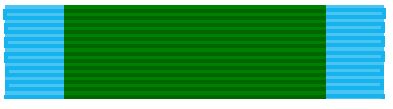





History and purpose
The Order originally rewarded service in the Mediterranean territories that came under British protection in the early 19th century. Over time its remit broadened to encompass diplomatic service, colonial administration and other forms of distinguished service overseas. Its foundation reflects the geopolitical priorities of the period and the Crown's interest in recognising non-military achievements associated with imperial and international affairs.
Structure and grades
The Order has three classes, each carrying post-nominal letters and differing privileges. These are commonly listed as:
- Knight or Dame Grand Cross (GCMG)
- Knight or Dame Commander (KCMG or DCMG)
- Companion (CMG)
Knighthood (or damehood) is conferred on holders of the two higher grades; companions receive membership without a titular knighthood. Appointments are made by the Sovereign on ministerial advice and are part of the British honours system.
Insignia, motto and symbolism
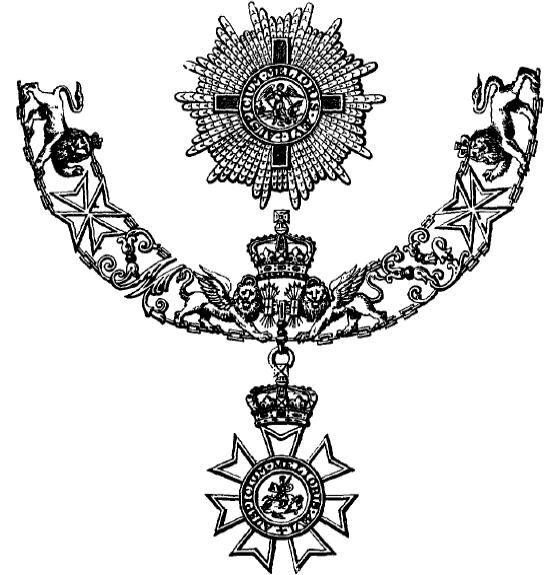
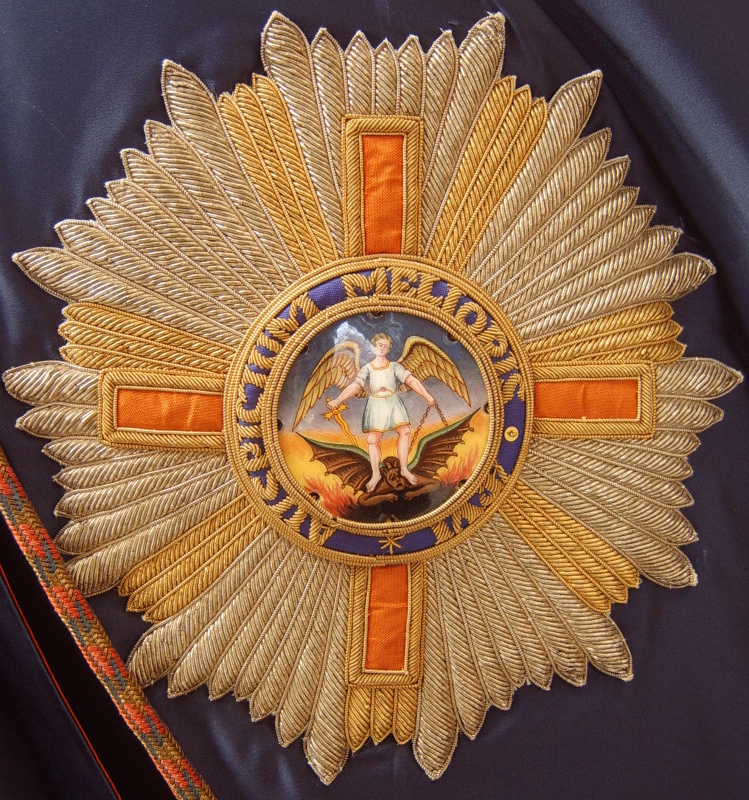
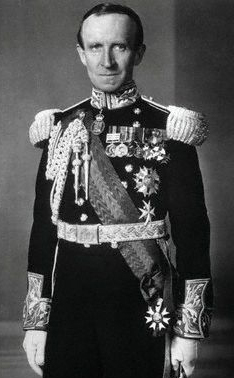
The Order's insignia include a badge, star and sash or neck ribbon worn according to rank. Its motto, Auspicium melioris aevi (meaning "Token of a better age"), expresses the aspirational character of the honour. The name invokes Saint Michael and Saint George, figures traditionally associated with protection and martial valour, though the Order recognises civil as well as military distinction.
Uses, examples and notable facts
Recipients typically include diplomats, senior foreign-service officers, governors-general, high commissioners, and individuals who have given conspicuous service abroad. The Order remains a prominent means by which the Crown and governments acknowledge impactful international service and contributions to relations between the United Kingdom, its territories and other nations.
Distinctions: it differs from military-only honours by emphasising overseas, diplomatic and civil achievement; its three-tier structure and post-nominals make it immediately recognisable in official lists and biographies.
Questions and answers
Q: What is the most Distinguished Order of Saint Michael and Saint George?
A: The Most Distinguished Order of Saint Michael and Saint George is an order of chivalry.
Q: Who established the order?
A: The order was established by George, Prince Regent, who later became King George IV of the United Kingdom.
Q: When was it started?
A: It was started on 28 April 1818.
Q: Who was the Prince Regent when it began?
A: The Prince Regent when it began was King George III.
Q: What are the two military saints that this order is named after?
A: This order is named in honour of two military saints, Saint Michael and Saint George.
Q: What type of organisation is this order?
A: This order is an organisation of chivalry.
Related articles
Author
AlegsaOnline.com Most Distinguished Order of St Michael and St George Leandro Alegsa
URL: https://en.alegsaonline.com/art/73013
Sources
- royal.gov.uk : "Order of St. Michael and St. George"
- express.co.uk : "Honorary Knighthood for Kofi Annan" · archive.is
- findarticles.com : findarticles.com
- thegazette.co.uk : "No. 57654"
- tate.org.uk : Henry POOLE 1873–1928
- aim25.ac.uk : "Cortazzi, Sir Hugh (1924-)"
- referenceworks.brillonline.com : "Whitehead, Sir John Stainton, GCMG., CVO., MA; BA,"
- lib.nus.edu.sg : "Our Chancellors and Vice-Chancellors : a biographical sketch : Our Chancellors.Ong Teng Cheong"
- fco.gov.uk : "Honorary Gcmg For Ryszard Kaczorowski"
- pqasb.pqarchiver.com : "Peres dedicates honorary knighthood to State of Israel"
- ukinjapan.fco.gov.uk : "Queen honours Sadako Ogata,"
- books.google.com : "Matsukata Masayoshi"
- books.google.com : "Satow, Ernest Mason"
- thepeerage.com : "Peerage.com"