
Muhammad Ahmad (the Mahdi): Sudanese religious leader and rebel
Muhammad Ahmad bin Abd Allah (1845–1885) was a Sudanese Sufi leader who proclaimed himself the Mahdi in 1881 and led the Mahdist revolt against Turco‑Egyptian rule, creating a short‑lived state in Sudan.
Overview
Muhammad Ahmad bin Abd Allah (12 August 1845 – 22 June 1885) emerged as a prominent religious and political figure in late 19th‑century Sudan. A cleric associated with the Sufi Samaniyya tradition, he declared himself the Mahdi—a messianic reformer in Islamic expectation—on 29 June 1881. His proclamation combined a claim to spiritual authority with a political programme aimed at overthrowing the established ruling order and purifying social and religious life in the territories of the Sudan.
Image gallery
6 Images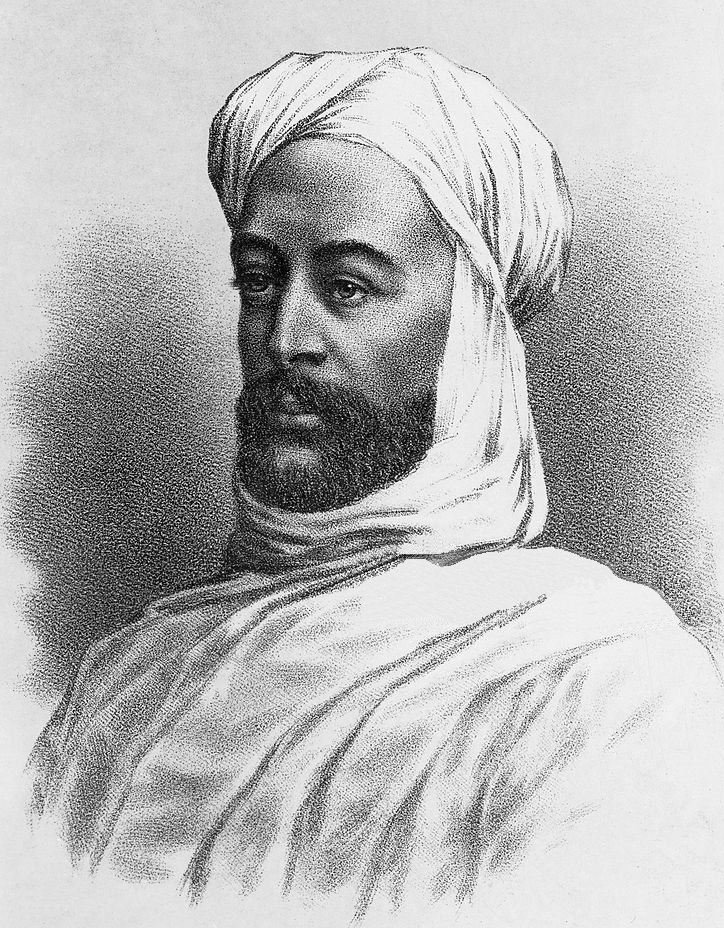


Beliefs and religious context
Ahmad’s message drew on long‑standing strands of Islamic revival and messianic expectation. The idea of a redeemer figure had appeared in various Muslim societies, and his claim resonated with those who perceived moral decay and foreign domination. He presented his mission in messianic language and framed reforms within the moral framework of Islam. His movement came at a time when other currents of reform—such as Wahhabi puritanical reformism and other local revivalist trends—were influencing debates across the Muslim world.
Political and colonial background
In the decades before the Mahdiyya, Sudan was administered by a Turco‑Egyptian government linked to the Khedivate of Egypt and the wider interests of the Ottoman Empire. The Khedive’s administration traced its authority to reforms initiated under rulers like Muhammad Ali Pasha. By the later 19th century, increasing involvement by British interests—and the rise of European powers more generally—intensified local grievances about taxation, conscription and perceived corruption. These economic and political pressures created fertile ground for a popular uprising.
Uprising, military campaign and the fall of Khartoum
From his 1881 proclamation onward, Muhammad Ahmad organised followers into a disciplined force combining religious zeal with guerrilla and conventional tactics. Over several campaigns the Mahdists routed Turco‑Egyptian troops and seized wide parts of the territory. The British government, which supported the Egyptian administration and was alarmed by the collapse of authority, deployed forces and appointed Charles George Gordon as Governor‑General to try to hold the capital. In January 1885 Mahdist forces captured Khartoum, where Gordon was killed. The victory established Mahdist control over much of Sudan.
- Proclamation as Mahdi: 29 June 1881.
- Campaigns against Turco‑Egyptian administration and its foreign backers.
- Fall of Khartoum and death of Gordon: January 1885.
- Muhammad Ahmad’s death: 22 June 1885; succession by Abdallahi ibn Muhammad.
Administration, succession and legacy
After occupying Khartoum and other centres, the Mahdist movement attempted to govern, imposing legal and administrative changes inspired by its interpretation of Islamic law and the Mahdi’s directives. Muhammad Ahmad died unexpectedly a few months after the capture of Khartoum. His chief lieutenant, known as the Khalifa, continued to administer the state but faced internal strains, economic difficulties and renewed foreign pressure. Mahdist rule remained a defining episode in Sudanese history: it ended Ottoman‑Egyptian administration for a time, reshaped local institutions, and prompted a stronger military and political response by Britain and Egypt that culminated in the reconquest of the Sudan at the end of the 19th century.
Notable facts and historical significance
The Mahdist uprising is studied as an example of a millenarian movement that combined charismatic leadership, religious rhetoric and anti‑colonial sentiment. It highlighted tensions between local political orders and expanding imperial influence and left a contested legacy in Sudanese memory: for some, the Mahdi is a national resistance figure; for others, the period is remembered for its disruptions and the challenges of post‑Mahdist governance. Readers seeking further contextual detail about the movement’s religious lineage, administrative experiments and military engagements can consult additional specialized sources and historical treatments.
For further reading on the religious background and regional dimensions of the movement see materials on the Samaniyya and broader revitalization currents in Islam, on the concept of the Mahdi, and on the geopolitical setting involving the Khedive, the legacy of Muhammad Ali Pasha, and interactions with European powers and the Ottoman framework.
Questions and answers
Q: Who was Muhammad Ahmad bin Abd Allah?
A: Muhammad Ahmad bin Abd Allah was a religious leader of the Sufi Samaniyya order in Sudan who proclaimed himself as the Mahdi or messianic redeemer of the Islamic faith on 29 June 1881.
Q: What were the causes of resentment among Arabic Sudanese population?
A: The Arabic Sudanese population resented the oppressive policies of their Turco-Egyptian rulers, as well as European powers' growing military and economic dominance throughout the 19th century.
Q: What happened after Muhammad Ahmad's proclamation?
A: After Muhammad Ahmad's proclamation, he led a successful military campaign against the Turco-Egyptian government of Sudan until Khartoum fell in January 1885.
Q: Who was appointed Governor General by Britain?
A: General Charles George Gordon ("Gordon pasha") was appointed Governor General by Britain to rule over Sudan.
Q: How did Gordon die?
A: Gordon died in Khartoum at the hands of Muhammad Ahmad's forces.
Q: What happened after Muhammad Ahmad's death?
A: After Muhammad Ahmad's unexpected death on 22 June 1885, his chief deputy took over administration of the Sudan. Churchill said they had killed all people capable of running it by then.
Q: What other movements preceded Mahdiyya? A: There were earlier Mahdist movements in West Africa, and Wahhabism and other puritanical forms of Islamic revivalism that preceded Mahdiyya.
Author
AlegsaOnline.com Muhammad Ahmad (the Mahdi): Sudanese religious leader and rebel Leandro Alegsa
URL: https://en.alegsaonline.com/art/127298