
Haloarchaea: salt-loving archaea of hypersaline environments
Haloarchaea are a group of salt-requiring Archaea adapted to very salty habitats. This article explains their traits, taxonomy, ecology, history of the name, and practical significance.
Haloarchaea are microorganisms characterized by an absolute requirement for very salty conditions. Often called halophiles, they belong to the domain Archaea and are considered extremophiles because they thrive where most life cannot. Rather than tolerating occasional salinity, many haloarchaea grow best in environments with high salt concentrations that far exceed ordinary seawater.
Image gallery
3 Images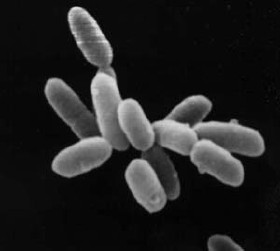


Distinctive features
These organisms display a set of adaptations to maintain cellular function in salt-saturated surroundings. Key traits include unusual membrane lipids built from ether-linked isoprenoid chains, proteins shaped to stay soluble and active in salty cytoplasm, and strategies to match internal ionic balance to the outside. Many produce colored pigments — carotenoids and retinal proteins — that protect cells from light and can give salt ponds vivid hues.
- Membrane chemistry adapted to salt and desiccation
- Proteins and enzymes stable in ionic environments
- Visible pigmentation from carotenoids and retinal-based photoproteins
- Varied cell shapes from rods and cocci to more unusual morphologies
Taxonomy and evolutionary position
Haloarchaea form a distinct evolutionary branch within archaeal diversity and are placed taxonomically within the Euryarchaeota. In formal classification discussions — the subject of taxonomy — they are commonly referred to as a class (historically named Halobacteria), reflecting their shared genetic and physiological characteristics.
History and naming
The older name "halobacteria" persists in some literature but is misleading: haloarchaea are not bacteria. Recognition of Archaea as a separate domain led to renaming and clearer placement in archaeal systematics. Advances in molecular sequencing and culture methods refined understanding of their relationships to other extremophiles.
Habitats, roles and applied importance
Haloarchaea are common in naturally and artificially salinated environments, such as salt lakes, coastal salterns, salt pans and some salted foods. They contribute to nutrient cycles in these ecosystems and their pigments can influence the color and light absorption of saline waters. Because their enzymes and membrane components remain functional under extreme ionic stress, haloarchaea are of interest for biotechnology, biochemistry and astrobiology as models of life under high salinity.
- Typical habitats: inland saline lakes and man-made salterns with concentrated salt-rich waters.
- Applications: stable enzymes, studies of light-driven proteins, and models for life in extreme environments.
- Scientific importance: insights into archaeal evolution and protein stability.
Because they require environments very different from most microbes, haloarchaea illustrate how life adapts to chemical extremes. Their study combines field ecology, microbial physiology, and molecular biology, and continues to refine our understanding of how cells function when surrounded by extreme salinity.
Related articles
Author
AlegsaOnline.com Haloarchaea: salt-loving archaea of hypersaline environments Leandro Alegsa
URL: https://en.alegsaonline.com/art/41974
Sources
- ncbi.nlm.nih.gov : webpage on Halobacteria