
Hațeg Island — Late Cretaceous insular ecosystem of Transylvania
Hațeg Island was a large offshore landmass in the late Cretaceous Tethys Sea, known for an insular fauna including dwarf dinosaurs and important fossils that have informed studies of island biogeography.
Overview
Hațeg Island was a substantial offshore landmass that existed in the Tethys Sea during the Late Cretaceous. Its position corresponds to the area around modern Hațeg in Hunedoara County, Romania. Rocks deposited on and around this island preserve a diverse assemblage of vertebrate fossils, including small-bodied or apparently dwarfed dinosaurs, pterosaurs and other reptiles. The island environment and its biota have become a classic case study in paleobiogeography and the ecological effects of long-term isolation.
Image gallery
5 Images


Geology and environment
The island's emergence is linked to the tectonic activity accompanying the early phases of the Alpine orogeny that reshaped much of Europe toward the end of the Cretaceous. Uplift, local basin development and marine transgressions produced the sedimentary sequences that now yield fossils. Contemporary reconstructions compare some aspects of the island's topography and climate to present-day island settings, though no exact modern analogue exists; for example, the island of Hainan is sometimes mentioned as a rough comparison in climate or general shape. The flora and fauna, however, were distinctly Late Cretaceous in composition and adapted to different atmospheric and oceanic conditions than today.
Fossil record and characteristic fauna
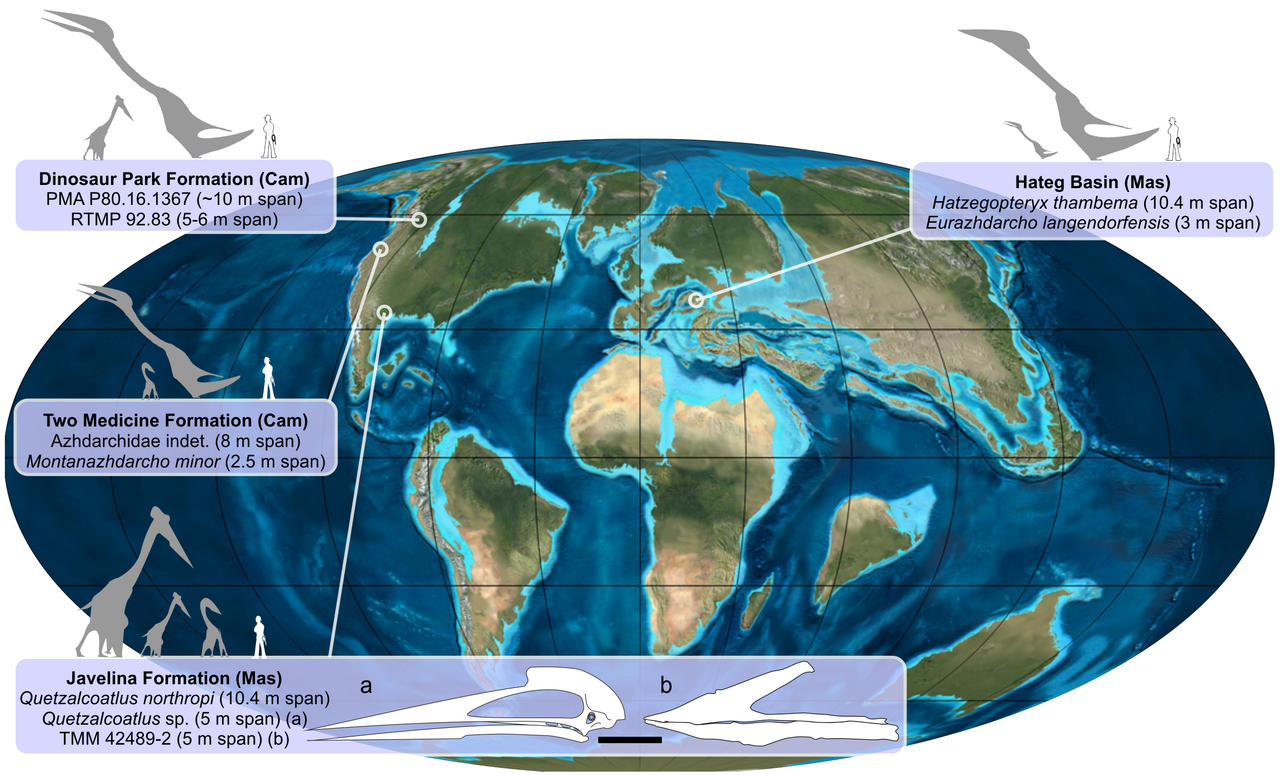
Fossils from the Hațeg area include several notable taxa that illustrate insular evolution. Small-bodied sauropods such as Magyarosaurus, ornithopods like Zalmoxes, and the giant pterosaur Hatzegopteryx are among the best known. Other elements of the fauna include crocodyliforms, turtles, and a variety of small mammals and birds. The preserved assemblage comes from Upper Cretaceous deposits and has been the subject of ongoing study and revision as new specimens and analyses appear.
- Magyarosaurus — a small sauropod interpreted as an insular form.
- Zalmoxes — an ornithopod known from several specimens indicating smaller body size than continental relatives.
- Hatzegopteryx — a large pterosaur with a robust skull, illustrating ecological diversity.
Island dwarfism and scientific significance
Early work on the Hațeg fauna was advanced by Hungarian paleontologist Franz Nopcsa, who proposed that the restricted resources and isolated conditions of islands tend to favor size reductions in large vertebrates over generations — a pattern often called "island dwarfism" or the "island rule." While details and mechanisms continue to be refined, Hațeg remains a pivotal example supporting the idea that insular conditions can drive pronounced morphological and ecological change. Studies here have contributed to broader debates in evolution, paleoecology, and how limited space and resources shape animal communities.
History of research and continuing work
Fieldwork in the Hațeg region began in earnest in the late 19th and early 20th centuries and has continued intermittently since then. New techniques in stratigraphy, CT imaging and phylogenetic analysis have clarified relationships among the island taxa and their continental relatives. The Hațeg sites are also important for education and public outreach, and fossils from the area appear in museum collections and scientific literature worldwide.
Further reading and resources
For maps, regional geology, and summaries of the fossil fauna, consult regional and synthetic sources. Examples and entry points include: site maps, reconstructions of the Tethys Sea, localities around Hunedoara County and broader treatments of Romanian paleontology. Overviews of Late Cretaceous stratigraphy for the area can be found via summaries of the Upper Cretaceous sections, major fossil lists or databases at repository resources and discussions of small-bodied dinosaur occurrences at faunal lists. Tectonic context from the Alpine orogeny and associated geological literature address the island's origin (orogeny studies).
Comparative notes that use modern island analogues, such as Hainan, can be found in ecological and climatic discussions (regional climate summaries, climate reconstructions, geology comparisons, topography notes). Vegetation and faunal differences between the Cretaceous island and present-day islands are covered in broader paleobotanical and paleofaunal summaries (vegetation studies, fauna comparisons). Historical accounts of Nopcsa's work and the development of the island dwarfism concept are discussed in biographical and theoretical treatments (Nopcsa and island rule).
Questions and answers
Q: Where was Hațeg Island located?
A: Hațeg Island was located in the Tethys Sea, near modern-day Hațeg, Hunedoara County, Romania.
Q: What kind of fossils have been found on Hațeg Island?
A: Small-sized dinosaur fossils have been found in the rocks of Hațeg Island.
Q: How was Hațeg Island formed?
A: Hațeg Island was formed mainly by tectonic uplift during the early Alpine orogeny towards the end of the Cretaceous.
Q: Is there a present-day analog for Hațeg Island?
A: There is no real present-day analog for Hațeg Island, but the island of Hainan (off the coast of China) is perhaps the closest.
Q: What was the vegetation and fauna like on Hațeg Island?
A: The vegetation and fauna on Hațeg Island was quite distinct from what we see today.
Q: Who came up with the idea of "island dwarfism"?
A: Hungarian paleontologist Franz Nopcsa (1877–1933) came up with the idea of "island dwarfism".
Q: Is Nopcsa's theory of island dwarfism widely accepted today?
A: Yes, Nopcsa's theory of island dwarfism – also known as the "island rule" – is widely accepted today.
Related articles
Author
AlegsaOnline.com Hațeg Island — Late Cretaceous insular ecosystem of Transylvania Leandro Alegsa
URL: https://en.alegsaonline.com/art/42791
Sources
- dinochecker.com : dinochecker.com
- doi.org : 10.1016/j.palaeo.2010.05.032
- sciencedirect.com : sciencedirect.com/science/article/pii/S0195667115300616