
Halophile — organisms adapted to salty environments
Halophiles are organisms that require elevated salt concentrations to grow. This article covers their biology, habitats, adaptations, examples, and uses in biotechnology and ecology.
Overview
Halophiles are organisms that require salt in their surroundings to live. The term derives from Greek words for "salt" and "loving." These organisms are found where evaporation concentrates salts, including man-made evaporation ponds and natural salt lakes. Famous habitats where halophiles flourish include the Great Salt Lake, Owens Lake, and the Dead Sea.
Image gallery
2 Images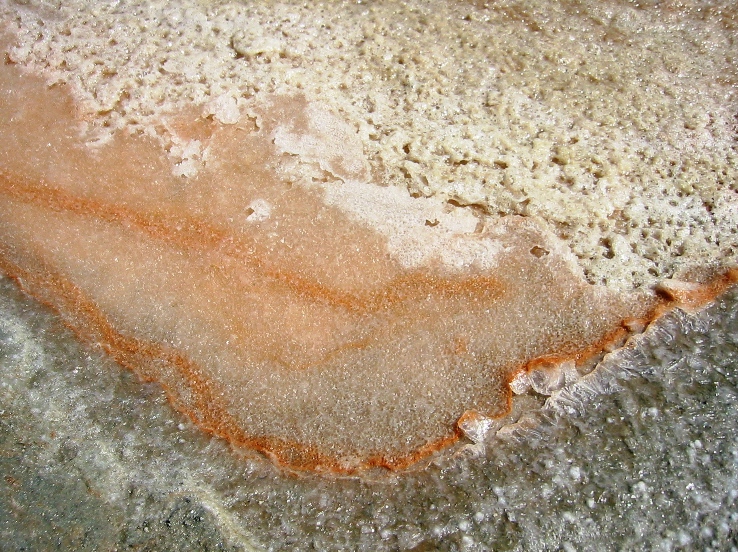

Classification and diversity
Most extreme halophiles belong to the domain Archaea, commonly called archaeans, but salt-adapted bacteria and eukaryotes also occur. A well-known eukaryotic example is the green alga Dunaliella salina, which tolerates very high salinities and produces carotenoid pigments. Halophiles range from single-celled microbes to simple multicellular organisms and occupy many ecological niches in saline environments.
Key adaptations
Halophiles use two broad strategies to cope with high salt: either balancing internal ionic strength with the outside medium, or synthesizing and accumulating organic 'compatible solutes' that do not interfere with cell chemistry. Protein structures and membrane lipids of halophiles are often specialized to remain stable and functional in saline conditions. These adaptations allow enzymes, transporters and structural molecules to work where non-adapted organisms would desiccate or denature.
Habitats and ecological roles
Salt-loving organisms inhabit coastal brines, inland salt lakes, salt pans, saline soils and artificial salterns. In these settings they form colorful microbial mats and blooms, influence nutrient cycles, and support unique food webs. Halophiles can dominate biomass in hypersaline systems and contribute to primary production, organic matter turnover, and the formation of mineral deposits.
Uses and significance
Halophiles are valuable in research and industry. Salt-tolerant enzymes and pigments are exploited in biotechnology, food processing, and cosmetics because they remain active under conditions that inhibit ordinary biomolecules. Some halophiles are used in salt production and in studies of life under extreme conditions, including astrobiology. Their resilience and metabolic diversity make them models for understanding adaptation and for potential applications in bioremediation of saline waste streams.
Distinctions and notable facts
- Halophile vs. halotolerant: halophiles require high salt to grow; halotolerant organisms survive but do not need it.
- Extreme halophiles often belong to archaeal groups with bright pigments that color saline waters red or pink.
- Studying halophiles illuminates protein stability, membrane chemistry and ecological processes in extreme settings.
Because halophiles span domains of life and show varied survival tactics, they remain an important subject for ecology, evolution and applied science. For further reading and specific datasets, consult specialized resources and microbial culture collections that focus on saline-environment organisms.
Questions and answers
Q: What are halophiles?
A: Halophiles are organisms that require a salty environment to survive.
Q: Where do halophiles live?
A: Halophiles commonly live in salt lakes or evaporation ponds, such as Great Salt Lake, Owens Lake, or Dead Sea.
Q: What is the meaning of the term "halophile"?
A: The term "halophile" comes from Greek for "salt-loving".
Q: What types of organisms are typically halophiles?
A: Most halophiles are archaeans, but some bacteria and eukaryotes, like the alga Dunaliella salina, are also halophiles.
Q: What type of environment is necessary for halophiles to live?
A: Halophiles need a salt-rich environment to survive.
Q: Are there any other lakes that halophiles may live in?
A: Yes, halophiles can be found in other salt lakes as well, in addition to the Great Salt Lake, Owens Lake, and Dead Sea.
Q: What makes halophiles unique compared to other organisms?
A: Halophiles are unique in that they require a high concentration of salt in order to thrive.
Related articles
Author
AlegsaOnline.com Halophile — organisms adapted to salty environments Leandro Alegsa
URL: https://en.alegsaonline.com/art/41978
Sources
- books.google.com : An introduction to astrobiology
- books.google.com : Halophilic microorganisms and their environments
- books.google.com : Microbial ecology: organisms, habitats, activities
- books.google.com : Protein adaptation in extremophiles
- books.google.com : Microbiology of extreme soils