
Ghazal: form, history, and cultural significance
A ghazal is a lyrical poetic form of rhyming couplets and a repeating refrain originating in Arabic verse and refined in Persian, Urdu, and other traditions; it explores love, loss, and longing.
Overview
The ghazal is a lyrical poetic form composed of a sequence of autonomous couplets that share a common rhyme and a repeated refrain. Each couplet, traditionally called a sher, is often self-contained, presenting a complete image or idea while participating in the poem's overall pattern. Ghazals are typically written in a single meter and are prized for balancing formal constraint with emotional intensity. Across different eras and languages the form has signalled both worldly love and mystical longing.
Image gallery
3 Images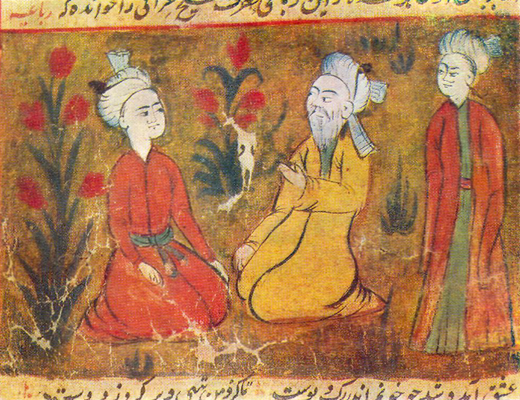


Structure and terminology
Several technical features distinguish a classical ghazal. The opening couplet, the matla, establishes the rhyme and the refrain: both lines of this couplet end with the same rhyme and the repeated phrase known as the radif. In every following couplet only the second line carries the rhyme and radif, with the rhyming pattern before the radif called the qaáfiya. Meter is consistent throughout the poem (referred to as beher in Persian and Urdu practice). The final couplet, or maqta, often includes the poet's pen name or signature in a convention called takhallus. These elements together create a recognizable musical and rhetorical effect.
Historical origins and development
The ghazal developed from Arabic verse and the shorter lyrical elements of the older panegyric qasida; it took shape as a distinct genre in early medieval Arabic poetry. Persian poets absorbed, refined, and expanded the form, giving it much of the thematic vocabulary—the beloved, the tavern, the wine of love—that later became central. From Persian literary circles the ghazal spread into the cultures of South Asia and the Ottoman world, adapting to local languages, meters, and cultural contexts while retaining its couplet structure and refrains.
Spread into South Asia and Sufi influence
In South Asia the ghazal became especially prominent from the medieval period onward, influenced by courtly patronage and by Sufi poets and mystics whose spiritual language and metaphors mingled with the form's conventional love themes. In Persian and later Urdu, the ghazal evolved into one of the principal poetic modes for expressing both human affection and divine longing. It became embedded in courtly literature and later in vernacular poetic traditions.
Themes, imagery and performance
Common ghazal imagery includes the beloved, wine, the rose, the night, and the separation that intensifies desire. These motifs may be used in secular or spiritual registers; Sufi poets often interpret the beloved as a symbol of the divine. In South Asia the ghazal also developed as a musical repertory: couplets are frequently set to melody and performed in classical and semi-classical styles, and the form found a place in concert performance and film music, which broadened its audience.
Notable poets and cross-cultural reception
Major figures associated with the ghazal include Persian and Sufi masters as well as later writers in Turkic and South Asian languages. European interest in Persian poetry in the 18th and 19th centuries brought the ghazal to the attention of writers such as Johann Wolfgang von Goethe and German poets who experimented with related lyric forms. In the late 20th century poets writing in English sought ways to translate, reproduce, or adapt the ghazal's couplet-and-refrain pattern, producing both strict and innovative versions.
Modern variations and adaptation
Contemporary practice ranges from faithful adherence to rhyme, refrain, and meter to freer adaptations that keep the couplet unit and thematic spirit while relaxing other constraints. Translators and poets composing in new languages have debated whether a ghazal in a non-classical language must reproduce every technical requirement or may preserve the essence—repetitive refrains, couplet autonomy, and tonal resonance. The form's flexibility helps it remain vital in poetry and performance today.
Further reading and resources
- Origins in Arabic verse and early forms
- Ghazal as a poetic genre and its characteristics
- The ghazal within Islamic cultural history
- Spread of the ghazal into South Asia
- Courtly and Sufi patronage of the ghazal
- Rumi and mystical dimensions of the ghazal
- Mirza Ghalib and the Urdu ghazal tradition
- Muhammad Iqbal and modern philosophical uses
- Goethe's engagement with Persian lyric
- German reception and adaptations
- Kashmiri poetic connections
- Agha Shahid Ali and ghazals in English
Related articles
Author
AlegsaOnline.com Ghazal: form, history, and cultural significance Leandro Alegsa
URL: https://en.alegsaonline.com/art/38623