
South Asia (Indian subcontinent): geography, countries, climate, and economy
Comprehensive overview of South Asia — the Indian subcontinent — covering geography, member states, climate zones, agriculture, resources, history, and regional distinctions.

South Asia, often called the Indian subcontinent, is the southern portion of the Asian continent and a distinct geographic and cultural region. It occupies a diverse range of landscapes from high mountain ranges in the north to coastal plains and island chains in the south. The region is bounded by several adjacent regions and major bodies of water: to the west and northwest lie West Asia and Central Asia, to the east are parts of Eastern and Southeastern Asia, and the Indian Ocean shapes its southern maritime edge. Historically and geographically the area is often referred to as the Indian subcontinent.
Image gallery
10 Images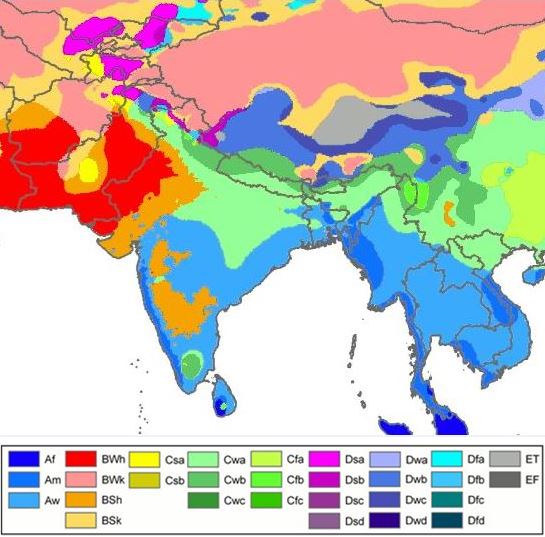






Constituent countries and political map
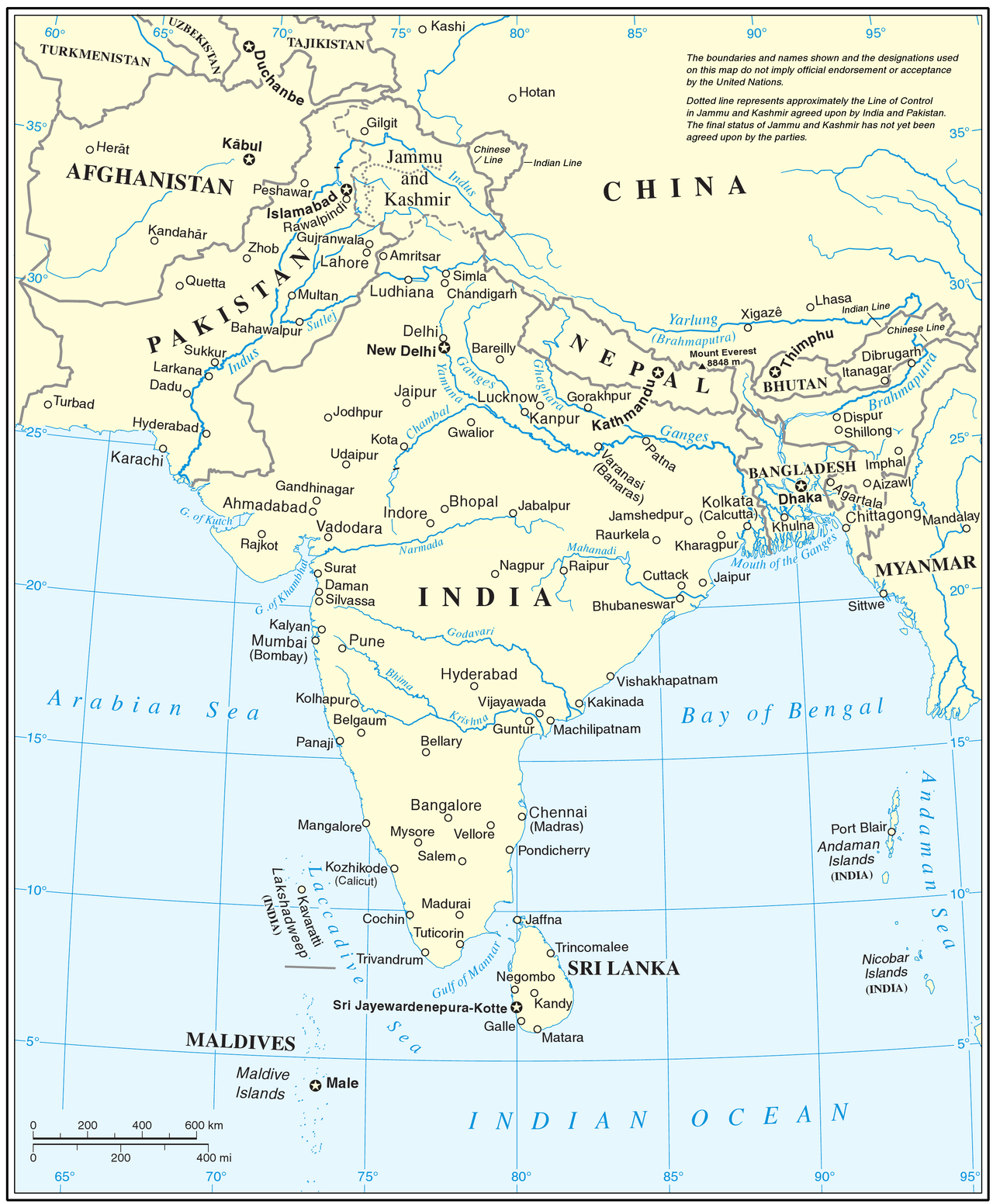
The modern political region commonly identified as South Asia comprises eight sovereign states and several dependent island chains. The principal countries are listed below; each plays a distinct role in the region's demographics, culture, and economy:
Physical geography and environments
South Asia displays striking environmental contrasts. In the north, the Himalayan and Karakoram mountain chains form the world's highest ranges and influence regional hydrology and climate. Plains fed by major river systems — notably the Indus and the Ganges — support dense agricultural populations. Further south, peninsular plateaus and coastal belts give way to tropical lowlands and island atolls. The distribution of moisture and elevation produces a mosaic of ecosystems ranging from alpine and temperate zones to tropical rainforest and dry desert-like tracts; seasonal moisture patterns are a dominant control on local ecology (moisture gradients).
Climate patterns
The region's climate can be generalized into three broad types: tropical, dry, and temperate. The most influential large-scale phenomenon is the monsoon, a system of seasonal wind reversals that delivers the majority of yearly rainfall to much of the subcontinent. Variability in the timing and strength of monsoon rains affects cropping cycles, water supply, and livelihoods. In the western interior, steppe and desert-like conditions develop where moisture is limited, while high-elevation areas experience cool to cold temperate climates and significant snow in winter. Periodically, tropical cyclones form over the adjacent oceans and can bring destructive winds and storm surge to coastal zones.
Economy, agriculture, and resources
Agriculture remains a central economic activity for a large share of the population; many people work as farmers and depend on seasonal rains and river irrigation. Staple and cash crops cultivated across the region include rice, tea, various oilseeds and pulses, and tree crops such as cashews. Groundnuts or peanuts and commercial plantation crops like tea are economically important in particular zones. Livestock such as cattle and sheep contribute to subsistence systems and local markets; in some cultural settings animals also serve draft and dairy purposes. The subcontinent contains significant mineral and energy deposits, including natural gas and coal, though the extent and pace of extraction and development vary by country and locality.
History, cultural significance, and distinctions
South Asia has a long and complex human history that has given rise to multiple major cultural, religious, and linguistic traditions. The term Indian subcontinent reflects a shared geological and historical heritage while acknowledging internal diversity. Empires, trade networks, and colonial encounters shaped modern boundaries and institutions. Today the region is notable for its demographic weight, rich cultural production, diverse religious practices, and important diasporas around the world. Its cities are centers of commerce, education, and culture, and its rural areas continue to sustain traditional livelihoods.
Contemporary importance and challenges
South Asia's importance is global in scale: it is a center of population growth, urbanization, and economic change. At the same time, the region faces shared challenges such as uneven development, pressures on water and land resources, vulnerability to climate variability and extreme weather, and the need for sustainable management of natural resources. Cross-border water basins, trade ties, and historical connections make cooperative approaches to environment and development especially relevant. Understanding South Asia requires attention to both common regional features and the particular circumstances of each country and locality.
For further thematic summaries and country profiles consult regional reference materials and national sources for up-to-date information. The links embedded above indicate topics and neighboring regions for additional context: West Asia, Central Asia, and other thematic entries on climate and agriculture (climate, moisture) that frame how South Asia interacts with adjoining areas.
Questions and answers
Q: What is South Asia also known as?
A: South Asia is also known as the Indian subcontinent.
Q: How many countries are in this region?
A: There are 8 countries in South Asia.
Q: What are the major countries in this part of the world?
A: The major countries in South Asia are Afghanistan, Bangladesh, Bhutan, India, Maldives, Nepal, Pakistan and Sri Lanka.
Q: What natural resources are used by people living there?
A: People living in South Asia use the rich land for farming to produce cashews, rice, peanuts, sesame seeds and tea. Natural gas resources are usually underdeveloped but some people raise cattle and sheep for milk or to carry things in Hindu areas.
Q: What kind of climate can be found in South Asia?
A: The climate of South Asia can be divided into three basic kinds - tropical, dry and temperate. In the northeast it is from tropical to subtropical (temperate). Moving west there is a steppe and desert climate like that of the Middle East with a mild climate near the Indus river where farmers grow crops such as rice and tea.
Q: How does the monsoon affect people living there?
A: The monsoons bring lots of rain to this area so when they do not come early it causes drought conditions which affects people's livelihoods.
Q: How do hurricanes affect this region?
A: Hurricanes occur every year which can cause destruction to homes and other property.
Related articles
Author
AlegsaOnline.com South Asia (Indian subcontinent): geography, countries, climate, and economy Leandro Alegsa
URL: https://en.alegsaonline.com/art/92113
Sources
- web.worldbank.org : "Afghanistan"
- crisisgroup.org : "Afghanistan"
- saarc-sec.org : "South Asian Association For Regional Coorporation"
- google.com : Google