
Sultan: title, role, and history of Muslim sovereigns
An encyclopedic overview of the title 'sultan': its meaning, historical development, differences from caliph and king, notable sultanates, and modern usage.
Overview
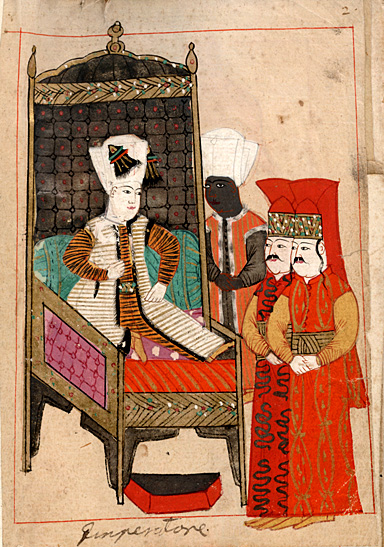
The term sultan denotes a sovereign ruler in many Muslim polities. It derives from an Arabic root meaning authority or power and came to name rulers who exercised independent temporal control without necessarily holding the religious office of caliph. In many contexts the title functioned much like the European king or monarch, but carried particular connotations tied to Islamic political culture and law. The family and territory ruled by a sultan is commonly called a dynasty or sultanate.
Image gallery
10 Images



Etymology and terminology
The Arabic word sulṭān literally conveys notions of strength, dominion and authority; it is rooted in the language of governance and legitimacy (Arabic). Unlike some titles that imply a single universal sovereign, a sultan was typically a ruler who claimed sovereignty over a territory and its people but did not always claim the wider spiritual-political leadership of the Muslim community. There is no strict Arabic equivalent specifically meaning "sultan's wife"; the European term sultana arose by adaptation and was used in several languages to refer to a sultan's consort, mother or daughter (mother, daughter), as well as other female relatives. The absence of a single conventional Arabic word for a sultan's spouse reflects differences in court vocabulary across regions and eras (wife).
Characteristics and distinctions
Sultans typically exercised executive, military and judicial functions within their domains and could appoint governors, judges and commanders. They differed from a caliph in that the caliph claimed a universal religious-political leadership of the Muslim community, while a sultan's authority was mainly territorial and often pragmatic. In style and rank a sultan could be comparable to a king, and in some places the title was later exchanged for local equivalents: during the 20th century several rulers in the Arab world adopted the title Malik (king) as state structures changed.
Historical development and notable sultanates
The title gained prominence in the medieval period as Turkic, Persian and other Muslim dynasties adopted it to legitimize rule. Well-known examples include the Seljuk and later Ottoman rulers in Anatolia, the Mamluk sultans in Egypt, the Delhi Sultans in South Asia, and numerous rulers in Southeast Asia such as those of Malacca, Sulu and Brunei. Sultanates varied widely in size and organization: some were compact courts controlling a single city and hinterland, others governed multiethnic empires. The term thus spans a wide chronological and geographic range.
Roles, succession and symbols
Sultanic power could be hereditary, elective within a royal household, or the result of military succession; succession practices differed by region and dynasty. Symbols of sultanic authority included regalia, inscriptions, coinage and public ceremonies that announced legitimacy to subjects and rivals. In many sultanates religious scholars and jurists played a role in recognizing or challenging a ruler's claim, linking temporal authority to broader notions of justice and Islamic law.
Modern legacy and examples
- Some present-day monarchs in Southeast Asia retain the title "sultan", notably in parts of Malaysia and in Brunei, where the position remains integral to national identity and state ritual.
- Other polities transformed or replaced the sultanic title with terms such as Malik (king) in the course of nation-state formation.
- The historical record of sultanates is an important source for understanding the diffusion of Islamic governance, cross-cultural court practices, and regional state formation.
For further reading and specific regional studies see introductory entries and dedicated histories (Islamic governance), comparative works on monarchs, and specialized surveys of medieval dynasties and their sultanates. Additional resources explore linguistic origins (sulṭān, Arabic), the use of female titles (Italian adoption of sultana), and the political shift to modern royal styles (sovereignty, caliphate, and regional changes in the Arab world).
Note: This article summarizes general patterns and terminology. Specific powers, court customs and succession rules varied by dynasty and period; readers should consult regional studies for detailed cases.
Questions and answers
Q: What is a sultan?
A: A sultan is an Islamic ruler who is a monarch.
Q: What is the origin of the word sultan?
A: The word sultan comes from the Arabic language and means "strength", "authority", or "rulership".
Q: What was the status of Muslim rulers who were sultans?
A: Certain Muslim rulers who claimed full sovereignty could be sultans and they did not have to take orders from any higher monarch, without claiming the overall caliphate.
Q: Is there a specific word for a sultan's wife in Arabic?
A: There is no specific word for a sultan's wife in Arabic.
Q: How did the word sultana come into being and what does it mean?
A: The word sultana began to be used (as the feminine version of the Italian word for sultano) in the 16th century in Italy, to describe the wife, mother, daughter, or concubine of a sultan.
Q: What is the meaning of the word sultanate?
A: The dynasty and lands ruled by the Sultan is called a sultanate, which corresponds to a kingdom.
Q: What did some Sultans in the Arab world change their title to during the 20th century?
A: During the 20th century, several Sultans in the Arab world changed their title to "Malik", which means "king" in Arabic.
Related articles
Author
AlegsaOnline.com Sultan: title, role, and history of Muslim sovereigns Leandro Alegsa
URL: https://en.alegsaonline.com/art/94747