
Gangkhar Puensum — the highest unclimbed mountain
Gangkhar Puensum is a 7,570 m peak on the Bhutan–Tibet frontier. Long disputed maps, cultural protections and political restrictions have left it the tallest known mountain that has never been summited.
Overview
Gangkhar Puensum is a major Himalayan peak listed at about 7,570 metres (24,840 feet). It lies in the range traditionally described as part of the Himalayas, on territory associated with Bhutan and the Tibetan region administered by China. Often cited as the world's highest mountain that remains unclimbed, it is sometimes indexed among the highest summits (near the 40th highest), and is also known by variant names such as Kangkar Pünzum. The mountain's native name is commonly translated as the "White Peak of the Three Spiritual Brothers," reflecting the local spiritual and cultural associations that surround it.
Image gallery
5 Images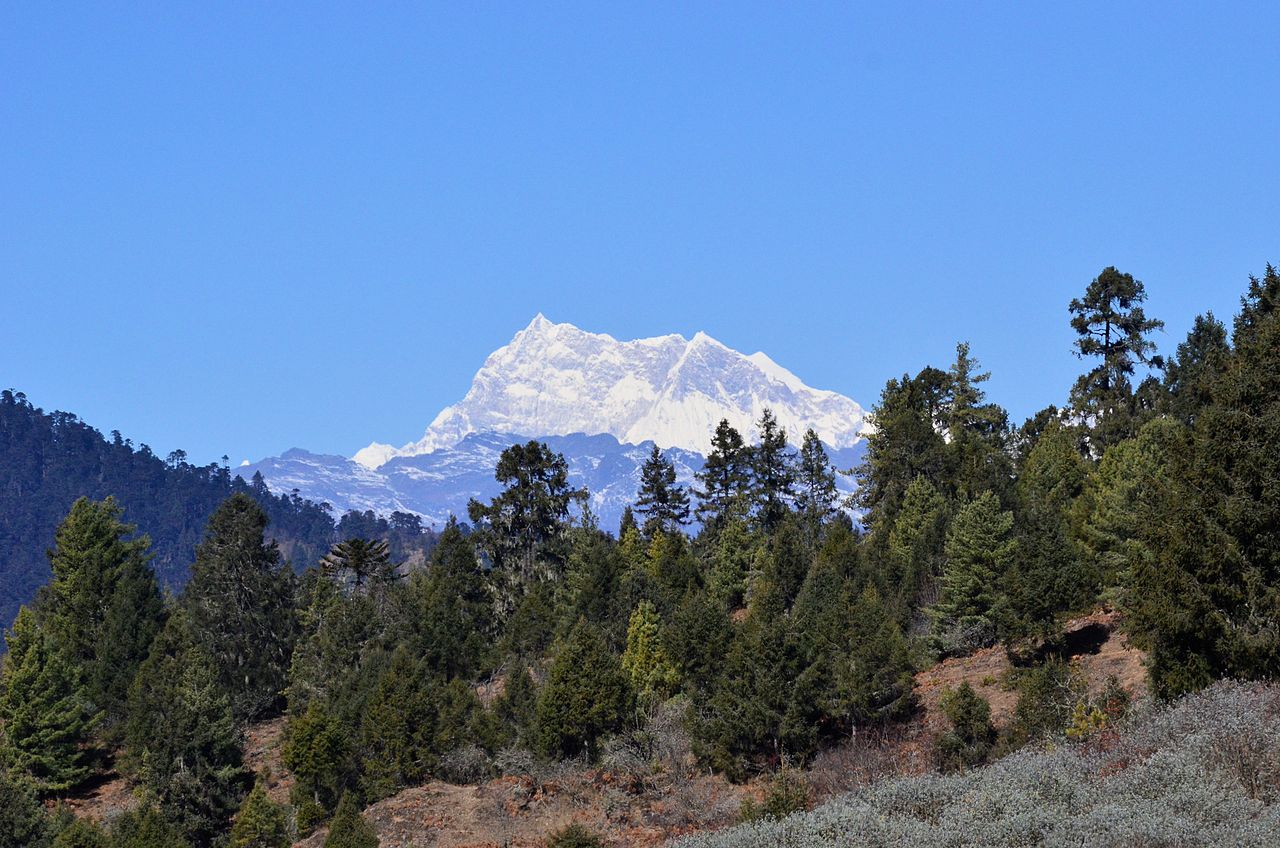


Physical characteristics
The mountain is characterized by steep, glaciated ridges, high alpine weather and complex relief typical of the central Himalaya. Its approaches rise from deep valleys, and the upper slopes are dominated by permanent snow and ice fields. Because of its elevation, conditions frequently include severe cold, high winds and avalanche risk. Precise topographic details have been difficult to agree on for decades because the region has not been comprehensively surveyed by all parties; published heights and positions vary between different national maps and scientific sources. For a discussion of mapping and measurement sources see mapping references and the note on surveying at national surveys.
Mapping, measurement and uncertainty
Initial measurements of the peak date from the early 20th century, with a notable recorded measurement in 1922. Since then, varying cartographic products put the summit in slightly different locations and list different elevations. Some of this uncertainty stems from limited ground survey access and from the use of distinct surveying methods by different states. Contemporary published positions and heights often follow data released by Chinese authorities, while Bhutan has historically lacked a full, modern mountain survey of the high border ridges.
Climbing history and legal restrictions
Several mountaineering teams have attempted to reach Gangkhar Puensum but none have achieved a confirmed ascent to the true summit. In the 1990s and 2000s Bhutan progressively restricted mountaineering: a regulation introduced in 1994 prohibited climbs above 6,000 metres, and a later decision in 2003 instituted a general ban on climbing mountains within Bhutan. The bans reflect a mixture of reasons including respect for sacred sites, environmental protection and limited search-and-rescue capacity. Access from the Tibetan side would require permission from Chinese authorities; however, political sensitivities related to the unresolved border dispute and wider bilateral relations have prevented authorisation. These political aspects intersect with broader issues of sovereignty and border delineation discussed at border talks and in official communications (diplomatic notes).
Cultural importance and conservation
For many Bhutanese communities the mountain and its surrounding areas are sacred. Religious traditions and local beliefs contribute to reluctance to permit climbing on certain peaks, a factor explicitly cited by Bhutanese policy makers when adopting restrictions. Conservation considerations — protecting fragile high‑altitude ecosystems and minimizing the impact of expedition waste — are additional reasons invoked in public statements and regulatory decisions. These cultural and environmental priorities are part of why Gangkhar Puensum remains off limits to recreational mountaineering.
Current status and significance
Today Gangkhar Puensum stands as a symbol of the interface between mountaineering ambition, cultural respect and international politics. Because it is the highest recognised mountain that has not been summited, it attracts attention from climbers, geographers and policy observers. Any future attempt that could reach the true summit would depend on changes in national policy, agreement between the authorities that control the approaches and careful engagement with local communities. For further institutional and geographic background see related resources at regional geography, administrative context, and general information portals (Tibet region, Bhutan). Additional references and reading can be found through curated data collections and specialist publications (mountain datasets, peak rankings, survey archives).
- Notable fact: Widely regarded as the highest unclimbed mountain in the world.
- Access: Blocked by Bhutanese law and by lack of Chinese permissions tied to border issues.
- Future prospects: Dependent on diplomacy, changes to national policy and respect for local cultural practices.
Related articles
Author
AlegsaOnline.com Gangkhar Puensum — the highest unclimbed mountain Leandro Alegsa
URL: https://en.alegsaonline.com/art/37465
Sources
- peakbagger.com : "Gangkar Punsum, Bhutan/China"
- peaklist.org : "High Asia II: Himalaya of Nepal, Bhutan, Sikkim and adjoining region of Tibet"
- himalayanclub.org : "Kingdom of the Thunder Dragon"
- bbc.com : "The mountains we have never climbed"
- peakware.com : "Gangkar Punsum"
- cntraveler.com : "What's the World's Highest Mountain That's Never Been Climbed?"
- popularmechanics.com : "7 of the Tallest Unclimbed Mountains in the World"
- books.google.com : Guinness World Records 2018: Meet our Real-Life Superheroes
- atlasobscura.com : "Gangkhar Puensum"
- insidehimalayas.com : "Bhutan Travel, Mountaineering in Bhutan"
- books.google.com : Guinness World Records 2016
- jac.or.jp : "Gankarpunzum & First Ascent Of Liankang Kangri Mountain In Dispute On China-Bhutan Border"
- bhutannewsonline.com : "Bhutan-China Relations" · web.archive.org