
Gao Region (Mali)
Overview of Gao Region in eastern Mali: location along the Niger River, historical role in the Songhai Empire, geography, economy, population groups, and recent security and humanitarian issues.
The Gao Region lies in eastern Mali and takes its name from its administrative capital, the city of Gao. Stretching from semi-arid Sahelian zones toward more desertic areas to the north, the region forms an important corridor along the Niger River, which shapes local settlement, agriculture and trade.
Image gallery
2 Images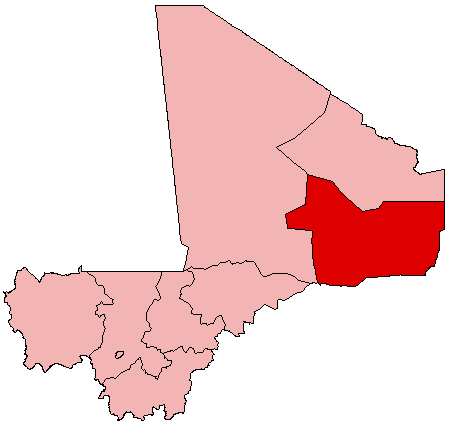

Geography and climate
Gao's landscape includes riverine floodplains, sandier plains and sparse desert. The Niger River provides perennial water resources in an otherwise seasonal climate, allowing pockets of intensive farming and fishing. Rainfall is limited and highly seasonal, with a gradient from more vegetated south to arid north.
History and culture
The area around Gao has a long history as a center of trans-Saharan commerce and learning. It was a prominent city in pre‑modern West African polities and later experienced colonial administration under French rule. Today the region is culturally diverse, home to groups such as the Songhai, Tuareg, Fulani (Peul) and Bozo, each contributing to local languages, music and social life.
Economy and livelihoods
Local economies rely on a mix of riverine agriculture, seasonal fishing, livestock herding and trade. Markets in Gao city serve as regional hubs for goods moving between southern Mali and northern Sahelian routes. Economic activity is frequently affected by variations in river levels and by broader security and market access issues.
Administration and contemporary issues
The region is divided into administrative circles and communes centered on Gao city and several smaller towns. In recent years Gao has faced significant challenges: periodic conflict and insecurity have disrupted governance, displaced populations and complicated humanitarian and development efforts. International peacekeeping and regional programs have been involved in stabilization, protection and recovery efforts.
- Major settlements: Gao (regional capital), Ansongo, Bourem and other towns.
- Key features: Niger River corridor, Sahel–Sahara interface, diverse ethnic composition.
- Contemporary focus: recovery, food security, community reconciliation and infrastructure.
Related articles
Author
AlegsaOnline.com Gao Region (Mali) Leandro Alegsa
URL: https://en.alegsaonline.com/art/37501