
Frangipani (Plumeria): botany, cultivation, and cultural uses
Frangipani (Plumeria) is a small genus of tropical flowering trees and shrubs known for fragrant, waxy flowers. Native to the Americas, it is widely cultivated for ornament, leis, perfumery, and cultural rituals.
Overview
Frangipani is the common name for Plumeria, a small genus of tropical and subtropical flowering plants. Members are usually deciduous shrubs or small trees grown for their showy, often fragrant flowers. The genus is native to the warm regions of the Americas but has been widely introduced across other tropical areas. For a taxonomic summary see Plumeria taxonomy.
Image gallery
10 Images


Botanical characteristics
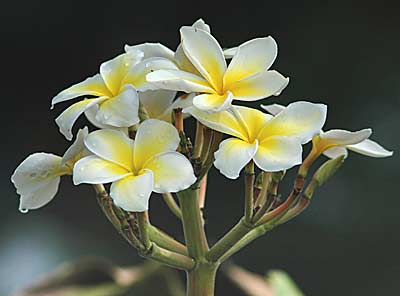
Plumeria species typically have a succulent, sometimes contorted trunk and produce a milky latex when cut. Leaves are arranged alternately and may be simple or clustered near branch ends. Flowers are tubular with five petals, often richly scented in the evening to attract pollinators. For species details and descriptions consult a regional list such as species accounts or surveys of their native range in the Americas.
Common cultivated species include P. rubra, P. alba, and P. obtusa. Deciduous habit and shrub or tree form vary by species and climate. P. rubra is notable for its many color forms and is native to regions including Mexico and Central America.
History, spread, and name
Plumeria originated in the Neotropics and spread with human movement to Africa, Asia and the Pacific. It is especially associated with ornamental plantings in places such as Hawaii, where it is widely cultivated. The English name "frangipani" likely derives from a European family or a perfume that resembled the plant's scent; sources discuss this origin cautiously and with varying detail.
Uses and cultural importance
Frangipani are primarily ornamental: planted in gardens, parks and along streets for their long-lasting blooms. Flowers are used in leis, garlands, temple offerings and personal adornment in many tropical cultures. They also appear in perfumery and traditional remedies in some regions, though the plant's latex can be irritating, so handling with care is advised. See notes on regional uses at local horticulture guides.
Cultivation and cautions
- Light and soil: prefer full sun and well-draining soil.
- Water and dormancy: drought-tolerant once established and often deciduous in dry or cool periods; avoid waterlogged roots.
- Propagation: commonly by cuttings; grafting is used for particular cultivars.
- Safety: sap may irritate skin and is mildly toxic if ingested.
For gardeners and cultural scholars alike, Plumeria offers striking flowers, a pleasant fragrance and many regionally specific traditions. Additional horticultural resources and identification keys are available through curated botanical references such as general references and specialist sites at regional species pages.
Related articles
Author
AlegsaOnline.com Frangipani (Plumeria): botany, cultivation, and cultural uses Leandro Alegsa
URL: https://en.alegsaonline.com/art/36133