
Fuchsia (plant genus)
Fuchsia is a genus of about 110 species in the evening-primrose family (Onagraceae), prized for its pendulous, brightly coloured flowers and widely grown as an ornamental worldwide.
Fuchsia is a genus of flowering plants in the family Onagraceae that contains roughly 110 described species. Most are woody shrubs or small trees, though a few are subshrubs or trailing perennials. Native primarily to Central and South America, with several species in New Zealand and the Pacific islands, fuchsias are best known for their distinctive, pendulous blossoms and a colour now called "fuchsia" after the flowers.
Image gallery
10 Images



Botanical characteristics
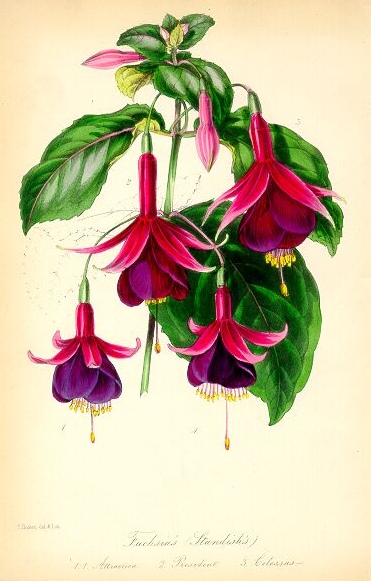
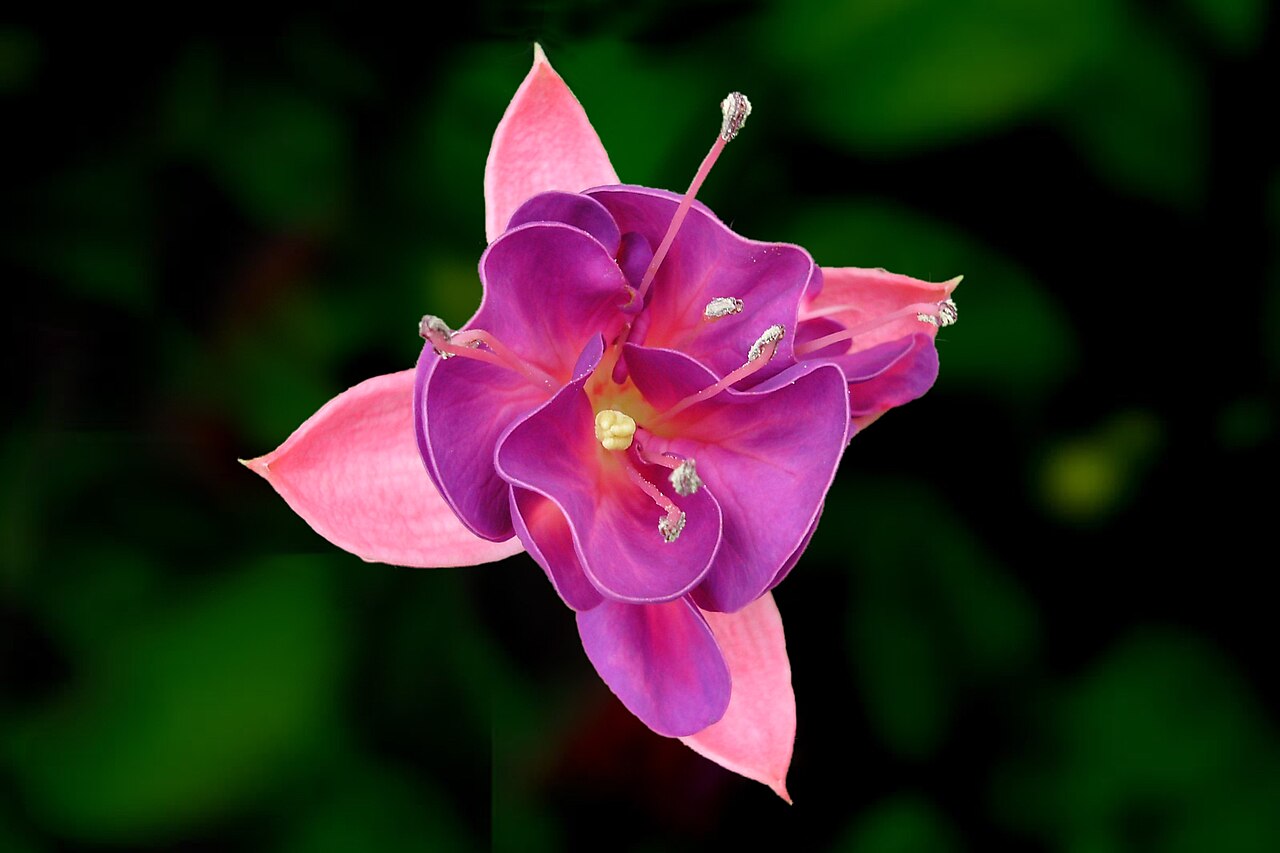
Fuchsia flowers are typically tubular and hang downward. Each bloom usually has four long, reflexed sepals and four shorter petals; the conspicuous stamens and often an extended style protrude beyond the corolla. Leaf arrangement is generally opposite (or sometimes in whorls), and leaves are simple with toothed margins. Flower colours range from pale pinks and whites through vivid reds and purples; many garden varieties combine contrasting hues.
Pollination is commonly by hummingbirds in the Americas, attracted by bright tubular flowers and nectar, while some island species are adapted to other bird or insect visitors. Growth habits vary: some species form upright shrubs, others produce trailing stems suited to hanging baskets.
History and naming
The first species formally recorded by European botanists was Fuchsia triphylla, collected on the Caribbean island of Hispaniola during an expedition in the late 17th century. The genus was named in honour of the German botanist Leonhart Fuchs (1501–1566). Over subsequent centuries fuchsias were introduced to European gardens and became popular subjects for hybridisation and selection.
Uses, cultivation and garden importance
Fuchsias are widely cultivated for ornamental use in containers, borders and hanging baskets; many hybrids combine hardiness, floriferousness and a wide palette of colours. They prefer sheltered, partly shaded sites with regular moisture and benefit from pruning in spring. Propagation is mostly by softwood cuttings; seed is used in breeding and conservation work.
Pests and problems include aphids and fungal diseases in humid conditions, and in some regions specialized pests such as the fuchsia gall mite have caused damage to cultivated plants. Conservation concerns apply to certain wild species with restricted ranges, making habitat protection and seed-bank efforts important for biodiversity.
Further reading and resources
- Genus overview and taxonomy
- Onagraceae family information
- Colour name "fuchsia" origin
- Species and cultivars list
- Botanical descriptions
- Hispaniola and regional flora
- Caribbean plant history
- Haiti flora notes
- Dominican Republic plant records
- Charles Plumier expedition accounts
- Leonhart Fuchs biography and legacy
- Greater Antilles botanical exploration
Questions and answers
Q: What is fuchsia?
A: Fuchsia is a genus of flowering plants.
Q: What is the color fuchsia derived from?
A: The color fuchsia is often purplish-red, which is where we get the name of the plant.
Q: Which family of flowering plants does fuchsia belong to?
A: Fuchsia belongs to the Onagraceae family of flowering plants.
Q: How many species does fuchsia have?
A: Fuchsia has 110 species.
Q: Is fuchsia a tree or a shrub?
A: Fuchsia consists mostly of shrubs or small trees.
Q: Who discovered the first Fuchsia plant?
A: The first, Fuchsia triphylla, was discovered on the Caribbean island of Hispaniola by the French monk and botanist, Charles Plumier, during his third expedition to the Greater Antilles.
Q: After whom was the new genus Fuchsia named?
A: The new genus Fuchsia was named after the German botanist Leonhart Fuchs (1501–1566) by Charles Plumier.
Related articles
Author
AlegsaOnline.com Fuchsia (plant genus) Leandro Alegsa
URL: https://en.alegsaonline.com/art/36887