
Femur (thigh bone): structure, function, and clinical significance
The femur is the long bone of the thigh connecting hip and knee. This article covers its anatomy, development, biomechanics, clinical importance, and variation across tetrapods.
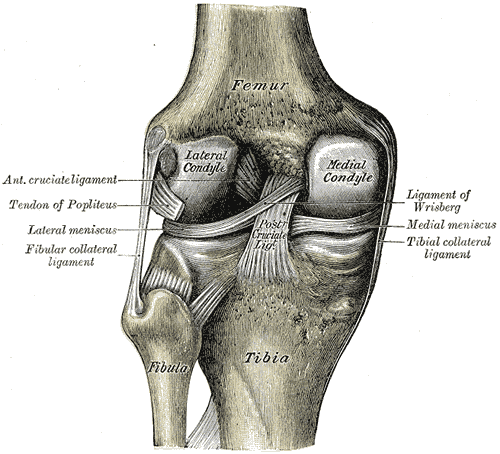
The femur, often called the thigh bone, is the single long bone of the upper leg in land vertebrates. In tetrapods it links the trunk to the limb by joining the pelvis at the hip and forming the chief element of the joint at the knee. At its proximal end the femur articulates with the pelvis via a ball-and-socket joint that allows multi-directional movement; distally it participates in a hinge-like connection with the lower leg.
Image gallery
10 Images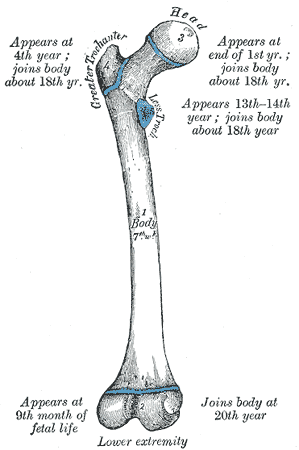




Anatomical regions and landmarks
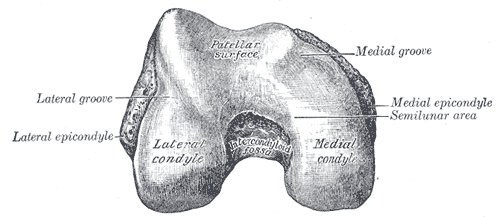
Macroscopically the femur is divided into proximal, shaft and distal regions. Distinct landmarks serve as attachment sites for muscles and ligaments and as articular surfaces:
- Head and neck: the rounded head fits into the acetabulum of the pelvis.
- Greater and lesser trochanters: prominent projections for large muscle groups.
- Shaft: a slightly bowed tube with a rough posterior ridge (linea aspera).
- Distal condyles: two rounded surfaces that articulate with the tibia and the patella.
The femur is the longest and among the strongest bones in the body, adapted to transmit large forces during standing and locomotion. Its internal structure balances stiffness and lightness through a dense cortical shell and a trabecular interior.
Development and growth
Femoral ossification begins before birth with primary centers in the shaft; secondary centers in the ends appear in infancy and childhood. Growth at the epiphyseal plates determines final length and can be affected by nutrition, hormones, or injury. The neck and head area are particularly important clinically because blood supply to the femoral head can be vulnerable after trauma.
Function, biomechanics and clinical relevance
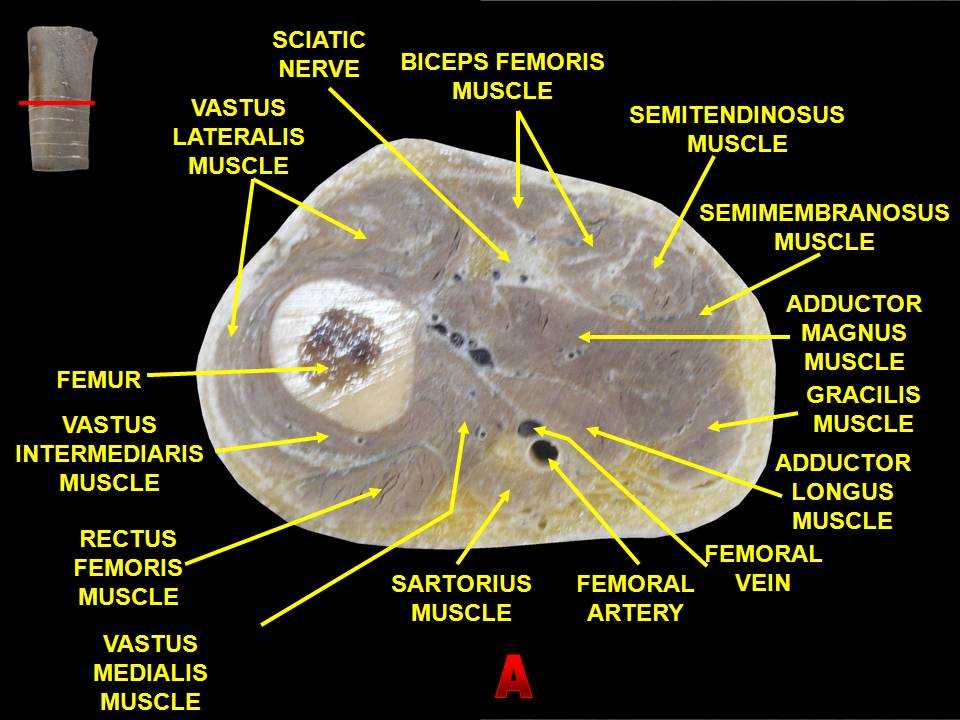
Functionally, the femur transfers body weight from the hip to the lower leg and provides leverage for powerful muscle groups: the gluteals, adductors, quadriceps and hamstrings. Common clinical issues include fractures of the femoral neck, intertrochanteric fractures and shaft breaks, each with distinct mechanisms and treatments. Hip arthroplasty and internal fixation are common surgical responses. Disruption of blood flow to the head can lead to avascular necrosis, a serious complication.
Imaging (X-ray, CT, MRI) guides diagnosis and management. Rehabilitation focuses on restoring weight-bearing capacity and gait mechanics while protecting healing tissue.
Comparative notes and notable facts
The femur varies in orientation and proportion among tetrapods to suit different modes of locomotion: in bipeds it is angled to support upright posture; in many quadrupeds it is more horizontal. Its combination of length, strength and muscle attachments makes it central to studies of movement, evolution and forensic identification. For introductory references and further reading see resources linked here: thigh bone overview, pelvic articulation, knee joint, and comparative anatomy portals at tetrapod studies.
Related articles
Author
AlegsaOnline.com Femur (thigh bone): structure, function, and clinical significance Leandro Alegsa
URL: https://en.alegsaonline.com/art/33963