
Felix Klein: mathematician, the Erlangen Program, and the Klein bottle
Concise biography of Felix Klein (1849–1925), his Erlangen Program, contributions to geometry, group theory, complex function theory, topology (including the Klein bottle), and his influence on mathematical education.
Overview
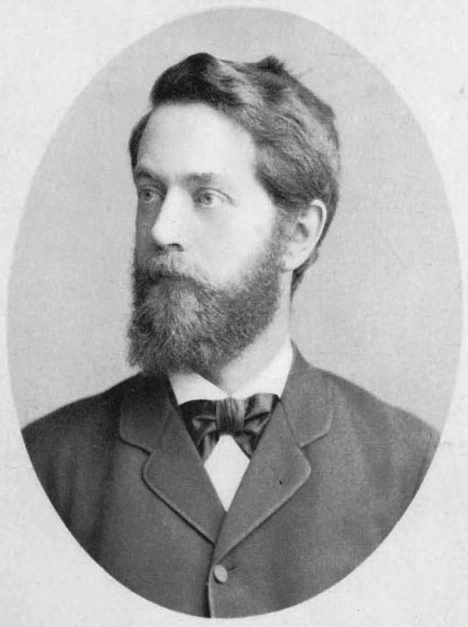
Felix Christian Klein ( April 25, 1849, Düsseldorf — June 22, 1925, Göttingen, Germany ) was a German mathematician whose work helped reshape the modern study of geometry, the role of groups in mathematics, and connections between analysis and topology. He combined concrete examples with broad conceptual programs that influenced both research and teaching.
Image gallery
4 Images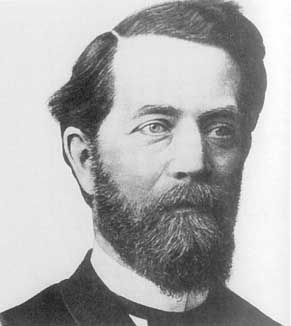


Biography and career
Klein studied and taught in several German universities and eventually became closely associated with Göttingen, where he played a major role in fostering mathematical research and reforming instruction. He was an energetic lecturer and expositor, known for bringing abstract ideas to life with geometric constructions and visual reasoning. His organizational and editorial efforts helped build the institutions and networks that supported mathematics in the late 19th and early 20th centuries.
Major contributions
Klein's work spans several interrelated areas. He stressed the unifying power of symmetry and transformation, and he used examples as well as abstract frameworks to illuminate mathematical structure.
- Erlangen Program: In 1872 Klein proposed the Erlangen Program, a conceptual framework that classifies geometries by their symmetry groups: geometries are studied via the groups of transformations that preserve their basic relations. This recasting made group theory central to geometric thinking and clarified relations among Euclidean, projective and non-Euclidean geometries.
- Group actions and geometry: Klein emphasized that many geometric phenomena can be understood as invariants under transformation groups, a perspective that later influenced the study of Lie groups, discrete groups, and geometric structures (geometry, group theory).
- Complex analysis and Riemann surfaces: He worked on links between complex function theory and geometry, studying automorphic functions and the action of transformation groups on Riemann surfaces. Some objects and classes of groups associated to these studies are popularly called Kleinian and modular-type groups.
- Topology and examples: Klein introduced and popularized concrete topological examples that clarify abstract notions. The Klein bottle, named after him, is a standard non-orientable surface used to illustrate orientability and embedding phenomena in topology.
The Erlangen Program explained
Rather than viewing different geometries as unrelated subjects, Klein proposed that each geometry be defined by a space together with a group of transformations and the properties invariant under that group. For example, Euclidean geometry studies figures up to rigid motions that preserve distances; projective geometry studies properties invariant under projective transformations; and certain non-Euclidean geometries are characterized by their own symmetry groups. This viewpoint helped organize existing theories and guided subsequent developments in differential and algebraic geometry.
The Klein bottle and topology
The Klein bottle is a simple yet striking example: formed by identifying opposite edges of a rectangle with a twist, it is a closed surface that is non-orientable and has no embedded realization in three-dimensional Euclidean space without self-intersection. As a visual and conceptual tool it appears in elementary topology to show how global properties of surfaces can differ from local ones.
Influence and legacy
Klein's blend of concrete models and unifying theory influenced many branches of mathematics. Concepts bearing his name — Kleinian groups, the Klein quartic and the Klein bottle among them — appear across geometry, complex analysis and topology. His pedagogical work, lectures and editorial projects helped shape mathematical education and the research environment of his time, especially at Göttingen, which became a leading center of mathematics in part through his efforts.
Further reading and resources
For dates, biographical notes and collections of his writings see annotated biographies and archival resources (birth date, early years, place of birth, date of death, death year, Göttingen connections). For introductions to his ideas and the historical context consult expository accounts of the Erlangen Program and surveys of group-theoretic methods in geometry and non-Euclidean studies. More specialized sources treat his work in complex function theory and on discrete groups (professional profile, national context, Klein bottle).
Related articles
Author
AlegsaOnline.com Felix Klein: mathematician, the Erlangen Program, and the Klein bottle Leandro Alegsa
URL: https://en.alegsaonline.com/art/33931