
Mathematician: roles, areas, history, methods and applications
A mathematician studies mathematics, creating proofs, models and theories. This article outlines typical roles, key branches, historical development, methods, and practical applications in science, technology and industry.
Overview
A mathematician is a person who studies mathematics, either professionally or for pleasure. Work can range from developing abstract theories to solving concrete real‑world problems. Some pursue research into foundations and proofs, while others focus on models and computation. Many explore patterns, structures and logical relationships that underlie other sciences.
Image gallery
6 Images



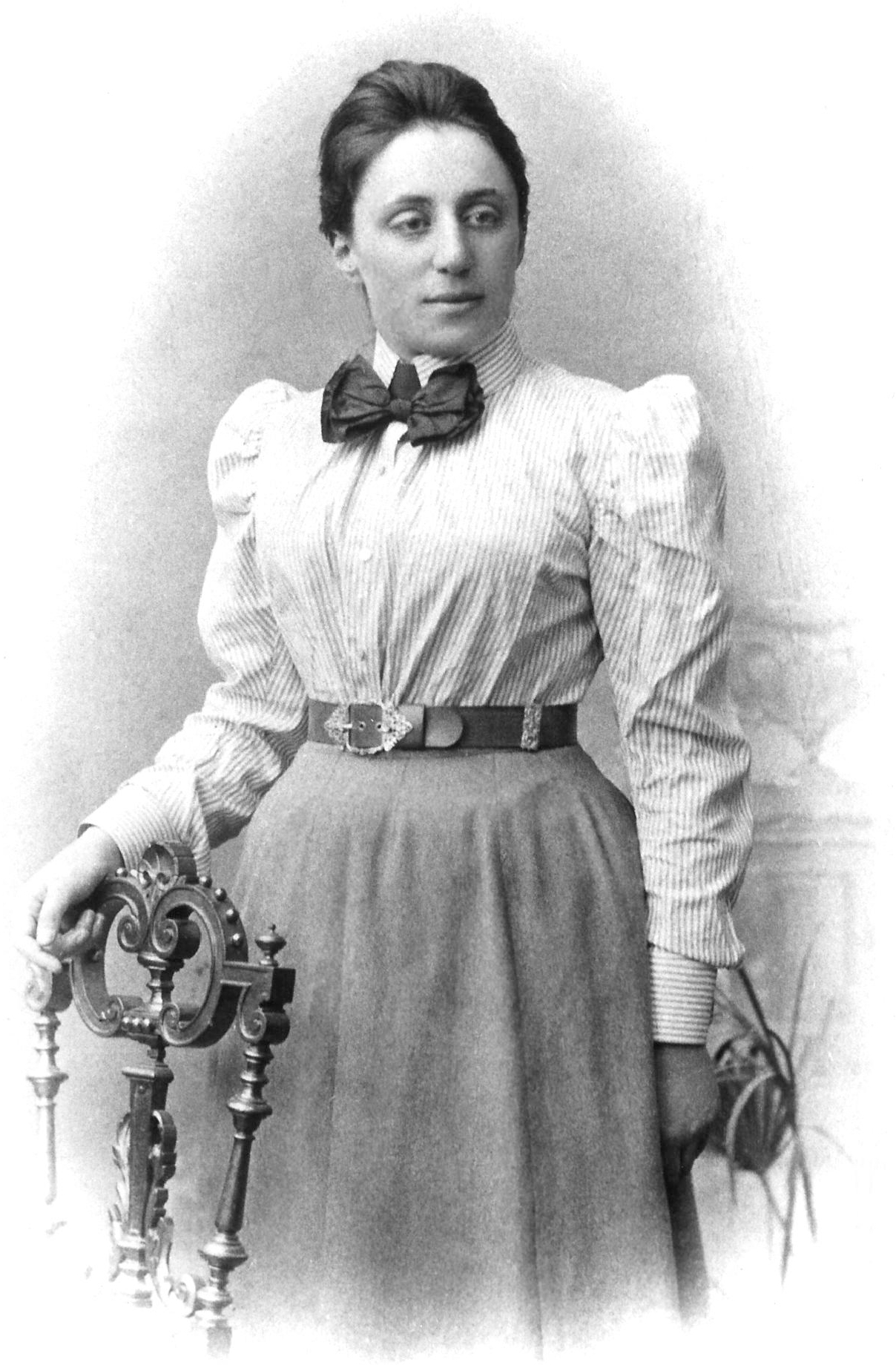

Typical roles and workplaces
Mathematicians can be professors, researchers in government labs, or employees in private industry. They also work in finance, engineering, data science and cryptography. Others contribute as independent consultants or hobbyists who continue study out of intellectual interest (hobby).
- Academic research and teaching
- Industrial research and development
- Applied work in statistics, modelling and computation
- Security, encryption and algorithm design
Branches and methods
Mathematics divides broadly into pure and applied directions. Pure areas include algebra, analysis, geometry, topology, number theory and logic; applied areas include numerical analysis, statistics, optimization and mathematical modelling. Typical methods are rigorous proof, abstraction, formal reasoning and increasingly computer‑assisted calculation and simulation.
Common tools are symbolic reasoning, formal proofs, computer algebra systems and numerical software. Collaboration across disciplines is frequent: mathematicians often work with physicists, biologists, economists and engineers to translate practical problems into mathematical form and interpret results.
History and notable figures
The role of the mathematician has evolved over millennia, from ancient geometry to modern abstract theory. Early influential figures include Euclid, whose systematic treatment shaped geometry; later contributors such as Isaac Newton, Carl Friedrich Gauss and Srinivasa Ramanujan extended calculus, number theory and analysis. Developments in the 19th and 20th centuries established modern rigor, set theory and computational methods.
Mathematicians have a profound impact on technology and society: they underpin cryptography, enable modern communications, inform data science and economics, and supply tools used in engineering and the natural sciences. Training typically involves advanced university study, strong logical and computational skills, and sustained problem‑solving practice.
Related articles
Author
AlegsaOnline.com Mathematician: roles, areas, history, methods and applications Leandro Alegsa
URL: https://en.alegsaonline.com/art/62811
Sources
- science.org.au : "Australian Academy of Science"
- fundacioabertis.org : "Fundación Abertis"
- acm.org : "Association for Computing Machinery Special Interest Group"
- ams.org : "American Mathematical Society"
- ancefn.org.ar : "Academia Nacional de Ciencias Exactas, Físicas y Naturales"
- oeiperu.org : "Academia Nacional de Ciencia y Tecnología"
- math.tu-berlin.de : "Algorithmic Number Theory Symposium"
- aps.org : "American Physical Society"
- sloan.org : "Alfred Pritchard Sloan Foundation"
- amstat.org : "American Statistical Association"
- academie-sciences.fr : "Académie des Sciences"
- aslonline.org : "Association for Symbolic Logic"
- sites.google.com : "Association for Women in Mathematics"
- asme.org : "American Society Of Mechanical Engineers"
- austms.org.au : "Australian Mathematical Society"