
American badger (Taxidea taxus): natural history, behaviour, and role in grassland ecosystems
A compact encyclopedia entry on the American badger (Taxidea taxus): appearance, range, digging adaptations, diet, behaviour, ecological importance, conservation and distinctions from other badger species.
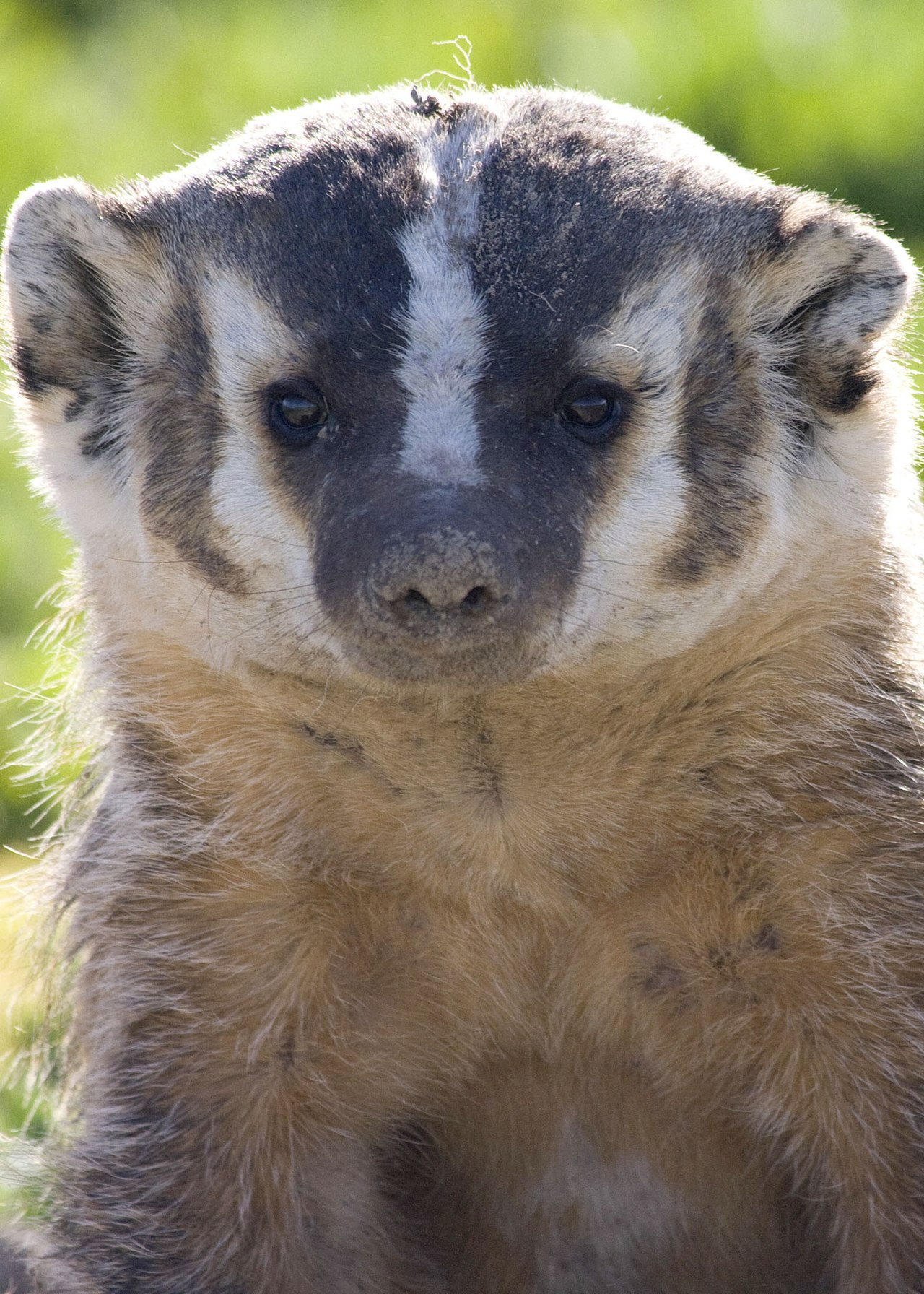
The American badger (Taxidea taxus) is a stocky, ground-oriented mammal native to much of North America. It belongs to the family Mustelidae and is adapted for life as a burrowing predator. Although it resembles the European badger in shape and face markings, it is not closely related to that Eurasian species and represents a distinct lineage within North American mustelids. See regional context: Great Plains, North America, and a comparison with the European badger.
Image gallery
10 Images


Range and habitat
American badgers are distributed across a wide band of the continent. They occur in parts of the western, central and eastern United States, extend into northern Mexico, and reach into south-central regions of Canada. Their preferred habitats are open or semi-open areas where digging for subterranean prey is practical: native prairies, rangelands, sagebrush steppe, agricultural fields and edges of woodlands. They favor soils that are friable or sandy loam, such as the prairies, but can be found from low elevations to high mountain meadows where conditions allow.
Physical characteristics and digging
Badgers have a low, robust body, short powerful limbs and very strong foreclaws that enable rapid excavation. Their skull is broad with distinctive black-and-white facial striping. Fur is coarse, usually grizzled gray to brown. The species is an effective fossorial predator: it can dig and enter burrows quickly and is capable of extensive tunneling through loose soil to reach prey and to construct resting or natal burrows.
Diet and hunting behaviour
American badgers are primarily carnivorous and specialize on ground-dwelling mammals. They capture much of their food by digging rather than prolonged pursuit. Typical prey items include small rodents and other fossorial animals such as mice, squirrels (including ground squirrels), and larger burrowers like groundhogs. Their diet can also include young ground-nesting birds, insects and carrion when available. Badgers hunt mostly alone and rely on keen hearing and powerful forelimbs to unearth prey.
Life history, ecology and conservation
American badgers are mostly solitary and show seasonal patterns in breeding and activity; reproduction involves behaviours that result in offspring born after a gestation period with delayed implantation, so young commonly arrive in spring. Lifespans vary between wild and captive animals, and populations respond to local conditions. Overall the species is not considered globally threatened, but local declines occur where habitat is converted, rodenticides are used, or road mortality and control measures reduce numbers. As ecosystem engineers, badgers influence soil turnover and their abandoned burrows provide shelter to a variety of other animals.
Notable distinctions and human interactions
Key distinctions include convergent similarities to European badgers despite separate evolutionary histories and the existence of recognized regional subspecies. Human attitudes range from appreciation for their role in controlling rodent pests to conflict where they damage agricultural infrastructure or are targeted by control programs. Management typically balances species conservation, agricultural concerns and public safety.
- Overview and taxonomy: Taxidea taxus, North American mustelid.
- Habitat needs: open areas with diggable soils.
- Feeding: specialized digger preying on burrowing mammals.
- Ecological role: soil turnover and burrow-provision for other species.
For further reading and region-specific details, consult field guides and local wildlife agencies via resources linked here: Great Plains, United States, Canada, and additional sources indexed at regional conservation pages: North America overview, Mexico distribution.
Tags
Related articles
Author
AlegsaOnline.com American badger (Taxidea taxus): natural history, behaviour, and role in grassland ecosystems Leandro Alegsa
URL: https://en.alegsaonline.com/art/3364