
Ernst Kaltenbrunner: Austrian SS leader and head of the RSHA
Austrian-born SS-Obergruppenführer who led the Reich Security Main Office (RSHA) during WWII, responsible for security policy and implicated in war crimes; tried and executed at Nuremberg.
Ernst Kaltenbrunner (born 4 October 1903 in Ried im Innkreis, Austria; executed 16 October 1946 in Nuremberg, Bavaria, Germany) was a senior SS official in Nazi Germany. He rose to prominence in the security apparatus of the Third Reich and became one of the most powerful figures within the Reich Security Main Office (RSHA) during the later years of the regime. Kaltenbrunner's career is chiefly remembered for his central role in coordinating police and security policy that enabled mass persecution and deportation during the Nazi era and World War II.
Image gallery
10 Images


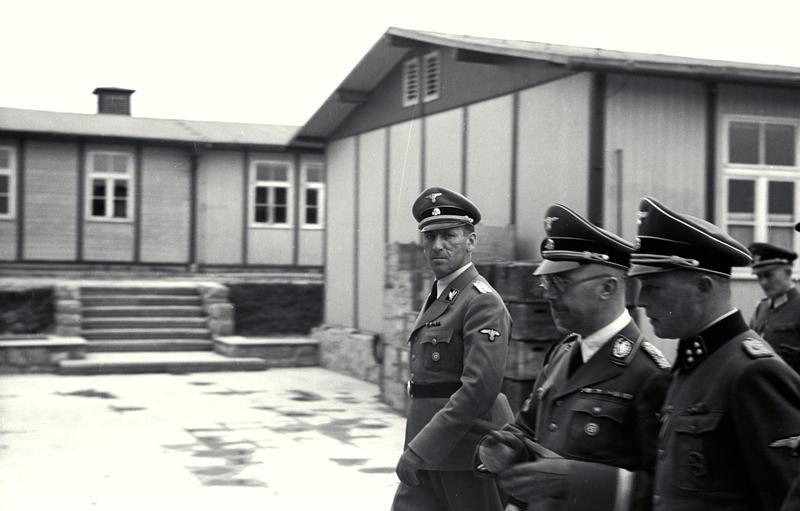


Early career and political rise
Trained as a lawyer, Kaltenbrunner moved from provincial Austrian politics into the Nazi movement in the early 1930s. He affiliated himself with the NSDAP and with the paramilitary SS, building a reputation as an energetic organizer and loyal administrator. As the Third Reich consolidated control over Austria and other occupied territories, Kaltenbrunner took on increasingly important security responsibilities and worked closely with leading figures in the SS and Gestapo structures.
Roles and responsibilities in the security apparatus
Kaltenbrunner eventually became chief of the Reich Security Main Office (RSHA), the centralized body that coordinated the German state’s political police, intelligence and security services. The RSHA incorporated the Gestapo, the security service (SD) and the criminal police (Kripo), and exercised wide authority over political repression, anti‑resistance operations and the enforcement of racial policies. The office also engaged in international police cooperation and contacts with police organizations abroad, including networks associated with Interpol.
Involvement in repressive campaigns
During his tenure in the security services, Kaltenbrunner was associated with measures against political opponents, with the persecution of Jews and other targeted groups, and with security operations in occupied territories. Contemporary records and the postwar prosecutions link the RSHA’s leadership to deportations, mass arrests and other crimes that formed part of the wider genocidal policies carried out by the Nazi state.
Context and notable episodes
- He succeeded Reinhard Heydrich as the senior head of the central security apparatus after Heydrich’s death following an assassination in 1942 (Heydrich assassination) and assumed full leadership of the RSHA in the subsequent period.
- Kaltenbrunner had been active in the movement’s early power struggles and repressions, an era that included events such as the Night of the Long Knives, the elimination of SA leadership including Ernst Röhm, and later communal campaigns of anti‑Jewish violence like Kristallnacht.
- He operated in areas under German occupation, including the lands of Bohemia and Moravia (Bohemia and Moravia), where SS and police authorities imposed harsh security regimes and reprisals against resistance and civilian populations.
Arrest, trial and legacy
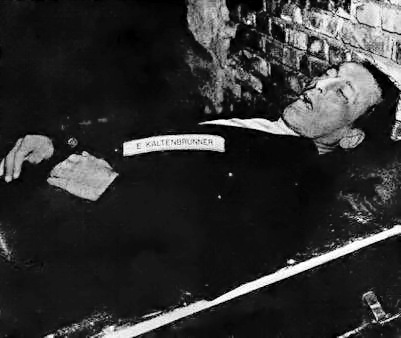
After Germany’s defeat, Kaltenbrunner was captured by Allied forces (Allied capture) and brought to trial at the international military tribunal in Nuremberg (Nuremberg Trials). He was tried on counts including war crimes and crimes against humanity, found guilty by the tribunal, sentenced to death and executed by hanging in October 1946. Historians view his conviction as part of the broader accountability for the leadership of the SS and of the Nazi state’s security institutions.
Kaltenbrunner remains a significant figure in the study of state‑sponsored repression because his career illustrates how legal training, bureaucratic authority and centralized security structures were mobilized to carry out widespread atrocities. His life and trial continue to be cited in discussions of responsibility, institutional complicity and the mechanisms of mass persecution under totalitarian regimes.
Ried im Innkreis • Austria • Nuremberg • Bavaria • Germany • Nazi era • World War II • Interpol • SS • Nuremberg Trials • Heydrich assassination • Bohemia and Moravia • NSDAP • Gestapo • Night of the Long Knives • Ernst Röhm • SA • Kristallnacht • Allied capture
Related articles
Author
AlegsaOnline.com Ernst Kaltenbrunner: Austrian SS leader and head of the RSHA Leandro Alegsa
URL: https://en.alegsaonline.com/art/32027