
Ernst Werner von Siemens: German inventor, industrialist and electrical pioneer
Biography of Ernst Werner von Siemens (1816–1892), his inventions, the founding of Siemens, and his legacy including the SI unit siemens named in his honour.
Ernst Werner von Siemens (13 December 1816 – 6 December 1892) was a German inventor and industrialist remembered as a leading contributor to early electrical engineering. Contemporary accounts describe him as both a practical engineer and a scientific experimenter; many modern summaries treat him as an inventor and a scientist whose work helped shape telegraphy and electrical machinery. For discussions of his inventive work see invention records and for biographical and scientific context see historical summaries.
Image gallery
1 Image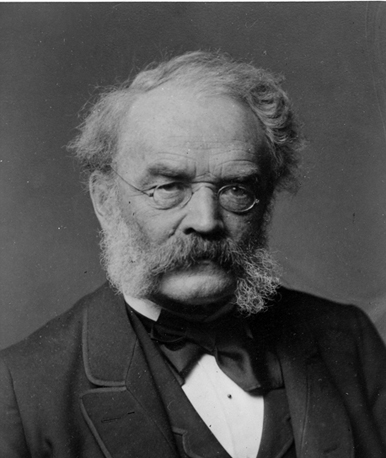
Early life and education
Born in Lenthe, near Minden in Prussia, Siemens trained originally as a mechanic and later attended the Prussian military college where he received technical instruction. His early career combined practical workshops, military service and independent experiments with telegraphy and electromagnetism. These formative experiences gave him skills that he applied to commercial telegraph systems and electrical machines.
Major inventions and technical work
Siemens is commonly associated with several practical advances rather than a single trademark invention. He developed a pointer telegraph and worked on improving telegraph cables and signaling techniques. He also pursued electrical generation and motors, contributing to the development of the dynamo principle and to early electric machinery. Major topics often listed under his name include:
- Practical telegraph apparatus and installation methods that expanded long-distance communication.
- Improvements to dynamo and generator design, helping to make electrical power generation more reliable.
- Engineering practices that bridged laboratory physics and industrial production.
Founding Siemens and business expansion
In 1847 Siemens joined with associates to form a company that evolved into the multinational Siemens enterprise. The firm began by building telegraph equipment and providing installation services, then diversified into power generation, rail signaling, medical devices and many other sectors over the decades. The company grew through a combination of technical innovation, manufacturing capability and international projects; for the company's origin and corporate history see founding history.
Legacy, honours and later recognition
Siemens was ennobled late in life and remained active in engineering and business until his death in 1892. His name has been commemorated in various ways, most notably as the SI unit of electrical conductance: the siemens. That unit, which bears his surname, recognizes his long association with electrical science and industrial electrification; more on the unit's usage can be found at unit reference.
Significance and notable facts
Werner von Siemens is often seen less as a solitary genius and more as a figure who combined theoretical understanding with practical engineering and business acumen. His career illustrates how mid‑19th century advances in electromagnetism were transformed into infrastructure and industry. Institutions, awards and foundations that trace their origins to his name continue to influence engineering education and applied research.
Related articles
Author
AlegsaOnline.com Ernst Werner von Siemens: German inventor, industrialist and electrical pioneer Leandro Alegsa
URL: https://en.alegsaonline.com/art/32032