
Epoxide (oxirane): the three‑membered cyclic ether
An epoxide is a three‑membered cyclic ether (oxirane). This article explains its structure, strain and reactivity, common syntheses, ring‑opening reactions, applications and notable distinctions.
Overview
An epoxide, also known as an oxirane, is a small cyclic ether in which an oxygen atom and two carbon atoms form a three‑membered ring. In basic texts of organic chemistry an epoxide is defined as a molecule containing that triangular arrangement; the term emphasizes the strained C–C–O ring that gives this group much of its characteristic reactivity. A concise definition and many teaching examples can be found in introductory resources on a general molecule and its functional groups.
Image gallery
2 Images
Structure and properties
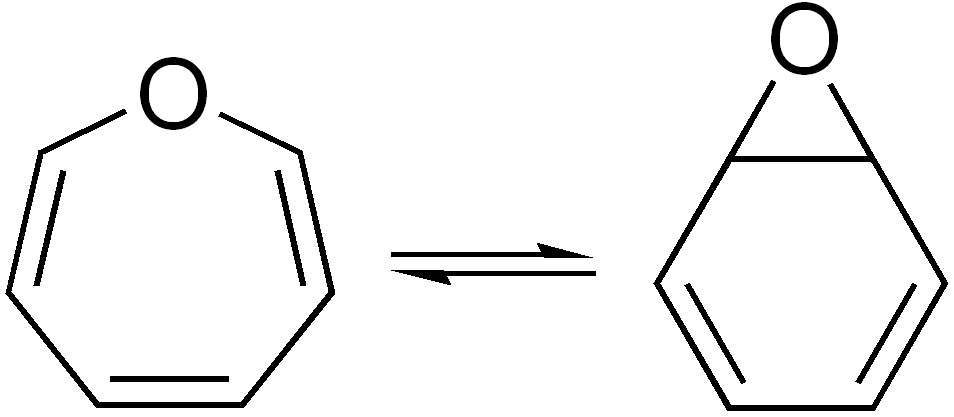
The epoxide ring contains two carbon atoms and one oxygen atom arranged in a three‑membered loop: the two carbon atoms and the oxygen atom are connected by covalent bonds. The C–C–O bond angles are compressed relative to typical tetrahedral geometry, producing substantial ring strain and making the ring bonds unusually reactive compared with unstrained ethers. The atoms are bonded in a compact framework often illustrated as a small triangle, and that geometric distortion drives many ring‑opening processes.
Synthesis
Epoxides are commonly prepared by oxidation of alkenes. One standard laboratory route uses peracid or hydroperoxide oxidants to transfer an oxygen atom across a C=C double bond; these methods are summarized in practical guides to converting alkenes to epoxides. Peroxide reagents such as peracids are widely used — general references discuss the role of a peroxide oxidant — and a number of catalytic systems have been developed to improve selectivity and yield. Asymmetric epoxidation techniques can produce a single enantiomer selectively when the starting alkene is prochiral, enabling enantioselective syntheses in fine chemical and pharmaceutical contexts.
Chemistry and ring‑opening reactions
The combination of angle strain and the electronegative oxygen atom makes epoxides electrophilic and susceptible to attack by nucleophiles. Under basic or neutral conditions, strong nucleophiles add by an SN2‑like pathway to the less hindered carbon; under acidic activation, the protonated epoxide is opened preferentially at the more substituted carbon in many cases. Typical reactants are nucleophiles such as amines, alkoxides, or hydride donors. In a common transformation, the ring opens so that one carbon becomes bonded to the incoming nucleophile while the original oxygen accepts a hydrogen to give an alcohol. Because the resulting alcohol can be modified into numerous other substituents, epoxides serve as versatile intermediates in synthesis and are used to install adjacent functional groups (functional groups).
Applications and importance
Epoxides are valuable building blocks in organic synthesis and find broad industrial use. Laboratory chemists use epoxides to build complex molecules quickly by selective ring opening followed by further transformations. On an industrial scale, simple epoxides are polymerized or reacted to form epoxy resins and adhesives, providing durable coatings and composite materials. In biological and environmental chemistry, certain epoxide intermediates are metabolically active and are processed by enzymes such as epoxide hydrolases; some epoxides are also electrophilic and can react with biomolecules.
Typical reactions and distinctions
- Common transformations: conversion to diols, halohydrins, ethers, and amino alcohols.
- Regio‑ and stereoselectivity: nucleophilic opening is sensitive to substrate substitution and reaction conditions (acid vs base).
- Distinctions: epoxides (three‑membered) differ from oxetanes (four‑membered rings) and ordinary ethers by much higher ring strain and reactivity.
- Industrial note: epoxide monomers and polymers have substantial economic importance beyond their role as synthetic intermediates.
Further reading
For concise summaries and mechanistic diagrams consult introductory and advanced sources: general overviews on organic chemistry, practical synthesis notes on molecules, structure descriptions at databases that treat carbon frameworks, oxygen chemistry entries at educational portals (oxygen), and mechanistic discussions on how bonds are bonded in small rings. Visual models and geometric sketches are often available through teaching pages that show the triangular representation (triangle) and the typical conversions from alkenes using peracid or catalytic oxidants. Practical laboratory guides address the use of peroxide reagents and advanced techniques for achieving enantioselectivity (enantiomer control). Mechanistic and preparative notes cover reactivity with common nucleophiles, proton transfers involving hydrogen, formation of alcohol products, and downstream installation of other functional groups.
Related articles
Author
AlegsaOnline.com Epoxide (oxirane): the three‑membered cyclic ether Leandro Alegsa
URL: https://en.alegsaonline.com/art/31773