
Ester (organic functional group)
An ester is an organic functional group with the formula R–CO–OR′, formed from acids and alcohols; common in fats, fragrances, solvents and polyesters and identifiable by characteristic spectra.
An molecule is classed as an ester when a carbon atom of a carbonyl is also bonded to an oxygen that carries an organic substituent, giving the common formula R–CO–OR′. In structural terms this is a carbon double-bonded to an oxygen atom and single-bonded to another oxygen, which is in turn bonded to a carbon. Esters are a widespread functional group in both natural and synthetic chemistry, notable for their roles in biology, industry and materials.
Image gallery
7 Images

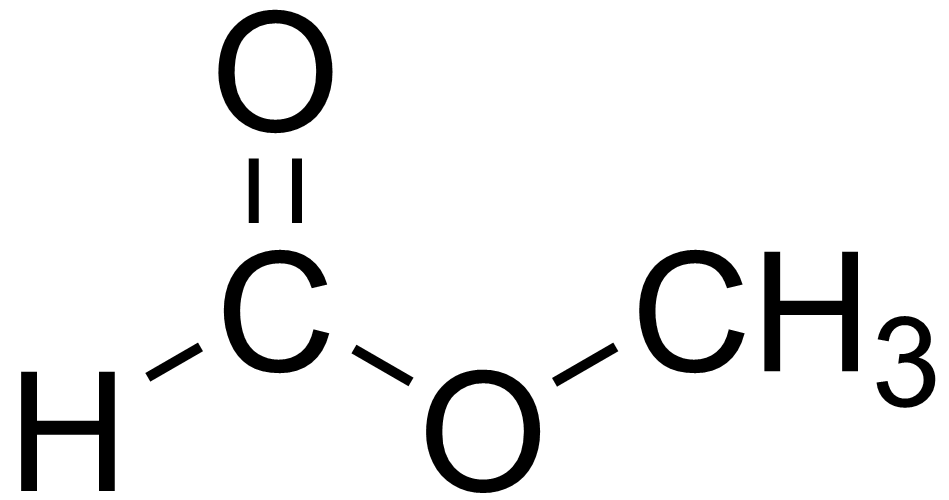

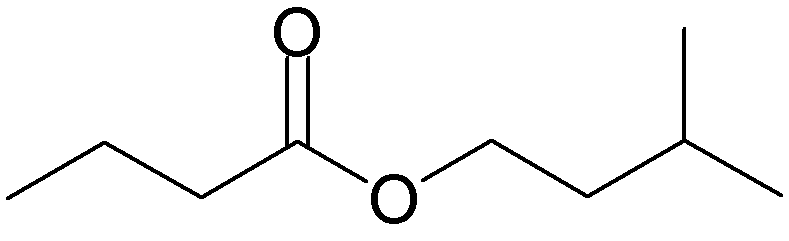
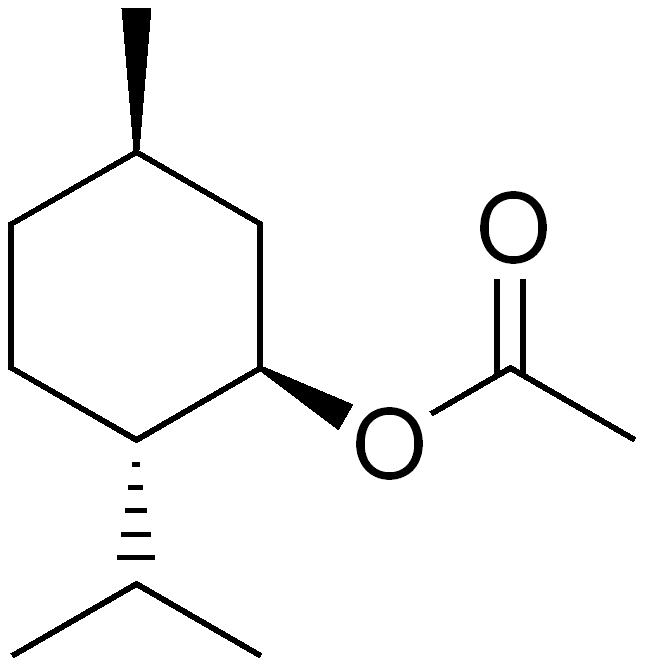

Structure and nomenclature
Esters combine an acyl fragment (derived from a carboxylic acid) and an alkoxy fragment (derived from an alcohol). In IUPAC names the alkyl or aryl group attached to oxygen is named first, followed by the carboxylate name. Simple examples are methyl acetate and ethyl propanoate. Cyclic esters are called lactones and are named by ring size and precursor acid. The ester linkage (COOR) lacks the acidic hydrogen of acids and therefore shows different hydrogen-bonding and physical properties compared with carboxylic acids.
Synthesis and common reactions
The classic laboratory synthesis is Fischer esterification: reacting a carboxylic acid with an alcohol in the presence of an acid catalyst, often with removal of water to drive the equilibrium. Esters also form by acid chloride or anhydride reactions with alcohols and by transesterification, where one alkoxy group is exchanged for another under acid or base catalysis. Enzymes called lipases catalyze ester formation and hydrolysis in biological systems.
- Hydrolysis: acids or bases cleave esters to give the parent acid and alcohol; base-promoted hydrolysis (saponification) gives the carboxylate salt.
- Transesterification: exchange of the OR group, key in biodiesel production and polymer recycling.
- Reduction: esters can be reduced to alcohols or, under controlled conditions, to aldehydes or ketones, depending on reagent and conditions.
- Nucleophilic acyl substitution and addition reactions permit construction of more complex carbonyl derivatives.
Occurrence and applications
Low-molecular-weight esters frequently have characteristic, often pleasant odors and are major components of fragrances and flavors; they are used in perfumes and food additives. Many biological lipids are esters: triglycerides are glycerol esters of fatty acids and are major energy stores in animals and plants. Esters are abundant in fats and oils, and transesterification of vegetable oils produces fatty acid methyl or ethyl esters used as biodiesel. Industrial uses include solvents, plasticizers and the manufacture of polymers: polyesters such as PET contain repeating ester linkages and are central to textiles and packaging.
Physical properties and analysis
Esters are generally polar but cannot donate hydrogen bonds, so they have lower boiling points than corresponding acids. They are often soluble in organic solvents and, depending on chain length, vary in volatility. Spectroscopic methods are routinely used to identify esters: Infrared spectroscopy typically shows a strong carbonyl absorption that helps distinguish esters from other carbonyl-containing groups, and Carbon-13 NMR spectroscopy and proton NMR give complementary information on the carbonyl carbon and alkoxy substituents. Mass spectrometry and chromatographic techniques assist in analysis of complex mixtures of esters found in natural products and industrial streams.
Related groups and safety
Esters are chemically distinct from amides, anhydrides and acyl chlorides in reactivity and stability; thioesters (where sulfur replaces the alkoxy oxygen) play important roles in biochemistry. Many simple esters have low acute toxicity but can be irritant, flammable and volatile; handling in well-ventilated areas and adherence to material safety data are recommended. Industrial processes involving esters may require controls for flammability and exposure.
For practical laboratory guidance and broader context, see introductory resources on molecular structure, reaction mechanisms and spectroscopy: molecule, reacting methods, the behavior of the carbon atom in functional groups, and summaries of the role of the double-bonded carbon–oxygen pair in carbonyl chemistry.
Questions and answers
Q: What is an ester molecule?
A: An ester molecule is a molecule that includes a carbon atom double-bonded to an oxygen atom, and single-bonded to another oxygen atom that is bonded to a carbon atom.
Q: How can esters be made?
A: Esters can be made by reacting a carboxylic acid with an alcohol with some acid.
Q: Where can esters be found?
A: Esters can be found in many substances, especially in fats and oils.
Q: What is a common use for esters?
A: Esters can be used to make perfumes because they sometimes have a very strong, nice smell.
Q: What are polyesters?
A: Polyesters are found in plastics.
Q: What reactions can esters undergo?
A: Esters can easily change the ether part of the molecule with another similar one. It is also possible to reduce the ester to a ketone or an alcohol, which can do many different reactions. Nucleophilic addition is also a good reaction, though a bit more difficult than with ketones.
Q: How can one identify if a molecule has an ester group?
A: One can identify if a molecule has an ester group by using infrared spectroscopy, which gives very sharp signals that are different from other carbonyls, or by using carbon NMR spectroscopy, which has similar characteristics.
Related articles
Author
AlegsaOnline.com Ester (organic functional group) Leandro Alegsa
URL: https://en.alegsaonline.com/art/32287