
Erbium (Er) — properties, history, and uses
Erbium (Er, atomic number 68) is a lanthanide rare-earth metal. It is used in fiber-optic amplifiers, medical lasers, glass coloring and metallurgy. This article outlines its properties, history, applications and safety.
Overview
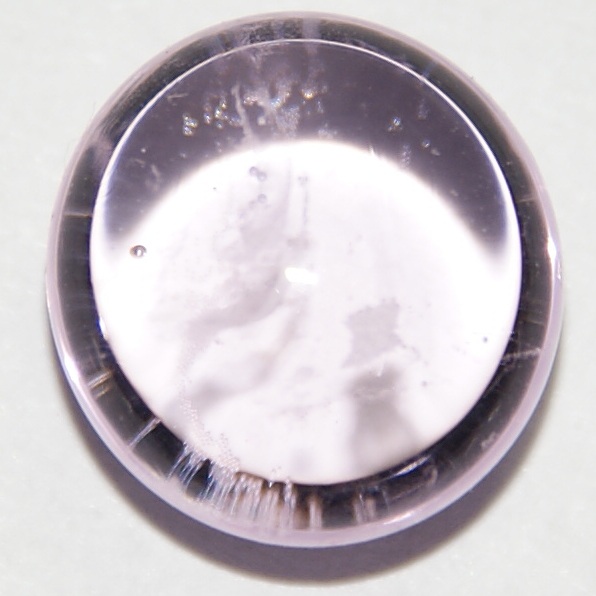
Erbium is a metallic chemical element with the symbol Er. It belongs to the lanthanide series and appears on the periodic table among the rare-earth elements. Chemically it most commonly exhibits the +3 oxidation state and is known for forming pink to rose-colored compounds and glasses. Its position in the lanthanide series gives it similarities to neighbouring elements but also distinctive optical transitions used in photonics.
Image gallery
7 Images


Physical and chemical characteristics
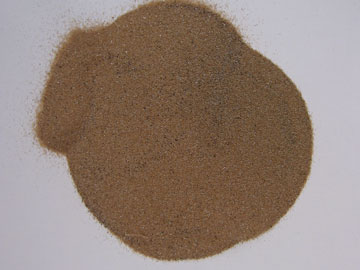
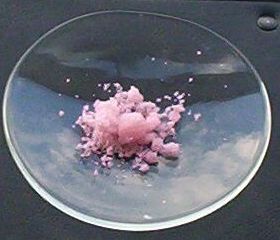
Elemental erbium is a silvery-white, relatively soft metal that is moderately stable in air but forms an oxide layer on its surface. Its trivalent ion, Er3+, shows strong absorption and emission bands in the near-infrared, notably around 1.54 micrometres, a wavelength important for telecommunications. Erbium forms oxides (for example, erbium(III) oxide), halides and various coordination compounds; many of these compounds produce characteristic pink or reddish colors.
History and discovery
Erbium was identified in the 19th century during analysis of minerals from the Swedish village of Ytterby, a prolific source of rare-earth discoveries. The element's name derives from Ytterby and it was separated and characterized after earlier work that had distinguished several new rare-earth substances. Over time improved separation techniques clarified erbium's identity among the lanthanide group.
Uses and applications
Erbium has several notable applications. Doping silica fibers with erbium ions enables erbium-doped fiber amplifiers (EDFAs) that amplify signals in long-distance optical communications; this use leverages the ion's emission near 1.54 μm. Erbium-doped crystals and glasses form lasers — for example, Er:YAG lasers used in dentistry and dermatology emit at a wavelength around 2.94 μm. Erbium oxide is used to impart pink tones to glass and ceramics, and small amounts of erbium improve the high-temperature properties of some alloys.
Occurrence, production and distinctions
Erbium occurs in several rare-earth minerals such as monazite, bastnäsite and xenotime, usually alongside other lanthanides. Commercial production involves separation from mixed rare-earth concentrates by solvent extraction or ion-exchange processes. It is classified as a chemical element with atomic number 68 and regarded as a rare earth element, a term that groups similar metallic elements used widely in modern technology.
Safety and notable facts
Metallic erbium and its common salts are of low to moderate toxicity; bulk metal is not highly hazardous but fine powders and soluble compounds should be handled with appropriate precautions. Erbium also finds niche roles in nuclear technology as a neutron-absorbing material and in research where its electronic structure contributes to studies of magnetism and spectroscopy. Its distinctive optical properties and coloration make it both scientifically useful and aesthetically notable.
Related articles
Author
AlegsaOnline.com Erbium (Er) — properties, history, and uses Leandro Alegsa
URL: https://en.alegsaonline.com/art/31855