
Epic Mickey (video game)
Epic Mickey is a 2010 action-adventure platformer for the Wii that reimagines Mickey Mouse in a darker setting; developed by Junction Point Studios with a distinctive paint-and-thinner gameplay mechanic.
Overview
Epic Mickey is an action-adventure platformer video game developed by Junction Point Studios and published by Disney Interactive. Designed primarily for the Nintendo Wii, the title was intended as a reinvention of Disney's flagship character that combined exploration, platforming and choice-driven mechanics. It was released in Europe on November 26, 2010, in North America on November 30, 2010 and later in Japan on August 4, 2011. The game is commonly described as a blend of classic platform elements and light role-playing choices, and is sometimes summarized in databases as a video game profile notable for its aesthetic and design experimentations.
Image gallery
2 Images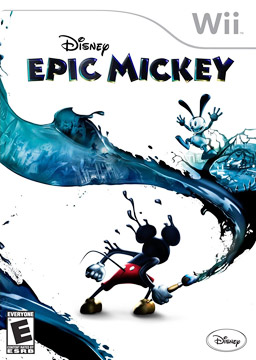

Setting and story
The central setting is the Wasteland, a shadowy realm formed from discarded and forgotten Disney concepts, locations and characters. The narrative begins when Mickey accidentally damages this world and must use a magical brush that dispenses paint and thinner to repair or erase elements of the environment. The story explores themes of memory, regret and restoration by allowing players to influence outcomes through their actions. A significant aspect of the plot is the prominent role given to Oswald the Lucky Rabbit, marking the character's return to a major Disney game after many decades.
Characters
Mickey Mouse anchors the game as the playable protagonist and is presented with more adventurous, occasionally conflicted tones than in many traditional portrayals. Other inhabitants of the Wasteland include both familiar and obscure figures drawn from Disney's historical catalogue; the game deliberately showcases forgotten characters and sidelined concepts to populate its atmosphere. Important supporting figures and antagonists appear throughout the journey and react to Mickey depending on whether the player chooses to restore or erase aspects of the world.
Gameplay and mechanics
The signature mechanic is the paint-and-thinner system: paint restores and alters objects and characters, while thinner erases or removes them. These choices are persistent and influence the story, NPC behavior and accessible areas. The Wii Remote is used to aim and apply brush effects, perform basic combat moves and interact with environmental puzzles. Platforming sections require timing and exploration; optional collectibles and side tasks encourage revisiting areas with different brush effects. Critics and players often noted that the motion-based control scheme shaped much of the game's feel on Wii hardware.
Development and design goals
Led by designer Warren Spector, Junction Point sought to present a more adventurous Mickey and to mine Disney's back catalogue for visual and narrative inspiration. The team emphasized an art direction that contrasted the bright, familiar style of Disney with darker, decayed environments to achieve a tone that could appeal to older players while remaining recognizable. Bringing Oswald into a major role required collaboration with Disney's character stewards and was highlighted in publicity as a notable restoration of company history.
Release and platforms
Epic Mickey was initially exclusive to the Nintendo Wii, with staggered release windows across regions; see the Europe and North American launch references for region-specific details. The game later spawned follow-ups and related titles that appeared on multiple systems. The main direct sequel, Epic Mickey 2: The Power of Two, broadened platform availability to include systems beyond the Wii such as Wii-family releases and home consoles. Additional ports and handheld entries extended the series' reach to devices including the PlayStation Vita, PlayStation 3, Xbox 360, and Wii U, while a handheld-focused title, Epic Mickey: Power of Illusion, was released for the Nintendo 3DS.
Reception and legacy
On release, the game received mixed to positive responses. Reviewers praised its imaginative setting, ambition and the novelty of rediscovering lesser-known Disney properties, while criticism commonly focused on camera behavior and occasional control imprecision. The tonal shift toward a darker, more reflective Mickey and the emphasis on player choice were widely discussed in commentary on the franchise's evolution. The series helped renew broader popular interest in earlier Disney characters and prompted additional merchandising and media attention around legacy figures.
Technical notes and presentation
Epic Mickey's production leveraged the Wii's motion-control strengths for aiming and brushwork, but those same controls introduced challenges in precision and camera management that influenced post-release patches and developer commentary. The game's art direction and sound design contributed significantly to atmosphere, using altered versions of familiar themes and ambient cues to reinforce the Wasteland's mood. For players researching the title, archived interviews and developer notes provide context on choices made during development and on how the team balanced accessibility with experimental design.
Further reading
For an overview of the game's genre and to locate technical or version-specific data, consult sources that catalogue video games by mechanics and platform; see the linked genre summary and game profile. Contemporary coverage, retrospective articles and official press materials offer additional perspectives on the title's conception and impact. Useful starting points include platform pages and publisher archives for region and format specifics, such as the entries for Europe, North America and Japan releases.
Genre overview Game profile European release North American release Japanese release Mickey Mouse Forgotten characters Epic Mickey 2 Wii PS Vita PS3 Xbox 360 Wii U Nintendo 3DS
Related articles
Author
AlegsaOnline.com Epic Mickey (video game) Leandro Alegsa
URL: https://en.alegsaonline.com/art/31697
Sources
- nytimes.com : "After Mickey's Makeover, Less Mr. Nice Guy"