
PlayStation 3 (PS3): overview, hardware, models and legacy
The PlayStation 3 is Sony’s third home game console, launched in 2006. This article summarizes its history, hardware, major models, services, backward compatibility and its influence on modern consoles.
Overview
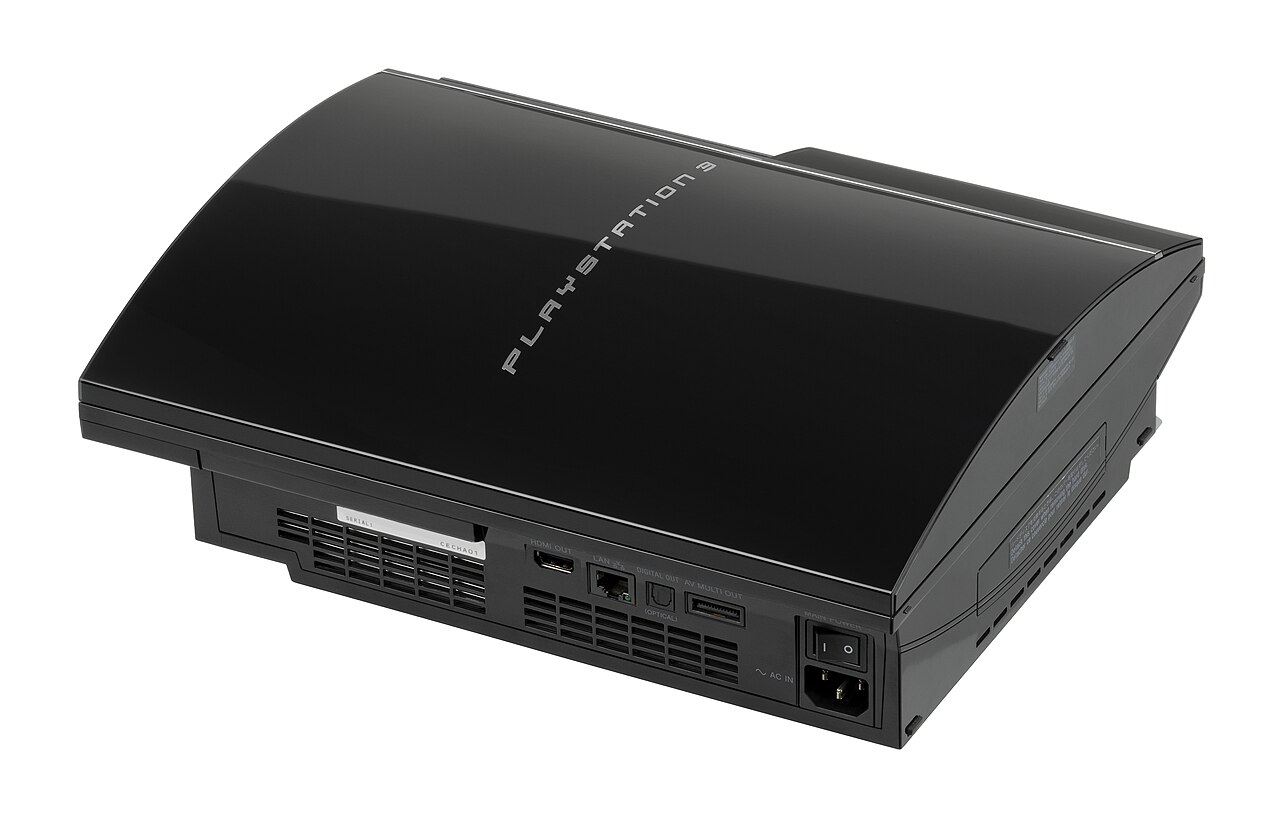
The PlayStation 3 (commonly abbreviated PS3) is the third home video game console produced by Sony. It launched in late 2006, debuting in Japan on November 11, then in North America on November 17 and later in Australia and Europe. The PS3 was Sony’s entry in the seventh generation of consoles and competed directly with Microsoft’s Xbox 360 and Nintendo’s Wii. Beyond games, the system was positioned as a living-room entertainment device, with high-definition output and a built-in optical drive for large-capacity media.
Image gallery
10 Images




Development and launch
Sony designed the PS3 around a multi-core Cell Broadband Engine CPU and a powerful graphics processor, aiming to deliver a marked leap in graphical capability and physics simulation compared with prior generations. Early promotional material emphasized Blu-ray playback, high-definition gaming and networked features. The console’s launch involved multiple regional SKUs and a premium price relative to its rivals, which influenced initial consumer uptake and industry response.
Hardware, media and capabilities
At its core the PS3 combined the Cell processor with a dedicated GPU, support for high-definition resolutions, hardware audio decoding and a Blu-ray disc drive, enabling both games and feature-length video playback from a single disc format. The Blu-ray capability helped push higher game installation sizes and defined part of the system’s role as a media hub. The PS3 offered USB ports, Ethernet and Wi‑Fi (in later models or as standard), support for external storage in later firmware, and multimedia applications such as video streaming, photo viewing and music playback.
Models and revisions
Sony released several hardware configurations during the PS3’s lifespan. Early retail models differed in hard drive capacity and feature sets; for example an initial low-capacity model featured a 20 gigabyte hard drive while other SKUs offered larger drives at higher prices. Price adjustments and new capacities followed: Sony announced reductions for the United States market and introduced intermediate sizes including 40 GB, 60 GB and 80 GB variants in different regions. Some of the earliest, higher-end units provided hardware-based backward compatibility for older software; over time Sony removed or reduced that feature in order to lower manufacturing cost. In 2009 and later years the company introduced a thinner, lighter "Slim" redesign that improved power efficiency and included larger hard drives such as 120 GB, 160 GB and 320 GB options.
Controllers and input
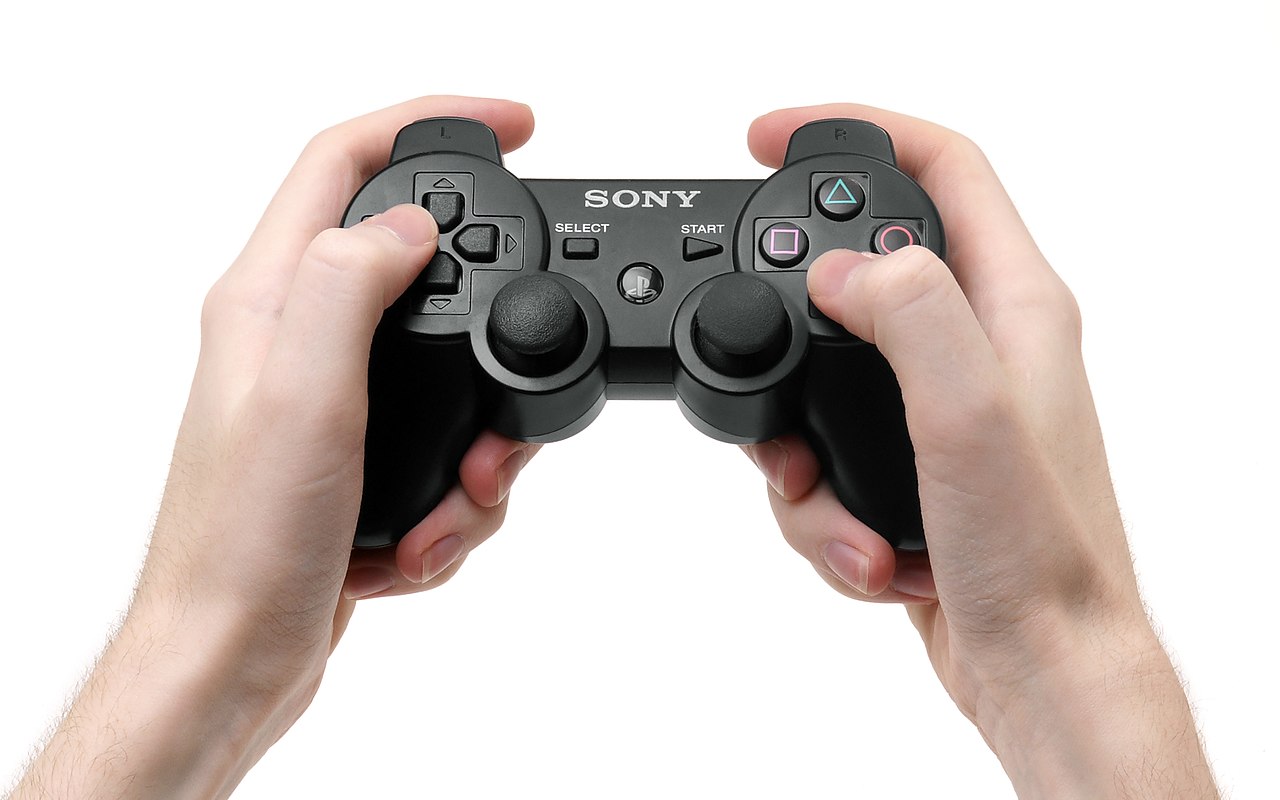
The PS3 shipped with wireless controllers that evolved during the console’s life. The Sixaxis controller initially provided wireless operation and motion sensing but no vibration; later the DualShock 3 combined the motion features with force feedback (rumble) while remaining Bluetooth-capable. A variety of first- and third-party peripherals—driving wheels, fight sticks, cameras and remote controls—expanded how players interacted with the system.
Online services, store and community
Sony operated the PlayStation Network (PSN) for online multiplayer, digital purchases and media downloads. PSN allowed free account-based access to online multiplayer (in contrast with contemporaneous subscription policies on some competing services), while Sony later offered subscription enhancements through PlayStation Plus for free monthly games, cloud storage and discounts. The platform also provided digital distribution of games, episodic content and indie titles through the PlayStation Store, and hosted social features such as friend lists, trophies and messaging.
Backward compatibility and media compatibility
Compatibility with earlier PlayStation generations varied by model. Some early PS3 units included hardware or software support for PlayStation 2 titles, while most models maintained compatibility with original PlayStation software through emulation or hardware. Over revisions compatibility was reduced or removed, so support depended on the specific SKU and region.
Notable software and impact
The PS3 hosted a broad library of first- and third-party games across genres, including high-profile exclusives that came to define portions of its catalogue. Its architecture encouraged ambitious technical work from developers, though many described the early platform as complex to program for compared with contemporaries. The presence of Blu-ray and a robust online store changed consumer expectations about distribution size and downloadable content for consoles.
Challenges, updates and discontinuation
Throughout its life Sony adjusted hardware, pricing and online services. The company issued firmware updates to add features and patch security issues; in some cases these updates also changed functionality for enthusiasts (for example deprecation of certain optional operating features). The PS3’s retail production ended regionally during the mid-2010s as Sony shifted focus to newer platforms, though the system continued to be supported with occasional software updates and third-party releases for some years after mainline production ceased.
Legacy
The PlayStation 3 helped establish several enduring console trends: integration of a high-capacity optical medium, a centralized digital storefront, a robust online account system and a focus on multimedia capabilities in addition to gaming. Its long lifecycle and library of exclusive titles influenced players, developers and subsequent console design decisions.
- Manufacturer: Sony
- Generation: Seventh (competed with Xbox 360 and Wii)
- Optical format: Blu-ray
- Launch regions: Japan, North America, Australia, Europe
- Early storage examples: 20 GB, 60 GB, 80 GB
- Related systems: PlayStation 2, PlayStation
- Rivals and ecosystem: Microsoft, Nintendo
Questions and answers
Q: What is the PlayStation 3?
A: The PlayStation 3 (PS3) is a video game console made by Sony.
Q: When was the PS3 released in Japan?
A: The PS3 was released in Japan on November 11, 2006.
Q: What features does the PS3 have?
A: The PlayStation 3 is a console that can play Blu-ray discs and it was, according to Sony, the most powerful console at the time. It also has an online mode to play and interact with other people for free unlike Xbox which must be paid for.
Q: How many models of the PS3 were available when it first came out?
A: When the PlayStation 3 was released, there were two different models - one with a 20 gigabyte (GB) hard drive and one with a 60 gigabyte hard drive.
Q: How much did each model cost when they first came out?
A: The 20 GB model cost $399 while the 60 GB model cost $599.
Q: When did Sony release versions of the PS3 with larger hard drives?
A: In July 2007, Sony announced that they would cut the price of the PS3 to $500 in the United States and also released versions of the console with 80 gigabyte and 40 gigabyte hard drives around this time. A white version of the 40 gigabyte model was released in Japan in November. Since 2011, new slimmer models with 160 GB or 320 GB of hard drive memory were sold.
Q: When did Sony discontinue production of their consoles?
A: Production of Playstation 3 consoles ceased in New Zealand on September 29, 2015; Europe and Australia on March 31, 2016; North America on October 31, 2016; and Japan on May 29th 2017 though third-party games are still being made for it.
Related articles
Author
AlegsaOnline.com PlayStation 3 (PS3): overview, hardware, models and legacy Leandro Alegsa
URL: https://en.alegsaonline.com/art/77407
Sources
- xbitlabs.com : "Asustek Computer Ships PlayStation 3 Consoles"
- scei.co.jp : "PlayStation 3 Sales Reach 70 Million Units Worldwide"
- gamesindustry.biz : "IDC: Game consoles, discs to remain revenue mainstays for "years to come""
- idc.com : "Worldwide Video Game and Entertainment Console Hardware and Packaged Software 2012–2016 Forecast"
- support.us.playstation.com : "PlayStation Support"
- playstation.joystiq.com : ""PS3 Slim gains ability to bitstream Dolby TrueHD, DTS-HD MA""
- gamespot.com : "20GB PS3 officially discontinued in North America"
- news.bbc.co.uk : "Sony cuts Playstation price in US"