
Dipodidae: jerboas, jumping mice and birch mice
Dipodidae is a family of small to medium bipedal rodents of the Northern Hemisphere, including jerboas, jumping mice and birch mice, adapted for saltatory locomotion in deserts, grasslands and forests.
The Dipodidae are a distinct family of small to medium-sized rodents found across much of the Northern Hemisphere. The family includes more than fifty recognised species grouped into several genera. Commonly encountered groups within Dipodidae are the jerboas, the jumping mice and the birch mice, each adapted to particular climates and lifestyles.
Image gallery
4 Images


Physical characteristics
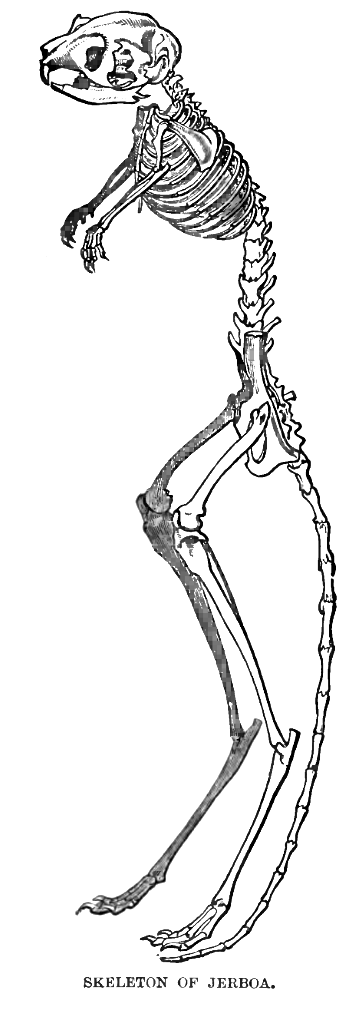
Members of Dipodidae share a suite of adaptations for saltatory movement. They have elongated hind limbs and feet, relatively short forelimbs and long tails that help with balance. Many species display pronounced auditory and visual features: large eyes and prominent ears aid nocturnal activity. Their mode of locomotion — called saltation — produces a bipedal hopping gait that in appearance more closely resembles small kangaroos than typical true mice.
Habitats and distribution
Dipodids occupy a wide range of habitats across Eurasia, North Africa and parts of North America. Species are adapted to open grassland, arid deserts and wooded forests, and some live in montane or steppe environments. Desert-dwelling jerboas exhibit the most extreme saltatory anatomy, while forest and meadow species tend to be more generalized or retain some quadrupedal abilities.
Behavior and ecology
Most dipodids are primarily nocturnal and feed on seeds, vegetation and insects, playing a role as prey for owls, foxes and snakes and as seed dispersers in their ecosystems. Many temperate species hibernate or enter torpor in cold seasons; deserts species may be strictly nocturnal to avoid daytime heat. Reproduction typically yields small litters of altricial young that develop rapidly to match a relatively short lifespan.
Classification and conservation
Taxonomically the family is divided into several subgroups and genera that reflect ecological and morphological diversity. While many dipodid species are locally common, others face threats from habitat conversion, agricultural intensification and climate shifts. Conservation attention focuses on habitat protection and monitoring populations that are restricted to fragmented or specialized environments.
- Family overview
- Jerboas — highly saltatory desert specialists
- Species diversity and geographic patterns
- Ecological roles and conservation concerns
Further reading and species data can be found in museum guides and mammal field accounts; scientific synopses and regional faunas provide up-to-date taxonomic treatments and conservation assessments (rodent resources, grassland studies, desert research, forest surveys). For general introductions to their locomotion and sensory adaptations see materials on saltation and comparative notes contrasting them with macropod movement or ordinary mouse locomotion.
Related articles
Author
AlegsaOnline.com Dipodidae: jerboas, jumping mice and birch mice Leandro Alegsa
URL: https://en.alegsaonline.com/art/27570