
Dire wolf (Canis dirus): Prehistoric predator of the Americas
Extinct large canid of the Late Pleistocene and early Holocene Americas. Known from abundant fossil sites, robust jaws and teeth, probable pack behavior, and extinction during late Pleistocene ecological shifts.
Overview
The dire wolf (Canis dirus, literally "fearsome dog") was a large canid that lived in North and South America during the Late Pleistocene and into the early Holocene. It is one of the best known prehistoric carnivores because of abundant skeletal remains recovered from multiple fossil localities. The species was described in the 19th century and has since been the subject of anatomical, ecological and genetic study.
Image gallery
10 Images


Size and appearance
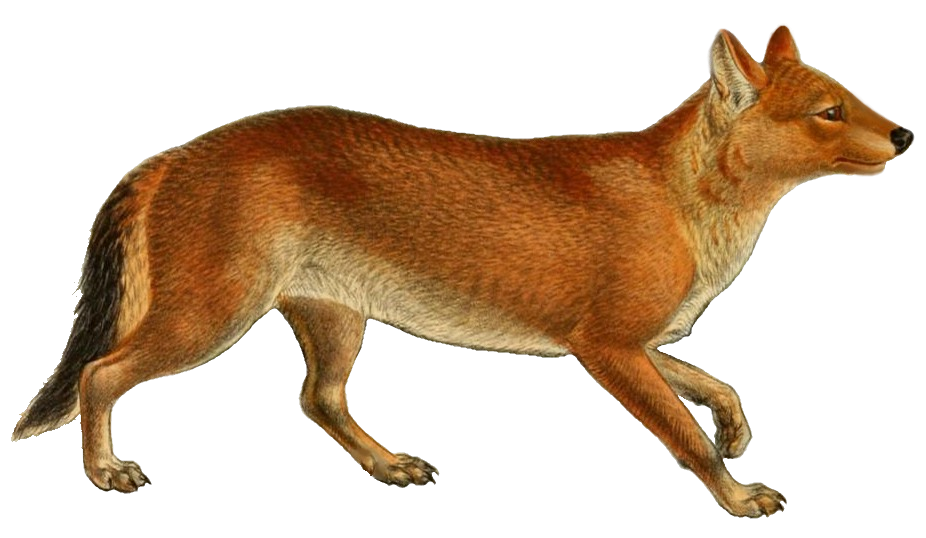
Dire wolves resembled modern gray wolves in overall form but were generally more heavily built. Their skulls were broader, jaws more robust, and teeth larger and adapted for processing flesh and bone. Limb proportions suggest a strong, endurance-capable runner rather than a long‑striding cursorial specialist. These features indicate adaptations to subduing and consuming large prey.
Distribution and habitat
Fossil evidence shows dire wolves ranged across much of the Americas, from parts of what is now southern Canada through large areas of the United States, Mexico and into South America. They occupied a range of habitats associated with Pleistocene megafauna, including grasslands, open woodlands and riparian corridors where large herbivores congregated.
Fossils, discovery and study
Well‑preserved bone assemblages, including exceptional collections from asphalt seeps and tar pits, provide unusually detailed information on dire wolf populations. These collections permit analyses of age structure, seasonality and causes of mortality. For curated specimen lists and summaries see a general fossil catalog and several museum pages that discuss major finds.
Diet, hunting and social behavior
Dental wear, skull morphology and stable‑isotope studies indicate dire wolves hunted large herbivores of the Pleistocene—such as bison, horses and other ungulates—and likely scavenged when opportunities arose. Many researchers infer some level of social hunting based on bonebeds containing multiple individuals and repeated occurrences of similar kill assemblages, a pattern comparable to social behavior in modern members of the genus Canis.
Extinction and significance
Dire wolves disappeared near the end of the last Ice Age, a time that saw widespread extinctions of large mammals in the Americas. Factors implicated in their decline include climate-driven habitat change, loss or redistribution of preferred prey, and competition with other predators and human hunters. For broader discussions see reviews of Pleistocene loss and predator dynamics in extinction reviews.
Distinctive facts and ongoing research
- Large, concentrated bone deposits allow detailed demographic and seasonal studies; see several site reports for examples.
- Comparative anatomical studies highlight specializations for strong bite forces and bone processing; summaries are available in anatomy studies.
- Recent genetic and morphological work continues to refine how dire wolves relate to modern canids and illuminate the timing and causes of their extinction; see recent research for updates.
Because of the quantity of material and its preservation, the dire wolf remains an important species for understanding Pleistocene ecosystems, predator–prey relationships and the processes that shape extinction events. Continued multidisciplinary study—combining paleontology, geochemistry, and genetics—aims to resolve remaining questions about its behavior, ecology and disappearance.
Questions and answers
Q: What is the dire wolf?
A: The dire wolf is an extinct species of wolf in the genus Canis.
Q: How famous is the dire wolf?
A: The dire wolf is one of the most famous prehistoric carnivores in North America.
Q: When did the dire wolf live in the Americas?
A: The dire wolf lived in the Americas during the Late Pleistocene and Early Holocene epochs, which was 125,000–9,440 years ago.
Q: When was the dire wolf first discovered?
A: The first specimen of the dire wolf was found four years before it was named in 1858.
Q: What is the meaning of "Canis dirus"?
A: "Canis dirus" means "fearsome dog".
Q: What genus does the dire wolf belong to?
A: The dire wolf belongs to the genus Canis.
Q: Is the dire wolf still alive today?
A: No, the dire wolf is extinct.
Related articles
Author
AlegsaOnline.com Dire wolf (Canis dirus): Prehistoric predator of the Americas Leandro Alegsa
URL: https://en.alegsaonline.com/art/27589
Sources
- biodiversitylibrary.org : "Notice of remains of extinct vertebrata, from the Valley of the Niobrara River, collected during the Exploring Expedition of 1857, in Nebraska, under the command of Lieut. G. K. Warren, U. S. Top. Eng., by Dr. F. V. Hayden, Geologist to the Expedition, Proceedings"
- biodiversitylibrary.org : "Notice of some fossil bones discovered by Mr. Francis A. Lincke, in the banks of the Ohio River, Indiana"
- biodiversitylibrary.org : "The extinct mammalian fauna of Dakota and Nebraska, including an account of some allied forms from other localities, together with a synopsis of the mammalian remains of North America"
- biodiversitylibrary.org : "Description of some remains of an extinct species of wolf and an extinct species of deer from the lead region of the upper Mississippi"
- doi.org : 10.2475/ajs.s3-11.61.47
- biodiversitylibrary.org : "Human remains and associated fossils from the Pleistocene of Florida"
- biodiversitylibrary.org : "Note on the systematic position of the wolves of the Canis dirus group"
- floridamuseum.ufl.edu : "Canis dirus :: Florida Museum of Natural History"
- library.sandiegozoo.org : "Dire Wolf Fact Sheet"