
Kangaroo (Macropus) — overview, biology and significance
Kangaroos are large Australian marsupials of the genus Macropus. This article covers their biology, species groups, distribution, locomotion, and interactions with people and ecosystems.
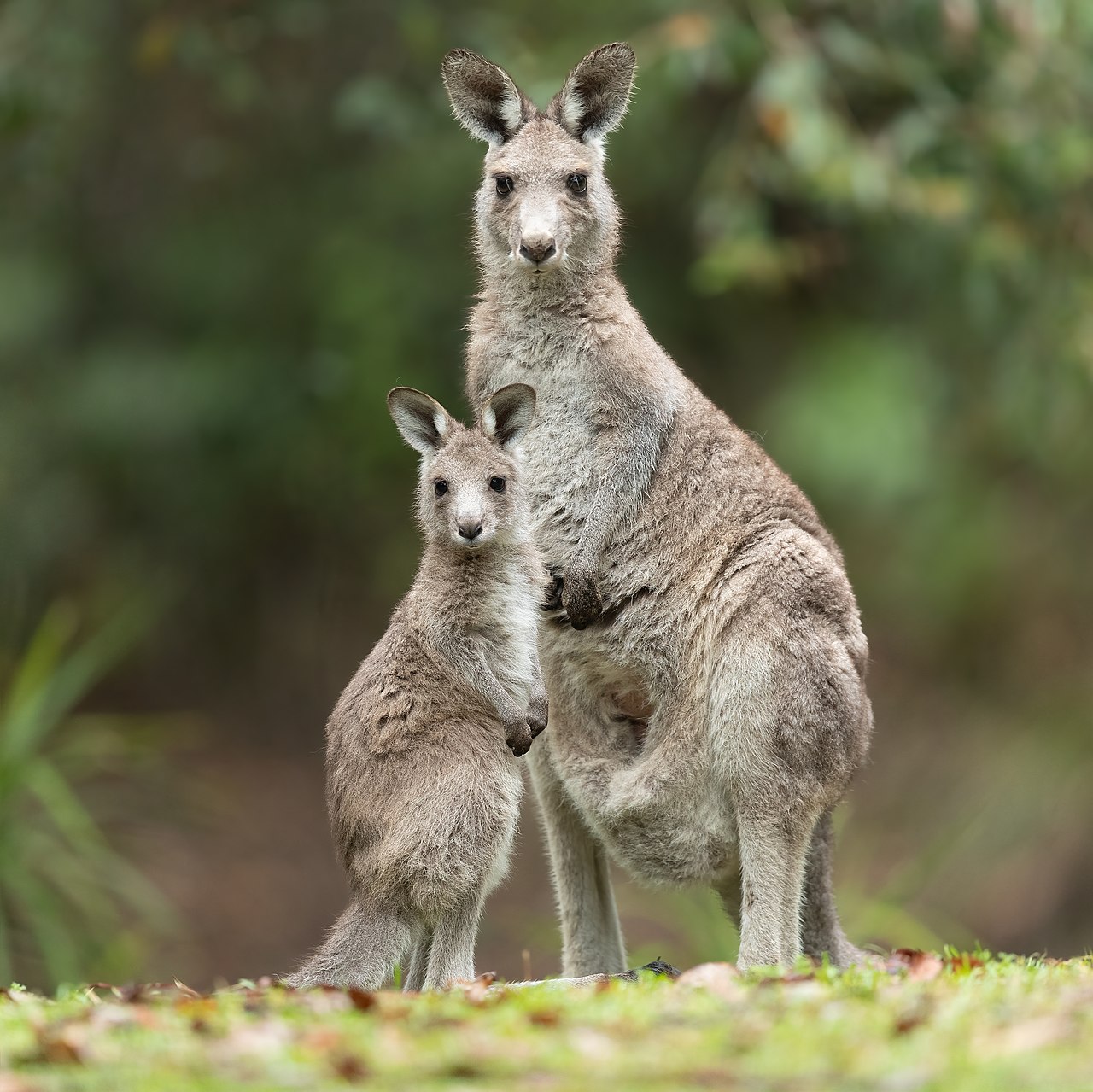
Overview: Kangaroos are marsupial mammals native to Australasia, best known for their upright posture and powerful hind limbs. The name commonly refers to the four largest species within the genus Macropus, but many related animals — small wallabies and other macropods — share similar anatomy and life history. As marsupials, females typically raise young in a pouch until they are sufficiently developed.
Image gallery
10 Images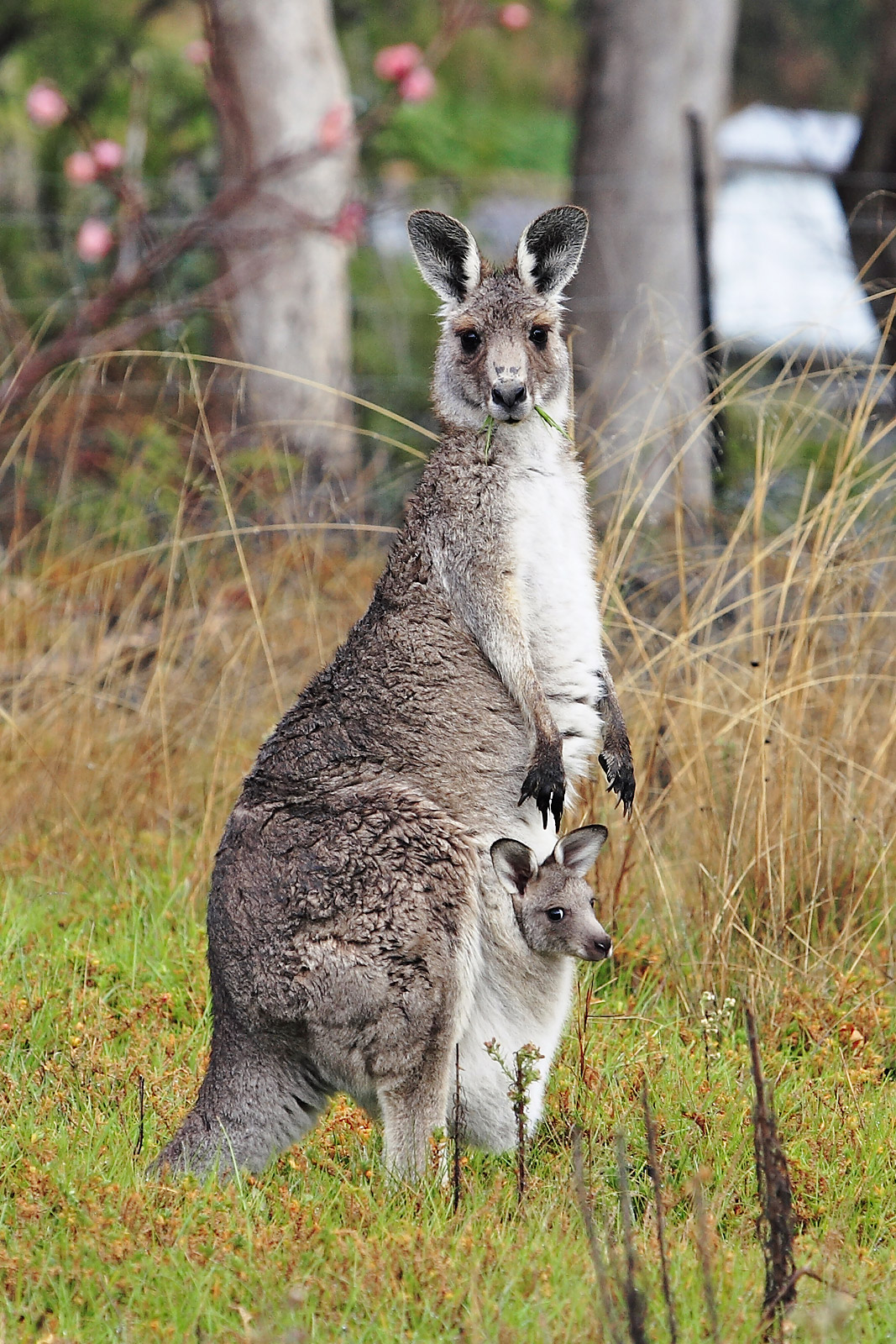


Physical characteristics
Kangaroos have long, muscular hind legs, large feet adapted for leaping, a strong tail used for balance and support, and relatively short forelimbs. Their mode of movement is distinctive: they propel themselves by hopping, an efficient gait at higher speeds that stores and recovers elastic energy in tendons. Body size varies widely across species, from small rock-wallabies to the large red kangaroo. Fur coloration and ear shape differ by species and habitat.
Species and classification
The term "kangaroo" is applied to several species within the macropod family. The best-known large species include the red kangaroo and the two grey kangaroos, while dozens of smaller species are often called wallabies. Taxonomy places these animals in a broader group of macropods; for more on the genus see genus information.
- Red kangaroo (large open-country species)
- Eastern grey kangaroo (common in woodlands and grasslands)
- Western grey kangaroo (similar range to the east in some areas)
- Smaller macropods (wallabies, tree-kangaroos in forests)
Distribution and habitat
Kangaroos are widespread across Australia and occur in parts of New Guinea. They occupy a range of habitats from arid plains and open grasslands to forested and rocky areas. Local populations respond to climate, vegetation, and land use, and their numbers can fluctuate with rainfall and food availability.
Behavior, ecology, and human interactions
Kangaroos are primarily grazers and browsers, important for grassland ecology and nutrient cycling. They are social in many species, forming groups called mobs. Kangaroos have cultural significance for Indigenous peoples and are a national symbol in Australia. They also intersect with agriculture and development: in some regions they compete with livestock for pasture or are managed to reduce road collisions. Conservation status varies by species; while some are abundant, others face threats from habitat loss, introduced predators, and hunting. For general background on their role in Australian ecosystems see regional fauna and specific management resources at wildlife pages.
For further reading and species lists consult taxonomic and conservation resources: genus-level summaries (Macropus overview), habitat reports (Australia habitats), and regional studies (New Guinea records, locomotion research). Additional educational guides and field identifications may be found through general wildlife portals (classification links, fauna references).
Questions and answers
Q: What is a Kangaroo?
A: A Kangaroo is an Australian marsupial that belongs to the genus Macropus.
Q: How many species of Kangaroo are there?
A: There are four large species of Kangaroo and fifty species of smaller macropods.
Q: How common are Kangaroos in Australia?
A: Kangaroos are common in Australia.
Q: Where else can Kangaroos be found?
A: Kangaroos can also be found in New Guinea.
Q: How do Kangaroos move?
A: Kangaroos move by hopping.
Q: What is the common name for the large species of Kangaroo?
A: The common name for the large species of Kangaroo is 'kangaroo'.
Q: What is the genus of Kangaroo?
A: The genus of Kangaroo is Macropus.
Related articles
Author
AlegsaOnline.com Kangaroo (Macropus) — overview, biology and significance Leandro Alegsa
URL: https://en.alegsaonline.com/art/52103
Sources
- youtube.com : "Kangaroo vs Emu: FIGHT!"
- blogs.discovermagazine.com : "Kangaroos have three vaginas"
- derm.qld.gov.au : "Kangaroos (Department of Environment and Resource Management)"
- anu.edu.au : "ANDC - For Schools"
- anu.edu.au : "ANU - Australian National Dictionary Centre - ANDC"
- bbc.co.uk : bbc.co.uk/news/science-environment-29603578
- plosone.org : plosone.org/article/info:doi/10.1371/journal.pone.0109888